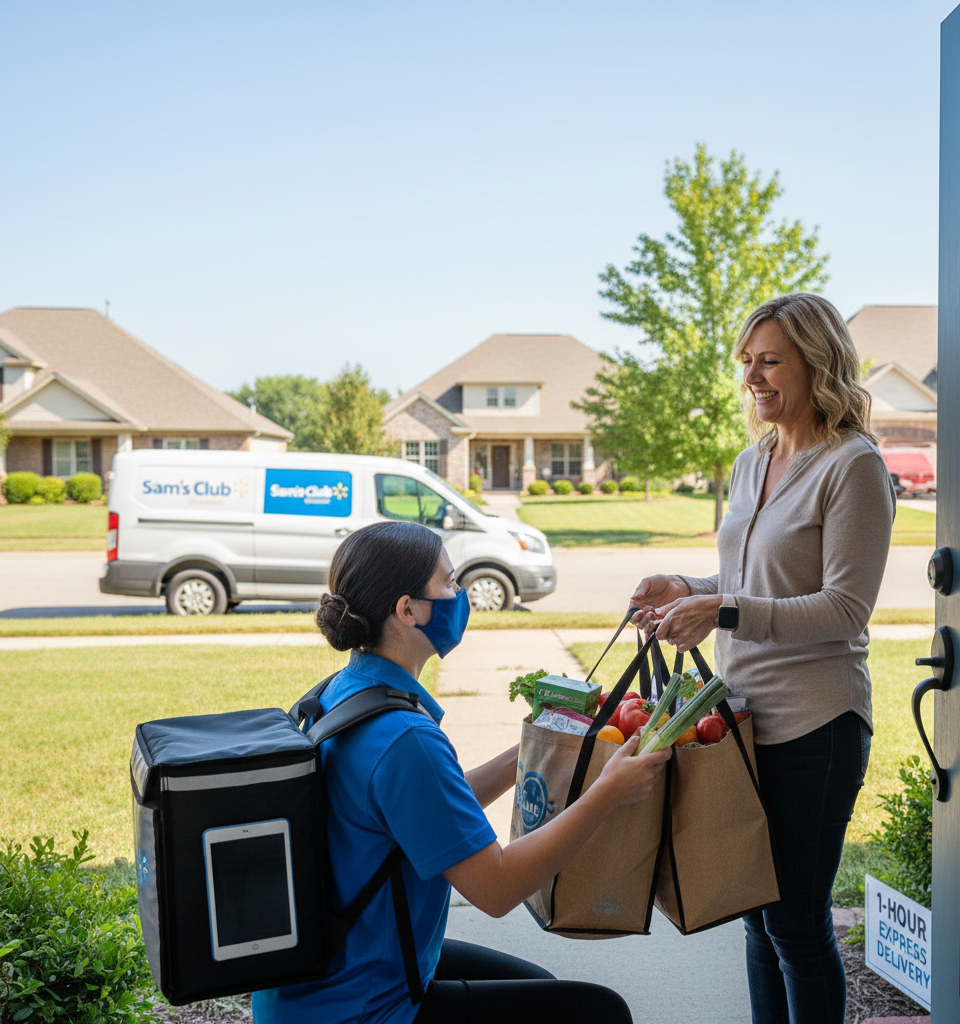
Sam's Club, the wholesale retail division of Walmart Inc., has significantly upgraded its fulfillment capabilities by introducing a nationwide 1-hour Express delivery service. Rolling out across more than 600 of its clubs, this new tier allows members to receive thousands of items, including fresh groceries, household essentials, and select electronics, with unprecedented speed. The initiative, announced this week, is a direct response to evolving consumer expectations for immediate gratification in e-commerce, placing Sam's Club in a more competitive position against both traditional grocers and fellow big-box retailers.
The Drive for Speed in Retail
This expansion builds upon Sam's Club's existing three-hour delivery option, initially launched in select markets. The accelerated rollout underscores a broader industry trend where speed and convenience have become primary differentiators beyond price. Consumers, increasingly accustomed to instant gratification from food delivery apps and online marketplaces, are now demanding similar efficiencies from their grocery and general merchandise purchases. The COVID-19 pandemic further amplified this demand, normalizing same-day and even same-hour delivery as a critical component of the retail experience.
Service Nuts and Bolts The 1-hour
Express delivery service is facilitated through a partnership with Instacart, leveraging the third-party delivery platform's extensive network of shoppers and drivers. Members can access the service directly through the Sam's Club website or mobile app, with an associated fee for the expedited delivery, typically ranging from $12 to $15 per order, in addition to standard service fees. The assortment available for Express delivery includes approximately 2,000 to 3,000 frequently purchased items, curated for quick packing and transit. This localized fulfillment model, utilizing inventory directly from each club, bypasses the need for dedicated dark stores or micro-fulfillment centers, allowing for rapid deployment and scalability.
Industry Ramifications and Competition Sam's
Club's aggressive push into 1-hour delivery intensifies the "delivery wars" within the retail sector. This move directly challenges Costco, Sam's Club's primary competitor in the warehouse club space, which currently offers same-day delivery through Instacart but hasn't broadly rolled out a guaranteed 1-hour option for its full catalog. It also places pressure on traditional supermarkets and e-commerce giants like Amazon, which continues to invest heavily in its Prime Now and Amazon Fresh services. The emphasis on speed aims to capture a larger share of the household budget, particularly for spontaneous or urgent purchases that might otherwise go to local grocery stores or convenience outlets.
Expert Insights on Fulfillment Trends
Retail analysts are viewing this development as a significant strategic play. "This isn't just about faster delivery; it's about owning the 'need it now' moment for consumers," states Sarah Jenkins, a retail industry consultant at ArcPoint Analytics. "Sam's Club is leveraging its physical footprint – its 600+ clubs – as de facto fulfillment centers, allowing them to compete effectively with pure-play e-commerce operations. The economics of last-mile delivery remain challenging, but for high-value membership programs, the customer retention benefits often outweigh the incremental costs." Jenkins also noted that the partnership with Instacart allows Sam's Club to scale rapidly without heavy capital expenditure on its own proprietary delivery fleet.
The Road Ahead for Rapid Delivery
Looking forward, the success of Sam's Club's Express delivery will likely depend on several factors, including the consistency of service, the perceived value proposition for members, and the ability to maintain strong inventory accuracy at the club level. The retailer may also explore further automation within its clubs to streamline the picking and packing process for rapid orders. The long-term implications could include a shift in how warehouse clubs are perceived, moving beyond bulk shopping destinations to become convenient, on-demand suppliers for daily needs. Future expansions might include specialized delivery windows or even subscription-based accelerated delivery options, further cementing their position in the rapidly evolving e-commerce landscape.