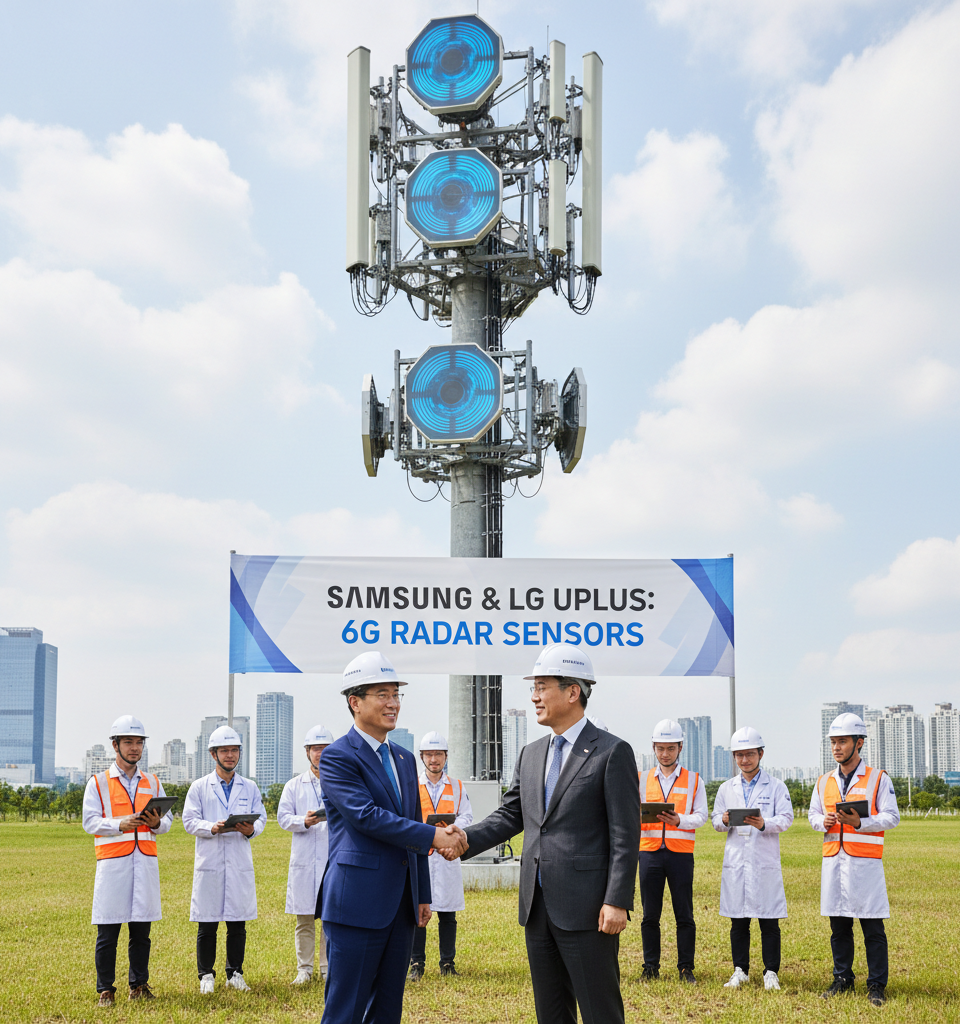
In a significant move poised to redefine the capabilities of future telecommunication networks, Samsung Electronics and LG Uplus have formally agreed to jointly develop Integrated Sensing and Communication (ISAC) technology. The memorandum of understanding (MoU) was signed on May 27 at LG Science Park in Magok, Seoul, with Samsung Research, the advanced R&D division of Samsung, leading its side of the collaboration. This initiative focuses on transforming conventional mobile network base stations into advanced environmental sensors, a pivotal step towards the realization of 6G networks.
The Promise of ISAC Technology
ISAC technology represents a paradigm shift in how cellular infrastructure could function. Beyond merely facilitating communication, base stations equipped with ISAC capabilities would be able to simultaneously sense their surroundings, acting much like a radar system. This dual-functionality is expected to open up a myriad of new applications and services, creating a more intelligent and responsive network environment. The integration of sensing capabilities directly into communication infrastructure could lead to more efficient use of spectrum and hardware, potentially reducing the need for separate sensing systems in certain applications.
Driving the 6G Revolution
This collaboration underscores the race among telecommunications giants to define and dominate the next generation of mobile technology. While 5G is still being widely deployed, attention is already shifting to 6G, which promises unprecedented speeds, ultra-low latency, and advanced capabilities like ubiquitous sensing and artificial intelligence integration. By investing in ISAC, Samsung and LG Uplus are positioning themselves at the forefront of this evolution, anticipating the fundamental requirements and potential applications of 6G. Their combined expertise in network infrastructure and advanced research is expected to accelerate the development and deployment of these complex technologies.
Strategic Importance and Market Impact
The partnership between two of South Korea's technology powerhouses carries substantial strategic importance. Samsung is a global leader in telecommunications equipment and mobile devices, while LG Uplus is a prominent mobile network operator. Their joint effort in ISAC development could set global standards and influence the direction of 6G research and commercialization worldwide. The ability for cell towers to perform sensing could have transformative impacts across various sectors, from smart cities and autonomous vehicles to industrial automation and environmental monitoring, potentially creating entirely new revenue streams and service models for network operators.
Potential Applications and Future Implications
Looking ahead, the potential applications of base stations that double as environmental sensors are vast. In smart cities, these integrated sensors could monitor traffic flow, detect异常 events, or manage public safety with greater precision. For autonomous vehicles, ISAC-enabled networks could provide critical real-time environmental data, enhancing safety and navigation beyond what onboard sensors alone can offer. In industrial settings, the technology could facilitate highly accurate monitoring of machinery and processes. This project is not merely about incremental improvements but about fundamentally expanding the utility and intelligence of mobile networks, making them an active participant in their environment rather than just a conduit for data.
The development of ISAC technology is still in its nascent stages, but the commitment from major industry players like Samsung and LG Uplus signals a strong belief in its future viability and necessity for 6G. The focus will now be on addressing technical challenges such as interference management, data processing at the edge, and developing new algorithms to effectively separate communication and sensing functions while optimizing performance for both. The success of this collaboration could very well dictate key aspects of the 6G landscape, pushing the boundaries of what integrated network infrastructure can achieve.