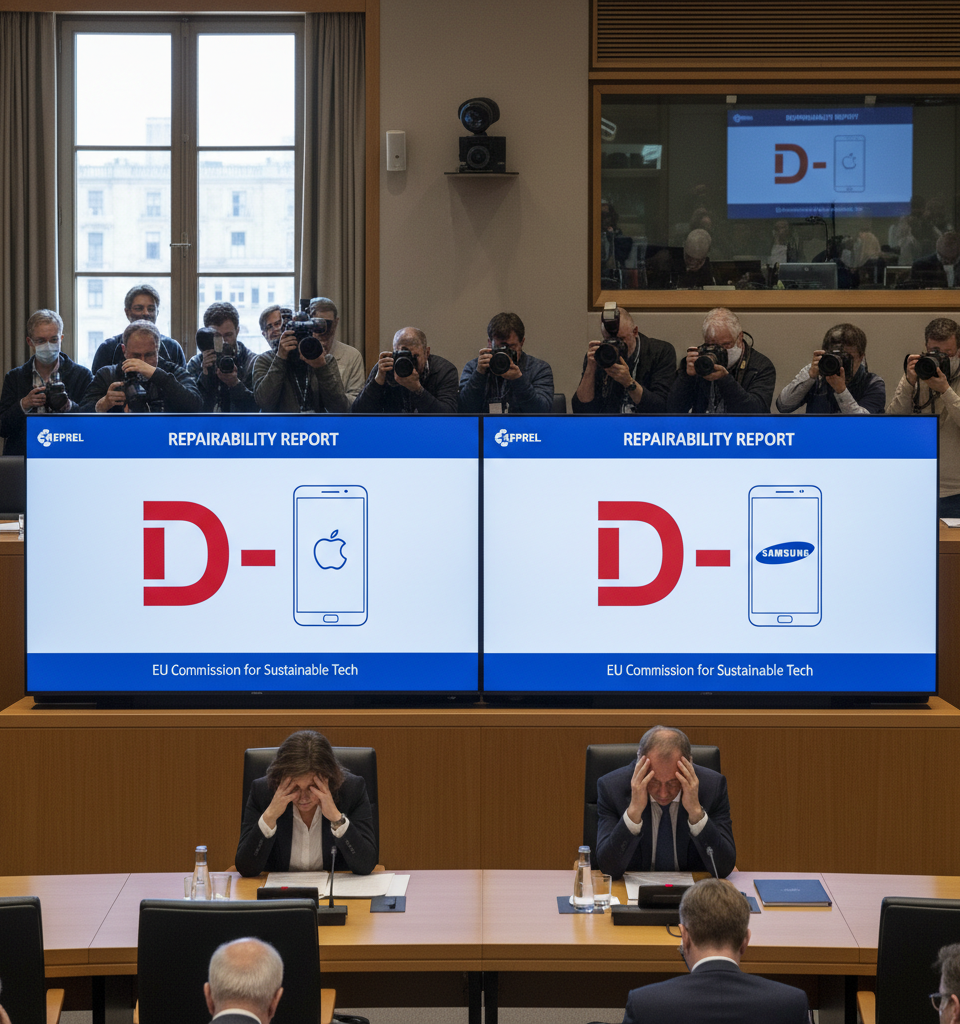
Brussels, Belgium – Major smartphone manufacturers Samsung and Apple have both received unimpressive 'D' and 'D minus' grades, respectively, in a new repairability assessment based on the European Union's stringent EPREL (European Product Registry for Energy Labelling) system. The critical report, released this week, highlights a pervasive issue within the consumer electronics industry: a perceived lack of commitment to product longevity and user-friendly repair. This comes as the EU intensifies its efforts to promote a circular economy and combat electronic waste.
The Urgency of Repairability in a Disposable Era
The findings are not merely a technical inconvenience but signal a pivotal moment in the ongoing debate between technological innovation and environmental responsibility. For years, consumer advocacy groups and environmental organizations have criticized smartphone manufacturers for designing devices that are notoriously difficult and expensive to repair, often leading to premature obsolescence and a burgeoning e-waste crisis. The EU's EPREL system, initially designed for energy efficiency labeling, is now being leveraged to provide a transparent, standardized metric for repairability, empowering consumers and applying pressure on industry giants to change their practices.
Dissecting the Grades: Specific Deficiencies Revealed
The report, which analyzed various aspects of device design affecting repair, pinpointed several key areas where Samsung and Apple's offerings fell short. While specific models were not individually named in the initial summary, the 'D' and 'D minus' grades broadly indicate challenges ranging from limited availability of spare parts and complex internal designs requiring specialized tools, to glued-down components making battery and screen replacements arduous and costly. These factors significantly elevate the financial burden on consumers seeking repairs, often pushing them towards purchasing new devices rather than extending the life of their existing ones. This contrasts sharply with consumer demand for more sustainable products and the 'right to repair' movement gathering momentum globally.
Industry Ripple Effects: A Shift in Design Philosophy?
The low scores are poised to send ripples through the competitive smartphone market. While Samsung and Apple dominate global sales, accounting for a significant portion of the market share, increased regulatory scrutiny and growing consumer awareness could force a re-evaluation of product design philosophies. Smaller manufacturers or those with historically better repairability scores might seize this opportunity to differentiate themselves. Furthermore, the report could accelerate the development of third-party repair networks, although these often face hurdles regarding parts availability and software locks from original equipment manufacturers.
Expert Commentary: The Inevitable Push for Change
Industry analysts are not surprised by the findings. Dr. Lena Schmidt, an environmental technology expert, commented, "For too long, manufacturers have reaped the benefits of planned obsolescence, prioritizing sleek aesthetics and proprietary components over functionality and longevity. The EU's EPREL system is a crucial step towards leveling the playing field and forcing these companies to internalize the environmental costs of their design choices." Another analyst, Mr. David Chen, noted, "While these grades are a public relations challenge, they are also an impetus for innovation. Companies that can genuinely improve repairability without compromising performance will gain a significant competitive edge in the evolving regulatory landscape."
Looking Ahead: Stricter Regulations and Consumer Empowerment
This report is likely just the beginning. The European Commission is actively exploring further legislative measures, including mandatory repairability scores on product packaging and requirements for manufacturers to provide spare parts and repair manuals for a specified period. The 'right to repair' movement, fueled by such reports, is gaining traction beyond Europe, with legislative efforts emerging in the United States and other regions. Consumers, armed with transparent information, are expected to increasingly factor repairability into their purchasing decisions, potentially reshaping the multi-billion-dollar smartphone industry towards more sustainable and durable products.
The Path Forward: Balancing Innovation and Sustainability
The challenge for Samsung, Apple, and other tech firms will be to reconcile their pursuit of cutting-edge innovation with the imperative for environmental sustainability. This could involve modular designs, easier access to internal components, standardized parts, and public access to repair documentation and tools. The industry stands at a crossroads, with regulatory pressure and consumer demand converging to demand a paradigm shift towards products that are not only technologically advanced but also built to last and easily repairable, ultimately contributing to a more sustainable electronics ecosystem.