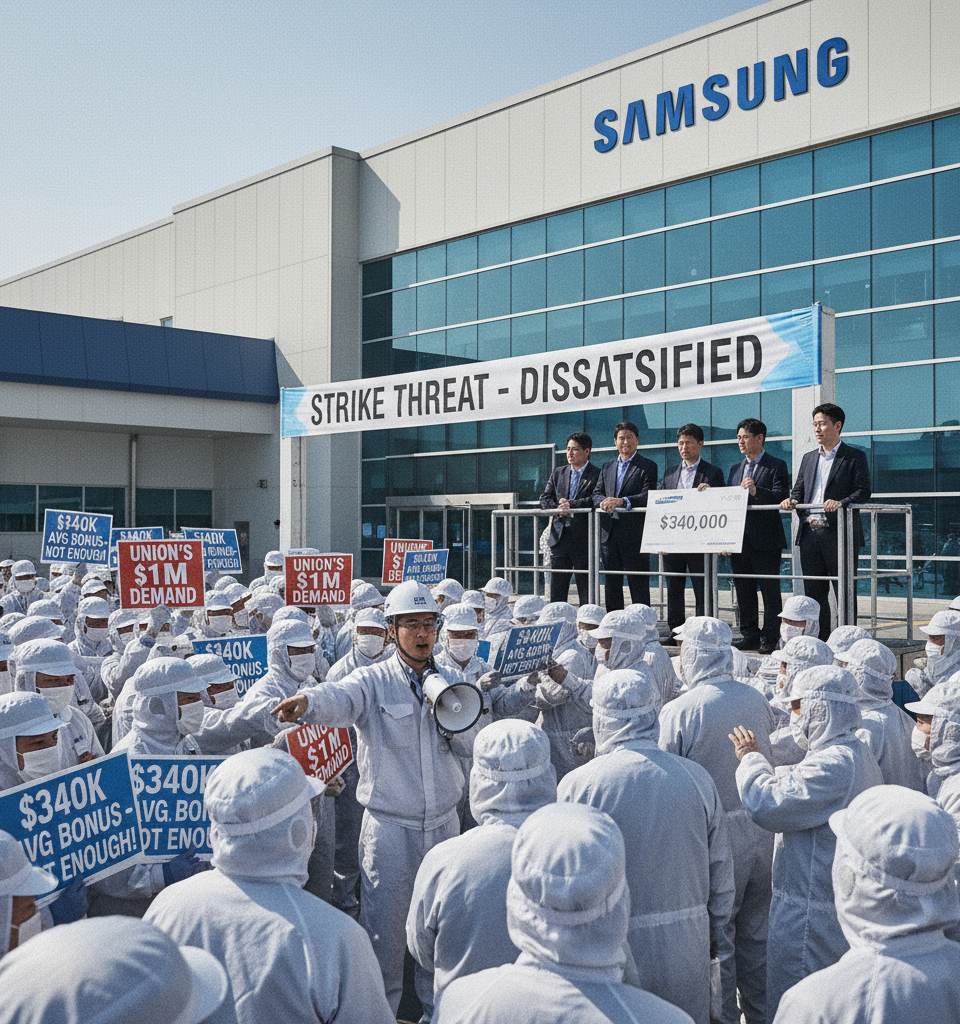
Samsung Electronics is reportedly preparing to disburse an average bonus of around $340,000 to its chip workers for the year, an offer that comes amidst intensifying labor negotiations and the looming threat of an unprecedented industrial action. The potential payout, first reported by Bloomberg on Thursday, is set against a backdrop of demands from a prominent union for significantly larger sums, with some staff potentially seeking bonuses up to $1 million, alongside an eighteen-day strike that could involve 45,000 employees.
This development highlights the growing assertiveness of labor unions within South Korea's technology giants, traditionally known for their robust, yet largely non-unionized, corporate cultures. The proposed strike, if it materializes, would mark a historic moment for the semiconductor industry, representing the largest walkout of its kind. Such a disruption at Samsung, a global powerhouse in memory chips and foundry services, carries substantial implications for worldwide electronics production and supply chains.
Compensation Details and Discrepancies
Leaked transcripts offer a granular view of the proposed compensation structure, revealing significant disparities across different divisions. Memory-line staff, critical to the production of high-demand components like DRAM and NAND flash, are reportedly being offered bonuses that could reach up to 607% of their base salaries, translating to approximately $477,000 for some individuals. Conversely, employees in the logic-chip division appear to be receiving substantially smaller incentives, with bonuses as low as 50% of their annual pay. This discrepancy underscores internal debates within Samsung regarding the valuation of different specialized roles and their respective contributions to the company's overall profitability.
The average bonus figure of $340,000 represents a significant investment by Samsung, yet it falls considerably short of the union's more ambitious demands. The union's push for certain employees to receive bonuses of up to $1 million reflects a strong belief in the value generated by these highly skilled workers, particularly given the strong performance and strategic importance of Samsung's semiconductor business.
Union Demands and Strike Threat
The specter of an 18-day strike by 45,000 Samsung employees elevates the stakes considerably. This scale of industrial action has no precedent in the semiconductor sector. The union's demands extend beyond just higher bonuses, likely encompassing broader improvements in working conditions, benefits, and overall compensation packages. The specific ultimatum of an 18-day walkout suggests a strategic move to exert maximum pressure on management, aiming to disrupt production long enough to force concessions without irrevocably damaging the company's long-term stability or market position.
Such a prolonged stoppage would inevitably lead to curtailed output at Samsung's fabrication plants, impacting the availability of critical components used across numerous industries, from consumer electronics and automotive to artificial intelligence and cloud computing. The timing of this dispute, amidst ongoing global demand for semiconductors, further amplifies its potential impact.
Broader Industry and Economic Implications
Samsung's role as a cornerstone of the global semiconductor supply chain means that any significant disruption stemming from labor unrest could have ripple effects across the technology ecosystem. Customers relying on Samsung for memory chips and custom logic designs could face delivery delays, increased costs, and the need to seek alternative suppliers – a challenging prospect given the highly specialized nature of these components and the industry's concentrated production base.
The incident also serves as a bellwether for labor relations within the broader South Korean chaebol structure. Successful union action at Samsung could embolden workers at other large conglomerates to demand better terms, potentially ushering in a new era of labor negotiations in a country traditionally known for relatively subdued union activity in its major tech firms. This could reshape competitive dynamics and operational costs for South Korean industries on a global scale.
Forward Outlook
As of today, the situation remains fluid, with ongoing negotiations between Samsung management and union representatives. The key question revolves around whether the current bonus offer will be sufficient to avert the threatened strike, or if the union will push forward with its demands, including the possibility of a $1 million bonus for some workers and the full 18-day walkout. The outcome of these discussions will not only determine the immediate compensation for thousands of workers but also set a crucial precedent for labor relations in one of the world's most critical industries. All eyes are now on the ongoing dialogue, as the industry holds its breath to see if a historical strike can be avoided. The next few weeks are critical in shaping both Samsung's immediate operational future and the wider semiconductor market dynamics.