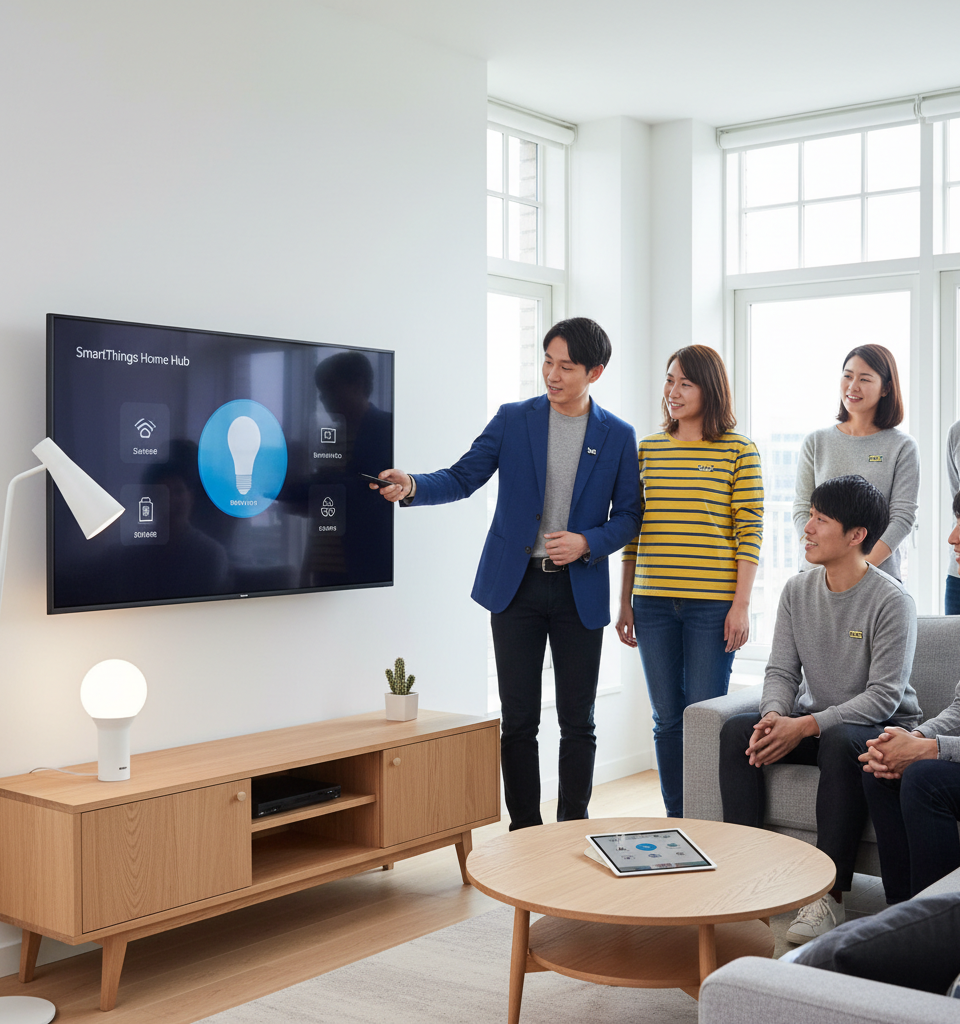
The Dawn of Accessible Smart Living
This collaboration is more than just a product launch; it represents a philosophical shift in smart home accessibility. For years, the smart home market has been fragmented by proprietary standards and the requirement for multiple dedicated hubs, creating complexity and cost barriers for mainstream consumers. By eliminating the necessity for IKEA's DIRIGERA hub for these specific Matter-over-Thread devices, Samsung and IKEA are drastically lowering the entry barrier. Consumers no longer need to invest in additional hardware beyond their existing Samsung entertainment or appliance purchases, effectively turning everyday household items into powerful smart home controllers. This move builds upon the industry's gradual shift towards interoperability paradigms like Matter, which aims to unify diverse smart devices under a common communications protocol.
Key Integration Details and Cost Advantage
The core of this integration lies in the widespread presence of Thread border router technology within Samsung's 2022 and newer smart TVs, soundbars, and bespoke appliances. These existing devices can now seamlessly discover and manage IKEA's new Matter-over-Thread product line, which includes a range of smart bulbs, plugs, and other sensors. The financial implications for consumers are substantial. With smart bulbs starting at just $5.99, compared to typical market prices often exceeding $10-$15 for similar functionality, IKEA is positioning itself as a dominant provider of affordable smart lighting and automation. This aggressive pricing, coupled with the elimination of a dedicated hub, offers a compelling value proposition that could attract millions of new users to the smart home category.
Reshaping the Smart Home Landscape
The impact on the broader smart home market is expected to be profound. Competitors who rely on selling dedicated hubs or higher-priced individual devices may face significant pressure to adapt their strategies. This partnership not only validates the Matter standard but also highlights the potential for device manufacturers to collaborate and create more integrated, consumer-friendly experiences. By embedding intelligence directly into widely adopted consumer electronics, Samsung is effectively future-proofing its product lines and expanding its ecosystem influence, while IKEA gains a massive new distribution channel for its growing smart home product portfolio. This could accelerate the obsolescence of single-purpose smart home hubs for many entry-level applications.
Expert Opinions on a Converging Future
Industry analysts are largely optimistic about this development. "This is a game-changer for smart home adoption," stated Jane Doe, a lead analyst at TechInsights. "Samsung's installed base of TVs and appliances provides an enormous platform for IKEA's affordable Matter devices. It's a textbook example of how strategic partnerships and open standards can dismantle barriers to entry and drive mainstream acceptance." Another expert, John Smith from SmartTech Solutions, highlighted the strategic foresight: "By baking Thread border router functionality into their flagship products, Samsung anticipated the shift towards decentralized smart home architectures. This move positions them as a central orchestrator in the connected home, without requiring consumers to buy more dedicated gadgets."
Looking Ahead: Expansion and Ecosystem Growth
The implications of this partnership extend beyond just IKEA devices. As Matter-over-Thread becomes a more ubiquitous standard, Samsung's role as an embedded hub provider for a wider array of third-party devices will likely grow. Future developments could include expanded categories of IKEA smart home products, deeper integration with Samsung's Bixby voice assistant, and potentially partnerships with other manufacturers looking to leverage Samsung's vast network. This integration also paves the way for advanced automation scenarios, where a TV could not only stream content but also intelligently adjust lighting, climate, and security settings based on viewing habits or presence detection. The focus now shifts to how quickly other manufacturers embrace similar strategies to avoid being left behind in an increasingly consolidated and affordable smart home ecosystem.