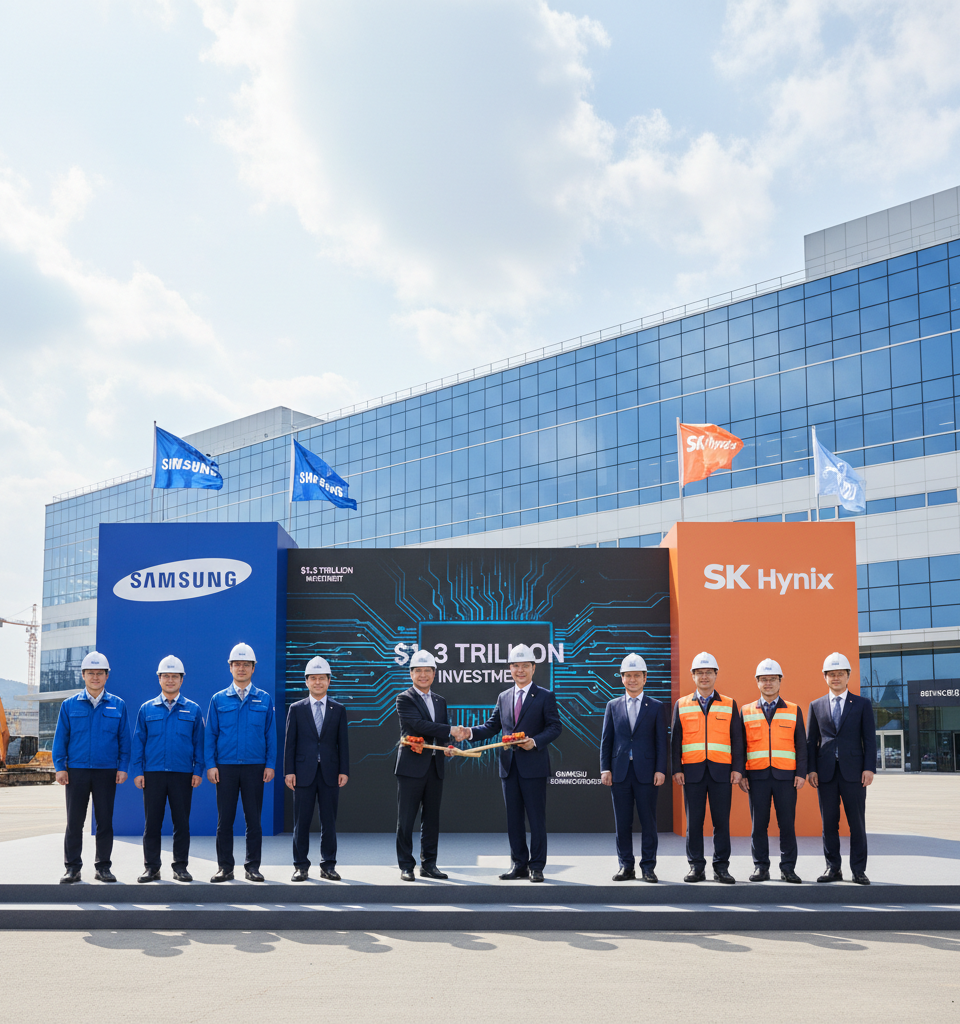
South Korean industrial giants Samsung Electronics Co. and SK Hynix Inc. are reportedly eyeing an unprecedented joint investment totaling approximately $1.3 trillion over the next decade to establish a robust semiconductor manufacturing hub in the Gwangju area. This ambitious undertaking is expected to see each company construct between four and five advanced fabrication facilities, significantly expanding the nation's capacity in a strategically vital sector.
This colossal investment underscores a national imperative to solidify South Korea's position at the forefront of the global semiconductor industry, a sector increasingly critical for economic growth and national security. The proposed expansion in Gwangju follows a growing global trend of governments and major corporations committing substantial resources to onshore and expand chip production capabilities amidst supply chain volatilities and intensifying technological competition. Such a move would not only create a new industrial complex but also reinforce South Korea's existing strongholds in semiconductor research, development, and manufacturing.
The investment, estimated at a staggering $1.3 trillion, is slated to be disbursed over a ten-year period, indicating a long-term strategic commitment rather than a short-term response. The construction of multiple fabs by both Samsung and SK Hynix in Gwangju would transform the regional landscape, creating thousands of high-tech jobs and attracting ancillary industries. While specific timelines for groundbreaking and operation are yet to be formally announced, the sheer scale of the rumored investment signals an aggressive push to increase output of advanced memory and logic chips, which are essential components for everything from artificial intelligence to autonomous vehicles and consumer electronics.
For the semiconductor industry, this level of investment by two of its dominant players signals a strong belief in sustained, high demand for advanced chips. It could potentially reshape the competitive landscape, further entrenching Samsung and SK Hynix as primary global suppliers. The build-out of new facilities, particularly in a concentrated geographical area like Gwangju, is likely to foster a powerful ecosystem of suppliers, research institutions, and skilled labor, driving further innovation and efficiency within the South Korean semiconductor sector. This strategic move could also provide a buffer against future geopolitical disruptions by diversifying fabrication locations and increasing domestic production capacity.
Economic and Geopolitical Impact
The reported $1.3 trillion commitment is far more than a corporate expansion; it represents a significant national economic play. South Korea, already a global leader in semiconductor manufacturing, would see its dominance further cemented. The influx of investment and the creation of numerous high-skilled jobs would provide a substantial boost to the national economy, contributing to GDP growth and fostering technological self-reliance. From a geopolitical standpoint, increasing domestic production of advanced semiconductors reduces reliance on overseas production, enhancing national security and economic stability in an era of complex global relations.
Boosting Domestic Capabilities
The construction of four to five fabs by each company signifies a massive increase in production capacity. Samsung, an industry leader in both memory (DRAM and NAND) and logic (foundry) chips, and SK Hynix, a dominant force in memory semiconductors, would collectively produce a formidable volume of components. This surge in domestic output could mitigate future supply chain shocks, ensuring a more stable supply for South Korean and international technology companies. It also highlights an ongoing effort to localize critical technology processes and reduce vulnerabilities tied to global supply chains.
Future Outlook
Looking ahead, the successful execution of this vast investment will depend on numerous factors, including stable global demand for semiconductors, sustained government support through incentives and infrastructure development, and the availability of a highly skilled workforce. The long-term nature of the investment suggests a commitment to continuous technological advancement and the development of next-generation chip technologies. Should these plans materialize as reported, Gwangju is poised to become a critical nexus in the global semiconductor manufacturing network, anchoring South Korea's influential role in the digital economy for decades to come.