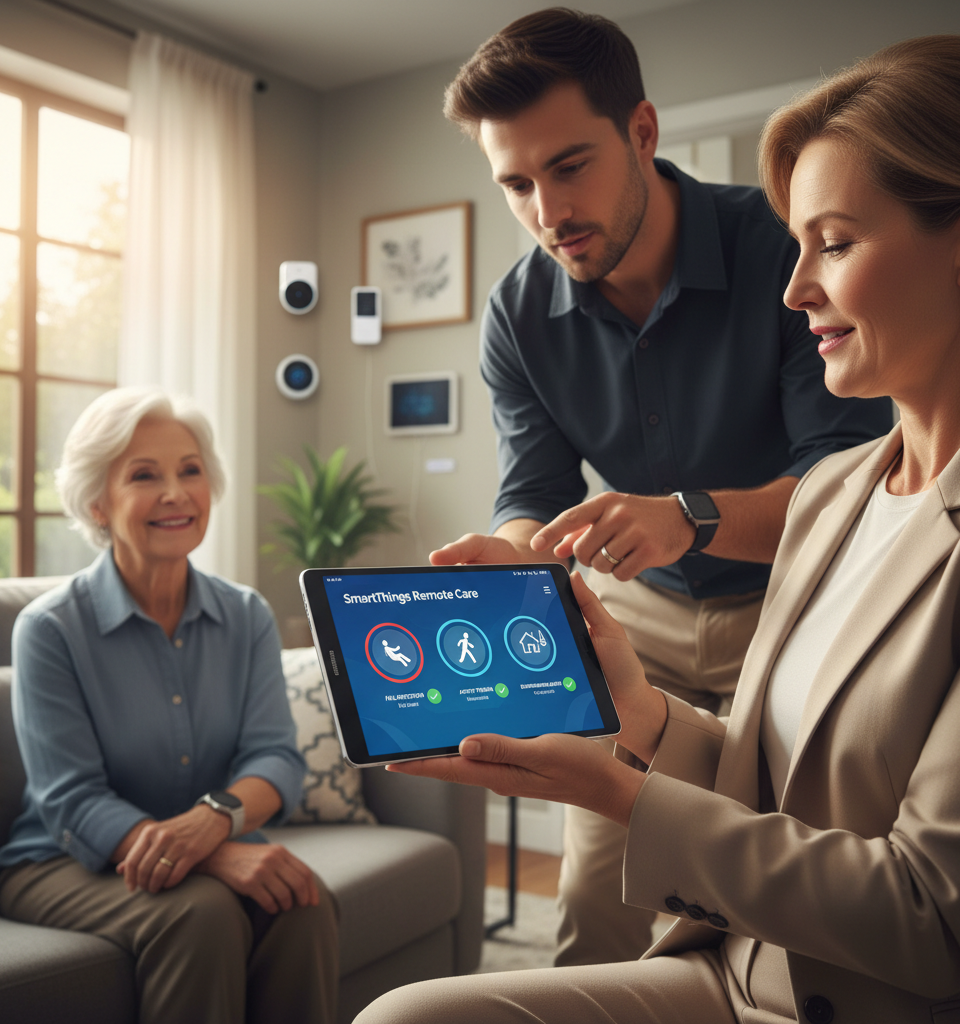
SEOUL, SOUTH KOREA – [Date] – Samsung Electronics today announced a groundbreaking expansion of its SmartThings platform, transforming its smart home ecosystem into a sophisticated remote care system specifically engineered for aging family members. This strategic update integrates an array of advanced functionalities, including fall detection through robot vacuum cameras, cognitive decline screening via behavioral pattern analysis, environmental safety alerts, and comprehensive activity tracking. The initiative not only augments Samsung's SmartThings offering but also positions the technology giant as a frontrunner in the burgeoning market for digital elder care solutions, empowering families with tools for enhanced peace of mind and proactive support.
The Growing Need for Digital Elder Care
The impetus behind Samsung's strategic pivot lies in the global demographic shift towards an aging population. According to the United Nations, the number of persons aged 65 years or over is projected to double to 1.6 billion by 2050. This surge necessitates innovative solutions for independent living and remote oversight, as traditional care models face increasing strain. Samsung's move addresses a critical market gap, offering a technological bridge for adult children to monitor the well-being of their elderly relatives without compromising their independence. The integration of AI and IoT into daily life has long been a promise; with this update, Samsung is delivering on that promise in a profoundly meaningful way.
Key Features and Technological Innovations
The enhanced SmartThings platform introduces several innovative features. Central to the offering is a sophisticated fall detection system, utilizing the cameras embedded in Samsung's robot vacuums to identify incidents and autonomously alert designated caregivers. Furthermore, the system employs advanced behavioral pattern analysis, powered by Galaxy AI, to screen for potential cognitive decline, flagging deviations from established routines. Environmental safety alerts notify families of potential hazards such as abnormal temperature changes, smoke, or gas leaks, leveraging connected sensors. Activity tracking, facilitated by wearables and smart home devices, provides insights into daily movement and sleep patterns. The update also incorporates millimetre-wave ambient sensing with local processing, ensuring privacy and real-time data analysis. Galaxy AI-powered routine creation further personalizes and optimizes care schedules.
Reshaping the Smart Home and Healthcare Landscape
This evolution of SmartThings is poised to significantly impact both the smart home and digital healthcare sectors. For the smart home industry, it validates the shift from convenience-centric features to essential, life-enhancing applications. It could spur other tech giants to invest more heavily in similar elder care functionalities, intensifying competition and innovation. In healthcare, Samsung's platform offers a preventive and monitoring tool that can potentially reduce emergency room visits, support telehealth initiatives, and provide valuable data for long-term care planning. Analysts estimate the global elder care market to reach nearly $2 trillion by 2027, with digital solutions playing an increasingly vital role. Samsung, with its deep penetration in consumer electronics, is uniquely positioned to capture a substantial segment of this market.
Expert Perspectives on Future Implications
Industry analysts have largely hailed Samsung's initiative as a strategic and socially impactful move. Dr. Anya Sharma, a leading analyst in digital health technology, commented, "Samsung's integration of AI-powered monitoring with everyday smart appliances establishes a new benchmark for proactive elder care. The ability to detect subtle changes in behavior and environment, coupled with the brand's ubiquitous presence, could significantly improve quality of life and reduce caregiver burden globally." She further notes the importance of a user-friendly interface and robust data privacy measures for widespread adoption. While privacy concerns remain a key consideration for such pervasive monitoring systems, Samsung emphasizes its commitment to user data protection through local processing and transparent data handling policies.
The Road Ahead: Future Developments and Broader Vision
Looking ahead, Samsung is expected to continuously refine and expand these elder care capabilities. Future iterations could involve deeper integration with local healthcare providers, predictive analytics for chronic disease management, and a broader array of biometric monitoring through next-generation wearables. The potential for partnerships with medical institutions and insurance providers also looms large, suggesting a comprehensive ecosystem that extends beyond the immediate family unit. Samsung’s ultimate vision appears to be the creation of a truly intelligent home that not only streamlines daily life but also actively safeguards the well-being and health of its inhabitants across all life stages, marking a significant evolution from mere connectivity to genuine care.