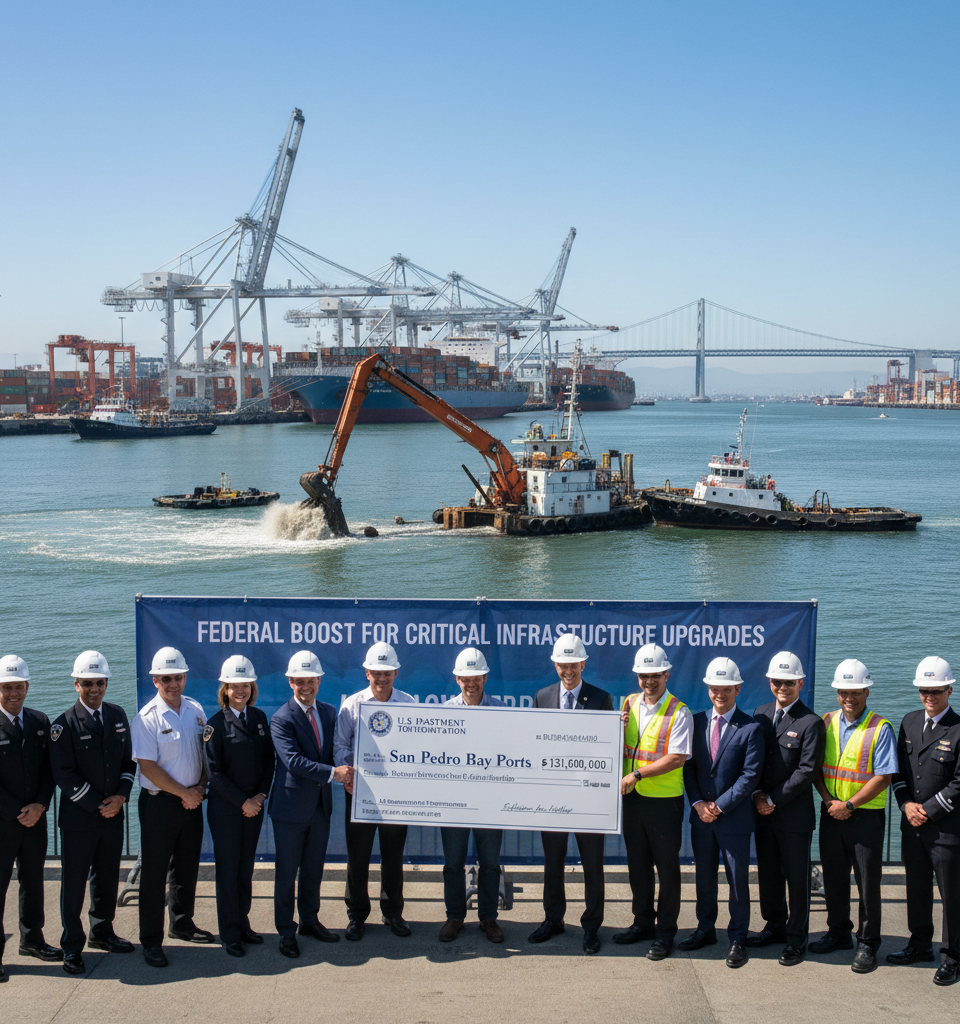
LOS ANGELES, CA – In a significant boost to national supply chain resilience and maritime commerce, the U.S. Army Corps of Engineers (USACE) has announced a record allocation of $131.8 million to the San Pedro Bay port complex. This substantial federal investment, confirmed recently, is earmarked for vital harbor maintenance, safety improvements, and various infrastructure projects, with a commanding $70 million specifically designated for the Port of Los Angeles. The funds underscore a federal commitment to sustaining and enhancing the operational capabilities of the busiest container port gateway in the Western Hemisphere.
Context and Strategic Importance
The San Pedro Bay port complex, comprising the Port of Los Angeles and the Port of Long Beach, serves as a critical artery for U.S. and global trade, handling approximately 40% of all containerized cargo entering the United States. Its efficient operation is paramount to the nation's economy, influencing everything from consumer goods availability to manufacturing supply chains. Decades of continuous operation, coupled with the ever-increasing size of modern container vessels, necessitate ongoing maintenance and strategic upgrades to maintain navigational depths, improve safety, and ensure compliance with environmental standards. This latest funding represents a vital injection to address these pressing needs, ensuring the complex remains competitive and capable of handling future trade volumes.
Key Allocations and Project Specifics
The $131.8 million appropriation distinguishes itself as the largest single allocation ever received by the San Pedro Bay complex from the USACE. Of this total, the Port of Los Angeles will receive $70 million, primarily for deep-draft navigation channel maintenance, ensuring that mega-ships can transit safely and efficiently. The remaining funds will likely be distributed between various projects across the complex, including dredging operations to remove accumulated sediment, repair of vital maritime infrastructure like breakwaters and wharves, and enhancements to aid navigational safety, such as lighting and buoy systems. These projects are fundamental to preventing bottlenecks, reducing transit times, and safeguarding vessels and port personnel.
Broader Industry and Economic Impact
This federal infusion will have a reverberating impact across the maritime and logistics sectors. By ensuring the deepest drafts and safest channels, the ports can accommodate the largest and most fuel-efficient container ships, leading to economies of scale for shipping lines and potentially lower shipping costs for importers. Improved infrastructure also translates to fewer delays, better schedule reliability, and enhanced throughput capacity, all of which are critical factors in mitigating supply chain disruptions. For the regional economy, the investment supports thousands of jobs directly and indirectly, through the execution of these projects and the continued, robust operation of the ports.
Expert Perspectives on Sustained Investment
Industry experts have long advocated for consistent federal investment in port infrastructure. Dr. Alan Goldberg, a prominent maritime economist, commented, "This substantial allocation is not just about fixing things; it's about investing in economic resilience. The San Pedro Bay ports are a linchpin of our national economy. Proactive maintenance and upgrades are far more cost-effective than reacting to failures and the resulting supply chain chaos." Port authorities also emphasize the collaborative nature of these projects, often requiring federal, state, and local partnerships to fund and execute complex engineering tasks that underpin global trade.
What Lies Ahead: Continuous Modernization
Looking ahead, the successful deployment of these funds will set the stage for further modernization efforts at the San Pedro Bay ports. While this record allocation addresses immediate concerns, port officials continuously plan for long-term growth and environmental sustainability. Future projects are expected to include further electrification of port equipment, expansion of rail infrastructure to reduce truck traffic, and the adoption of advanced digital solutions for cargo management. This ongoing commitment to infrastructure development is critical for the ports to maintain their competitive edge and continue to serve as a vital gateway for international commerce in an ever-evolving global trade landscape.
Conclusion: A Foundation for Future Prosperity
The $131.8 million federal grant represents more than just a financial handout; it is a strategic investment in the foundational infrastructure that underpins the U.S. economy. By fortifying the San Pedro Bay ports, the federal government is ensuring the continued flow of goods, supporting countless businesses, and securing the nation's position in global trade. This critical funding paves the way for a more robust, efficient, and resilient supply chain for years to come.