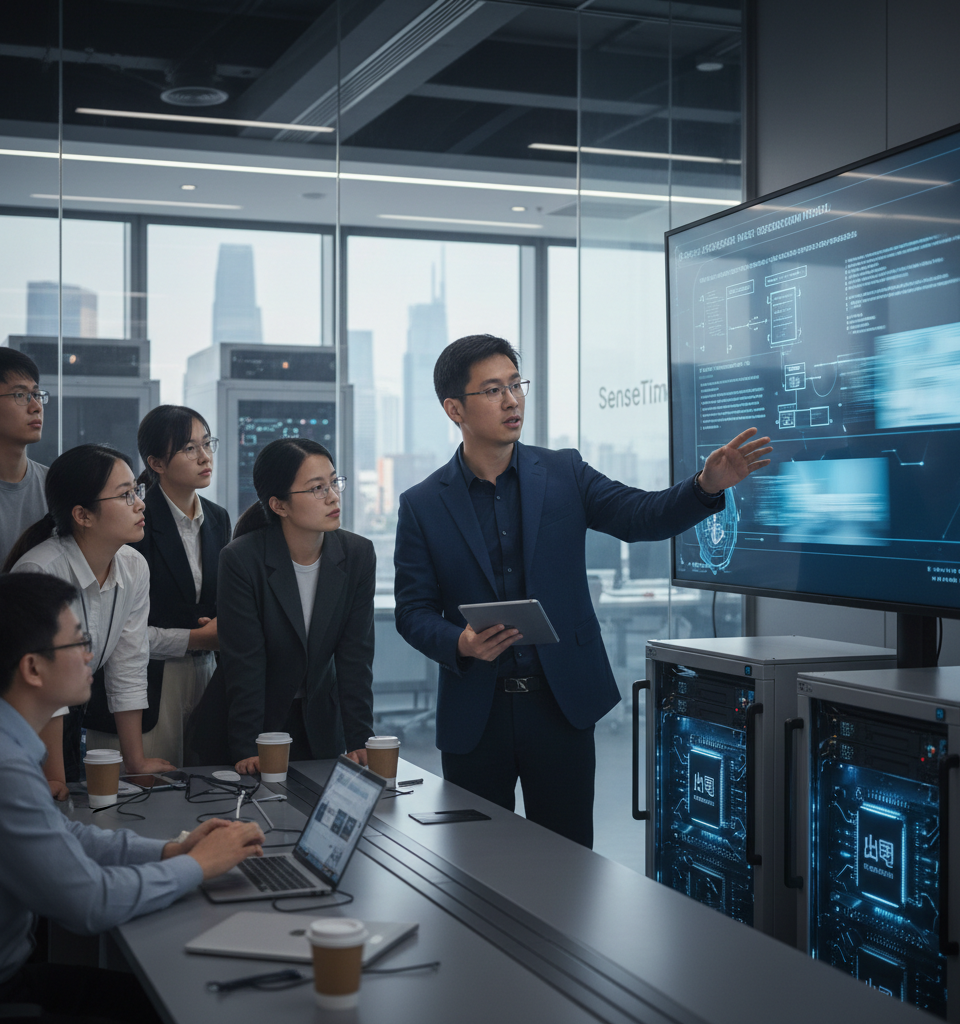
Shanghai, China – SenseTime, one of China's most prominent artificial intelligence companies, has introduced a new high-speed image generation model as it navigates stringent US export controls. The Hong Kong-listed firm publicly unveiled the model, which it claims is specifically optimized to run efficiently on Chinese-made semiconductors, underscoring a strategic shift towards domestic technological independence. This development, rooted in the company's commitment to open-source methodologies, highlights a significant response to geopolitical pressures limiting its access to advanced Western technology.
Geopolitical Backdrop and Strategic Imperative
SenseTime has been a focal point of US-China technological competition, having been placed on various US blacklists since 2019 due to alleged involvement in surveillance activities in Xinjiang. These sanctions have severely curtailed its ability to procure cutting-edge chips and software from American suppliers, including crucial components for its AI development. In response, Chinese tech giants like SenseTime are increasingly investing in domestic hardware and software ecosystems, seeking to reduce reliance on foreign components and strengthen national technological resilience.
The New Model: Speed and Domestic Optimization
SenseTime's latest image generation model is touted for its impressive speed, promising a transformative experience for users and developers. While specific performance benchmarks against international competitors like OpenAI's DALL-E or Midjourney were not immediately released, the company emphasized its optimization for Chinese-manufactured chips. This focus suggests a concerted effort to maximize performance within the constraints imposed by sanctions, potentially leveraging specialized architectural designs suitable for existing domestic hardware capabilities. The open-source nature of the model is also a key differentiator, inviting broader collaboration and development within the Chinese AI community.
Broader Industry and Market Implications
This move by SenseTime carries significant implications for both the global and Chinese AI markets. For the domestic market, it could catalyze further investment and innovation in Chinese chip design and manufacturing, creating a more robust indigenous hardware ecosystem. Globally, it reinforces the growing bifurcation of the AI landscape, with distinct innovation pathways emerging in China versus the West. The success of SenseTime's open-source strategy could also influence other sanctioned Chinese firms to adopt similar models, fostering a more self-reliant technological stack within the country. The AI software market in China was estimated at ¥120 billion (approximately $16.5 billion USD) in 2023, and initiatives like this are expected to fuel further domestic growth.
Expert Analysis: A Necessity-Driven Innovation
Industry experts view SenseTime's strategy as a pragmatic and necessity-driven innovation. "Given the geopolitical restrictions, SenseTime's pivot to open-source and domestic chip optimization is not just a choice, but a survival strategy," commented Dr. Lee Wen-Chuan, an AI policy analyst at the East Asian Institute. "It allows them to maintain relevance and continue innovating, albeit on a potentially different trajectory than their Western counterparts. The challenge will be scaling this model to compete with the vast resources and advanced fabrication capabilities available to global leaders." Analysts suggest that while initial performance might lag some Western high-end models, the long-term strategic benefits of self-reliance could outweigh initial compromises.
The Road Ahead: Self-Sufficiency and Global Competition
Looking ahead, SenseTime's commitment to open-source development and domestic hardware integration is likely to deepen. The company will face continued pressures to demonstrate the scalability and competitive performance of its models, especially as global AI development accelerates. Success in this endeavor could position SenseTime, and by extension, China's AI sector, as a formidable force capable of independent innovation. Upcoming developments will likely include further partnerships with Chinese chip manufacturers and more rigorous benchmarks demonstrating the model's capabilities in real-world applications. The push for data center AI chips within China, with companies like Huawei and Biren Technology making strides, will be crucial in supporting SenseTime's ambitions.