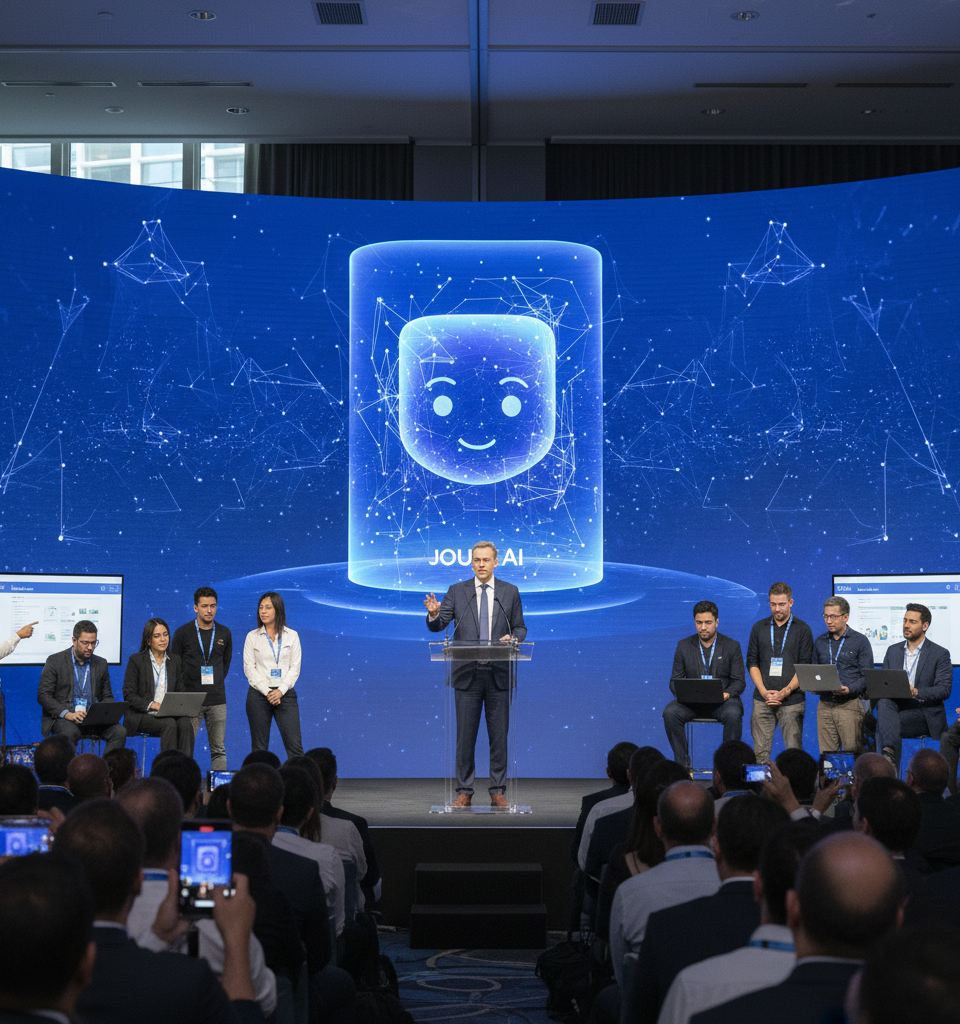
This week at the SAP Sapphire conference, CEO Christian Klein initiated his keynote address with a provocative question that resonated deeply throughout the tech industry: "Will SAP be a software company in the future?" The query, unusual for the leader of Europe's most valuable technology firm, immediately telegraphed the profound strategic reevaluation underway within the Walldorf, Germany-based multinational. The semi-official answer arrived later in the presentation, delivered by SAP's proprietary AI assistant, Joule, which declared that SAP is "becoming an AI company." This statement, coupled with recent market dynamics, indicates a transformative period for the enterprise software giant as it navigates the burgeoning era of artificial intelligence.
Context and Background
SAP, historically synonymous with enterprise resource planning (ERP) software, has built its vast multi-billion dollar empire on providing mission-critical business applications to some of the world's largest organizations. For decades, its core identity has been unequivocally rooted in software development and licensing. However, the rapid ascent of AI and machine learning has presented both an existential challenge and an unparalleled opportunity for established tech titans. Klein's public introspection reflects a broader industry trend where traditional software providers are racing to integrate AI at every layer of their offerings, often redefining their very business models in the process. This strategic pivot is not merely an enhancement but a fundamental shift, impacting product development, customer engagement, and competitive positioning.
Key Details and Strategic Imperatives
The CEO's leading question and Joule's response were not merely rhetorical flourishes; they underscore SAP's aggressive push into integrating generative AI across its extensive portfolio. The company unveiled a slew of AI-powered innovations at Sapphire, emphasizing "Business AI” – a framework designed to embed intelligence directly into business processes like supply chain management, finance, and human resources. SAP announced plans for a significant investment in AI capabilities, including partnerships with leading AI firms and internal research and development efforts. For instance, the company recently committed over $1 billion to AI startups through its Sapphire Ventures arm. This proactive stance aims to ensure SAP's solutions remain cutting-edge and essential, preventing erosion by nimble AI-native competitors.
Industry and Market Impact
SAP's public introspection and subsequent AI shift send clear signals across the enterprise software landscape. Competitors like Oracle, Salesforce, and Microsoft are all similarly investing heavily in AI, creating an arms race for intelligent enterprise solutions. SAP's assertive move has been met with a largely positive response from investors and analysts, who recognize the imperative for incumbent software providers to adapt.
While the immediate impact on revenue models – traditionally reliant on licensing and maintenance – remains to be fully seen, the market has interpreted SAP's AI commitment as a necessary and potentially lucrative evolution. SAP's stock performance over recent months, despite broader market fluctuations, suggests investor confidence in its strategic direction, effectively answering Klein's question with an implicit affirmation of its continued relevance, albeit with an evolving identity.
Expert Perspective
Industry analysts widely commend SAP’s strategic clarity. "Klein's candor, though startling, serves as a powerful declaration of intent," noted Sarah Harding, a principal analyst at Enterprise Tech Insights. "SAP cannot afford to be complacent; the future of enterprise applications is inextricably linked with AI. Their pivot, while ambitious, is absolutely critical for long-term relevance against cloud-native AI innovators." Other experts highlight the challenges of integrating AI without compromising the stability and reliability that clients expect from SAP's core ERP systems. Integrating sophisticated AI models into complex, mission-critical systems requires significant R&D investment and a careful approach to data privacy and ethical considerations, areas where SAP aims to differentiate itself.
What's Next for SAP
The road ahead for SAP involves sustained investment in AI research, aggressive talent acquisition in AI specializations, and a continuous push for embedding AI deeply into every product line. Key upcoming developments include the rollout of enhanced Joule capabilities across more SAP applications, further ecosystem partnerships with AI innovators, and a concentrated effort to educate its vast customer base on the practical benefits and deployment strategies for its new AI-driven offerings. The ultimate measure of success will be how effectively SAP can translate its AI ambitions into tangible business value for its clients, ensuring its position not just as a software provider, but as a leading enabler of intelligent enterprises in the decades to come.
This evolution means SAP will fundamentally remain a software company, but one where AI is no longer an add-on, but the very core of its product functionality and value proposition. The market will continue to scrutinize its execution and the financial returns generated by this significant strategic shift.