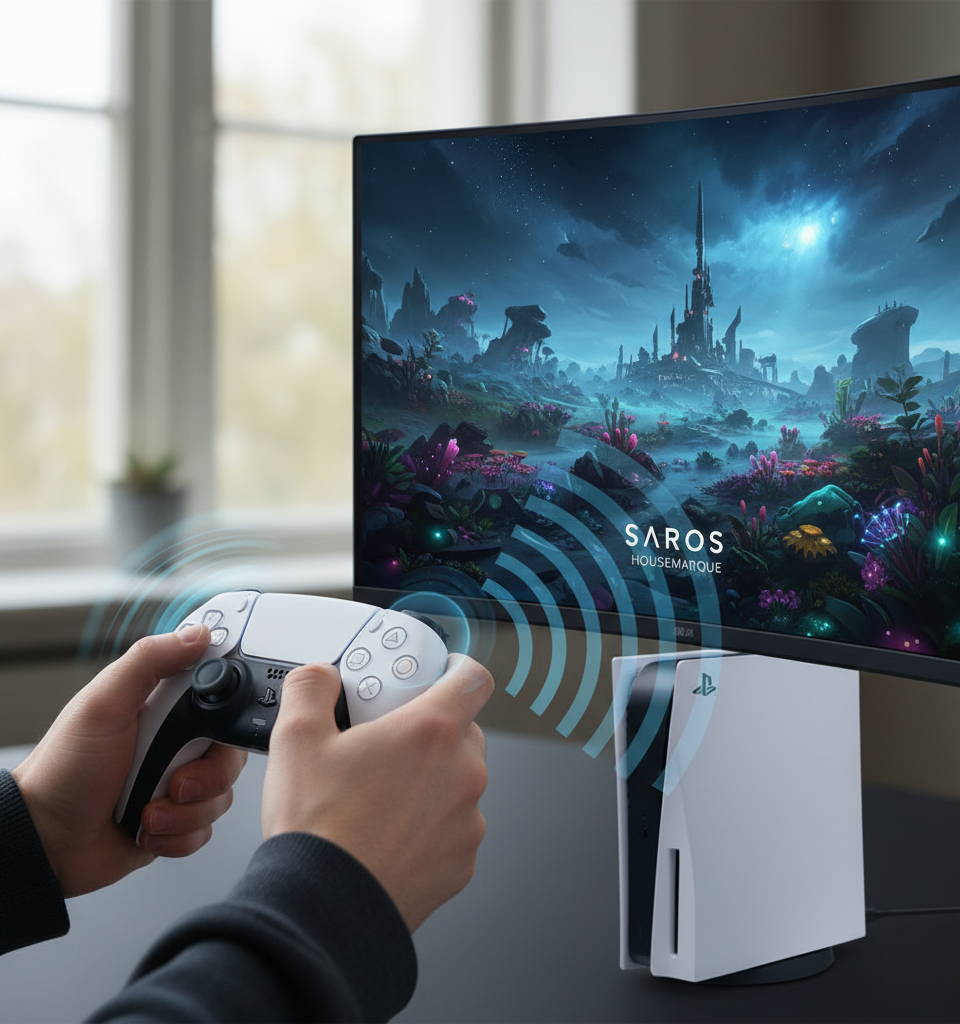
Housemarque, the Finnish development studio celebrated for its critically acclaimed PlayStation 5 exclusive Returnal, has unveiled significant details about its upcoming title, Saros. The new game is poised to become a showcase for the PS5’s immersive technologies, specifically its DualSense controller’s nuanced haptic feedback and the console’s sophisticated 3D audio engine. This strategic decision by Housemarque signals a concerted effort to push the boundaries of sensory immersion in video games, potentially setting a new standard for how developers leverage Sony's proprietary hardware.
Historical Context and Industry Evolution
The integration of advanced haptics and spatial audio in gaming has a history marked by incremental improvements. While haptic feedback has been a standard feature in controllers for decades, the DualSense controller, launched with the PlayStation 5 in November 2020, marked a significant leap forward. Its finely tuned actuators allow for incredibly precise and varied sensations, from the rumble of an alien landscape to the specific feel of individual raindrops. Similarly, 3D audio, processed through the PS5's Tempest Engine, transcended traditional surround sound by creating highly localized and dynamic soundscapes. Despite these innovations, many developers have, to date, only scratched the surface of their full potential, incorporating them as novelties rather than fundamental gameplay pillars. Housemarque's previous success with Returnal, which demonstrated early but impactful uses of these features, positions them uniquely to headline this new wave of immersion.
Key Technical Details and Design Philosophy
Sources close to the development of Saros indicate that Housemarque's design philosophy places these immersive technologies at the very core of the gameplay experience. For instance, the haptic feedback will not merely vibrate but will convey intricate details such as the material of a surface being walked on, the precise impact of different weapon types, or even subtle environmental effects like wind currents. The DualSense’s adaptive triggers, which can vary resistance based on in-game actions, are also expected to play a crucial role, mimicking the recoil of a firearm or the tension of drawing a bow. On the audio front, Saros plans to utilize the PS5's 3D audio to provide unprecedented directional cues, allowing players to pinpoint enemy locations or environmental events with greater accuracy, thereby enhancing tactical depth and atmospheric presence. "We are building gameplay experiences around what these technologies can offer, not just adding them as an afterthought," stated a lead designer involved with Saros development, emphasizing the foundational role of haptics and 3D audio.
Broader Industry and Market Impact Should Saros succeed in its ambitions, its impact on the broader gaming industry could be substantial.
A compelling example of these technologies woven into the fabric of a highly-rated game could inspire other major studios to invest more heavily in their implementation. This, in turn, could drive increased consumer demand for games that fully exploit the PS5's unique features, potentially influencing future console hardware design and software development cycles across the industry. Currently, the percentage of PS5 titles fully leveraging advanced haptics and 3D audio remains relatively low compared to the total game library, presenting a significant opportunity for market differentiation. Expert analysts project that successful showcases like Saros could increase the average development budget allocation for these features by 10-15% over the next three years.
Expert Perspectives Industry analysts and game development veterans largely concur that the full potential of the DualSense and 3D audio has yet to be realized.
"Housemarque has a history of technical excellence and innovative gameplay," comments Maya Singh, a senior analyst at Digital Frontier Group. "If Saros truly delivers on its promise, it could serve as a powerful example for other developers, illustrating how these features can transcend novelty and become fundamental to game design. This could reignite interest in creating truly immersive, system-specific experiences rather than prioritizing cross-platform compatibility above all else." This sentiment suggests that while developers often opt for broad compatibility, titles that push hardware boundaries can define generations.
The Path Forward and Future Implications
Looking ahead, the success of Saros will be a critical litmus test for the enduring relevance and widespread adoption of these advanced sensory technologies. Should the game receive critical acclaim for its immersive qualities, it could usher in an era where sophisticated haptic feedback and precise 3D audio are no longer niche features but core components expected by players. This would not only deepen the immersive qualities of future games but also solidify the PlayStation 5's position as a console capable of delivering truly next-generation sensory experiences. Furthermore, it could spur innovation from peripheral manufacturers and sound engineering firms, leading to even more advanced and accessible audio-visual solutions for players worldwide. The industry will be closely watching to see if Saros truly becomes the catalyst for a new standard in interactive entertainment.