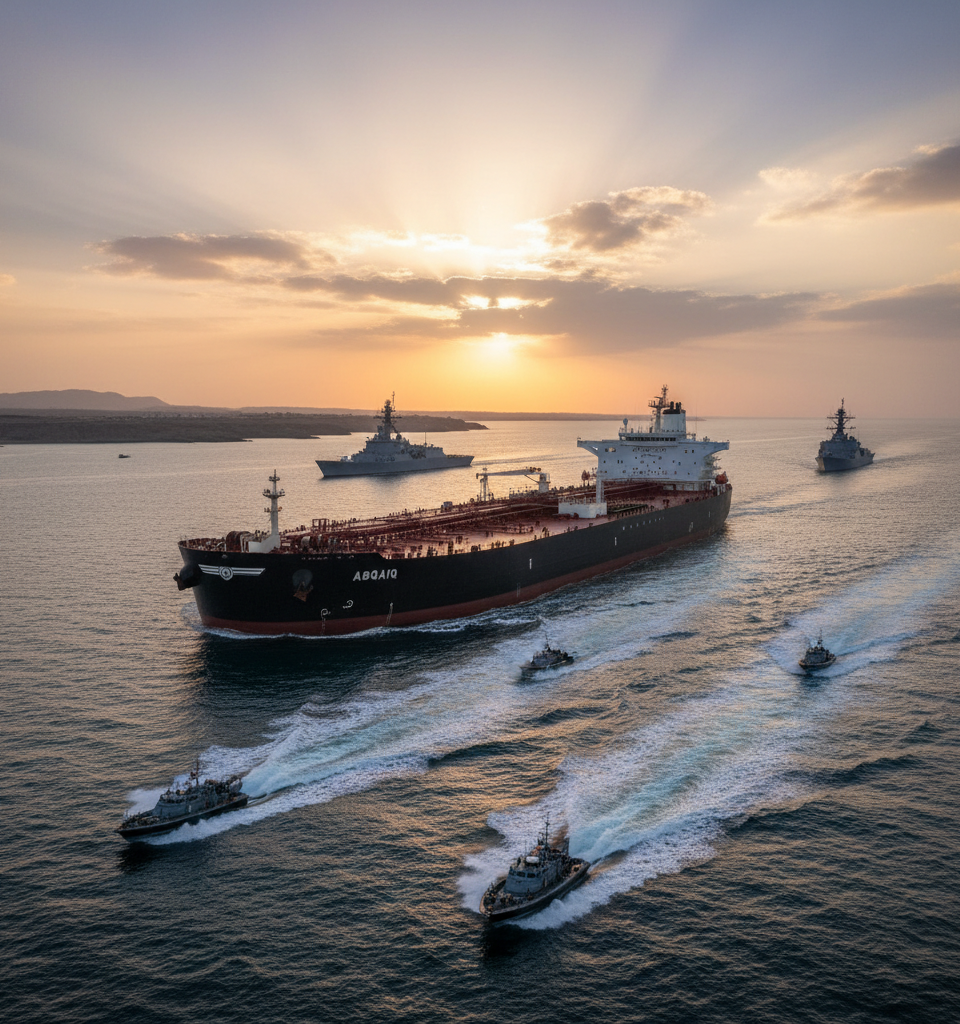
**Riyadh, Saudi Arabia – ** – In a move set to reverberate across global energy markets, Saudi Arabia has announced an unprecedented increase in the official selling price (OSP) for its flagship Arab Light crude to Asian customers, setting a new record premium. This significant price hike reflects the escalating geopolitical risk in the Persian Gulf, where a broadening conflict and persistent threats from Iran regarding the Strait of Hormuz are significantly tightening crude supplies and driving market anxiety to new heights.
This decision underscores a stark reality: the persistent instability in the region, particularly the expanding conflict and heightened security concerns around critical shipping lanes, is directly impacting the economics of oil supply. For December loadings, Saudi Aramco, the state-owned oil giant, raised the OSP for Arab Light crude to Asia by an additional $2.00 per barrel, pushing its premium over the Oman/Dubai benchmark to an all-time high of $9.80 per barrel. This surpasses the previous record set just last month, signaling a sustained and intensifying market premium for reliable Middle Eastern crude.
Geopolitical Undercurrents and Supply Security
The rationale behind this aggressive pricing strategy is multifaceted, deeply rooted in the current geopolitical flux. The Persian Gulf, which accounts for roughly one-third of the world's seaborne oil trade, has been a crucible of tensions. Reports of naval skirmishes, drone attacks, and intensified rhetoric between regional powers have created a volatile environment. Crucially, Iran's reiterated warnings about its capacity to close the Strait of Hormuz – a choke point through which approximately 20% of the world's daily oil consumption passes – are injecting an acute risk premium into every barrel originating from the region. Buyers, particularly in Asia, are increasingly prioritizing supply security, a factor Saudi Arabia is now heavily monetizing.
Historically, Saudi Arabia has meticulously balanced market share with price stability. However, the current landscape appears to have shifted this calculus. With global oil inventories remaining relatively tight and demand, particularly from China and India, showing resilience, any perceived threat to supply can trigger substantial price movements. This record premium signals Riyadh's assessment that the market is willing to bear higher costs for guaranteed supply amidst escalating regional instability, even as OPEC+ discussions about future production levels continue to loom.
Market Impact and Regional Implications
The immediate impact of this price adjustment will be felt most acutely by Asian refiners, who rely heavily on Middle Eastern crude. Countries like China, India, Japan, and South Korea, which are among the world's largest oil importers, will see their feedstock costs significantly rise. This could translate into higher consumer fuel prices across the continent, potentially stoking inflationary pressures and impacting manufacturing costs. The premium also widens the differential between crude grades, potentially making non-Middle Eastern crude, despite higher freight costs, more attractive for some buyers, though overall global supply remains constrained.
Moreover, the move reflects a broader market re-evaluation of Middle Eastern crude's value proposition. As a key swing producer and guardian of significant spare capacity, Saudi Arabia's pricing decisions are closely watched. This record OSP sends a clear signal that the kingdom believes the current geopolitical risk is not transitory but a fundamental component of the contemporary oil market, demanding a higher premium for the reliability it offers in a tumultuous region. Analysts suggest that smaller, independent refiners might struggle more than state-backed entities to absorb these elevated costs.
Expert Insights and Strategic Calculations
Energy market analysts are largely concurring with the Saudi assessment of heightened risk. "This isn't just about supply and demand; it's about the 'fear premium' baked into every barrel," commented Dr. Eleanor Hughes, a Senior Energy Strategist at Global Insight Partners. "Saudi Arabia is leveraging its strategic position and its reputation as a reliable supplier in a period of extreme geopolitical fragility. The threat to the Strait of Hormuz is not new, but the current context of a broadening conflict makes it a much more potent factor than in previous years." She further noted that the willingness of Asian buyers to accept such a high premium underscores their profound concern over energy security.
Another perspective from Mr. Kenji Tanaka, Head of Asia Energy Sector Research at Pacific Rim Securities, suggests that "Riyadh is also sending a message to the broader market and perhaps to geopolitical actors: the cost of instability in the Gulf directly translates to economic pain. This is a commercial decision with significant strategic implications, reinforcing the critical importance of secure shipping lanes." The OSP increase, therefore, is not merely a reflection of market conditions but a strategic maneuver in a complex geopolitical chess game.
The Unfolding Future of Oil Security
Looking ahead, the trajectory of oil prices and premiums will hinge critically on the de-escalation or further intensification of conflicts in the Persian Gulf. Any direct disruption to shipping through the Strait of Hormuz, even temporary, could trigger an unprecedented surge in global oil prices, potentially pushing Brent crude well into triple-digit territory. Conversely, a diplomatic breakthrough or a significant reduction in regional tensions could see these premiums subside.
The long-term implications include increased investment in alternative shipping routes and a renewed global push for energy diversification, though these are multi-year endeavors. For the immediate future, Asian importers will continue to operate with tighter margins and heightened vigilance, acutely aware that the price of their energy security is now at an all-time high, directly influenced by the escalating drumbeat of conflict in the Gulf. The December OSP sets a precedent, indicating that the era of inexpensive and utterly secure Middle Eastern oil may be temporarily behind us, replaced by a new paradigm of risk-adjusted premiums and volatile market dynamics.