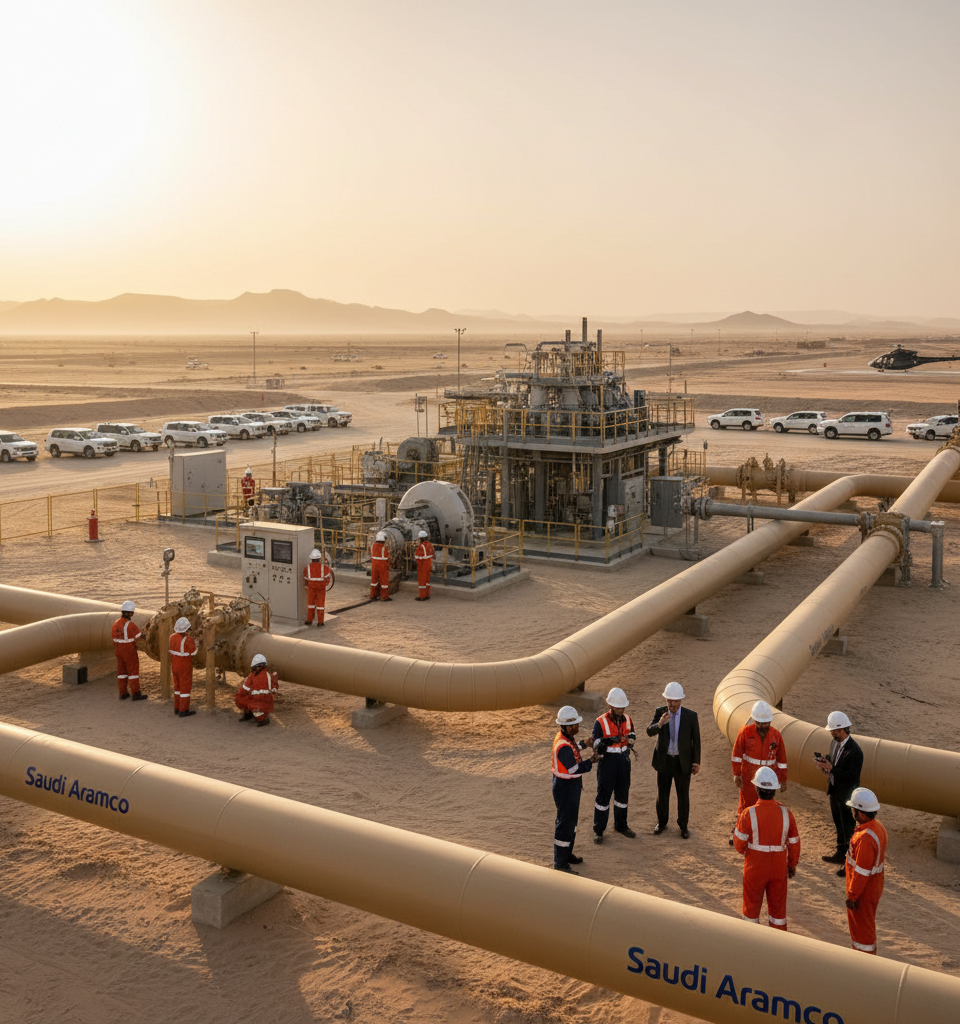
Saudi Aramco, the Kingdom's national oil company, announced robust first-quarter 2024 financial results, exceeding market expectations. The positive performance was significantly buoyed by the efficient and near-capacity operation of its East-West Pipeline, a critical conduit for transporting crude oil across the Arabian Peninsula. This strategic asset allowed the company to maintain consistent supply to diverse markets, thereby maximizing revenue generation in a dynamic global energy landscape.
Context and Strategic Significance
Aramco's consistent operational excellence, particularly concerning its vast pipeline network, is pivotal to global energy security. The East-West Pipeline, also known as the Petroline, is a crucial artery that bypasses the Strait of Hormuz, offering a strategic alternative for oil exports. Its full utilization provides both operational flexibility and geopolitical stability, reducing reliance on a single chokepoint. This operational efficiency is especially critical as global energy markets navigate geopolitical tensions and evolving supply-demand dynamics.
Key Financials and Operational Highlights
For the first quarter ending March 31, 2024, Saudi Aramco reported a net income attributable to shareholders of $27.3 billion, slightly above the average analyst estimate of approximately $26.5 billion. While this represents a modest decrease from the record-breaking figures of the previous year, it demonstrates the company's strong foundational profitability. Capital expenditure for the quarter stood at approximately $10.8 billion, aligning with the company's long-term growth and diversification strategy. Production volumes remained robust, with total hydrocarbon production averaging 12.4 million barrels of oil equivalent per day (boe/d). The East-West Pipeline's operational efficiency was a recurring theme in the earnings call, with company executives emphasizing its role in maintaining stable export routes and optimizing delivery to Western markets.
Industry and Market Impact
The strong performance of Saudi Aramco has a ripple effect across the global energy sector. As the world's largest crude exporter and a key player in OPEC+, its financial health and operational decisions influence global oil prices, investment trends, and supply chain stability. The consistent flow of oil through the East-West pipeline, in particular, reassures markets regarding the security of supply, potentially mitigating price volatility that could arise from geopolitical uncertainties in the highly sensitive Middle East region. This stability benefits not only consuming nations but also contributes to a more predictable environment for upstream and downstream investments.
Expert Analysis and Outlook
Energy analysts have largely praised Aramco's disciplined capital management and strategic asset utilization. "Aramco's ability to maximize output through its non-Strait of Hormuz pipeline routes offers a significant competitive advantage and risk mitigation," noted Dr. Elena Petrova, a senior energy economist at Global Energy Insights. "This structural flexibility helps them weather market fluctuations and maintain market share." Experts also point to Aramco's ongoing investments in gas expansion and renewables as crucial for future growth, enabling the company to diversify its revenue streams beyond traditional crude oil exports in preparation for the global energy transition.
Future Implications and Developments
Looking ahead, Saudi Aramco is expected to continue its focus on sustainable production levels while strategically expanding its gas and petrochemical portfolios. The company recently re-affirmed its commitment to boosting natural gas production by over 60% by 2030, a move aimed at meeting domestic demand and increasing feedstock for higher-value products. Furthermore, investments in carbon capture technologies and hydrogen production are gaining traction as part of its broader sustainability agenda. The continued optimization of critical infrastructure like the East-West Pipeline will remain paramount to securing reliable energy supply and maintaining its dominant position in the global energy market for years to come.