Global supply chains rely on efficient logistics, and expanded rail connectivity often reduces transit times and costs for importers and exporters. This strategic move could streamline inventory management and improve market access for businesses operating in the Southeast United States.
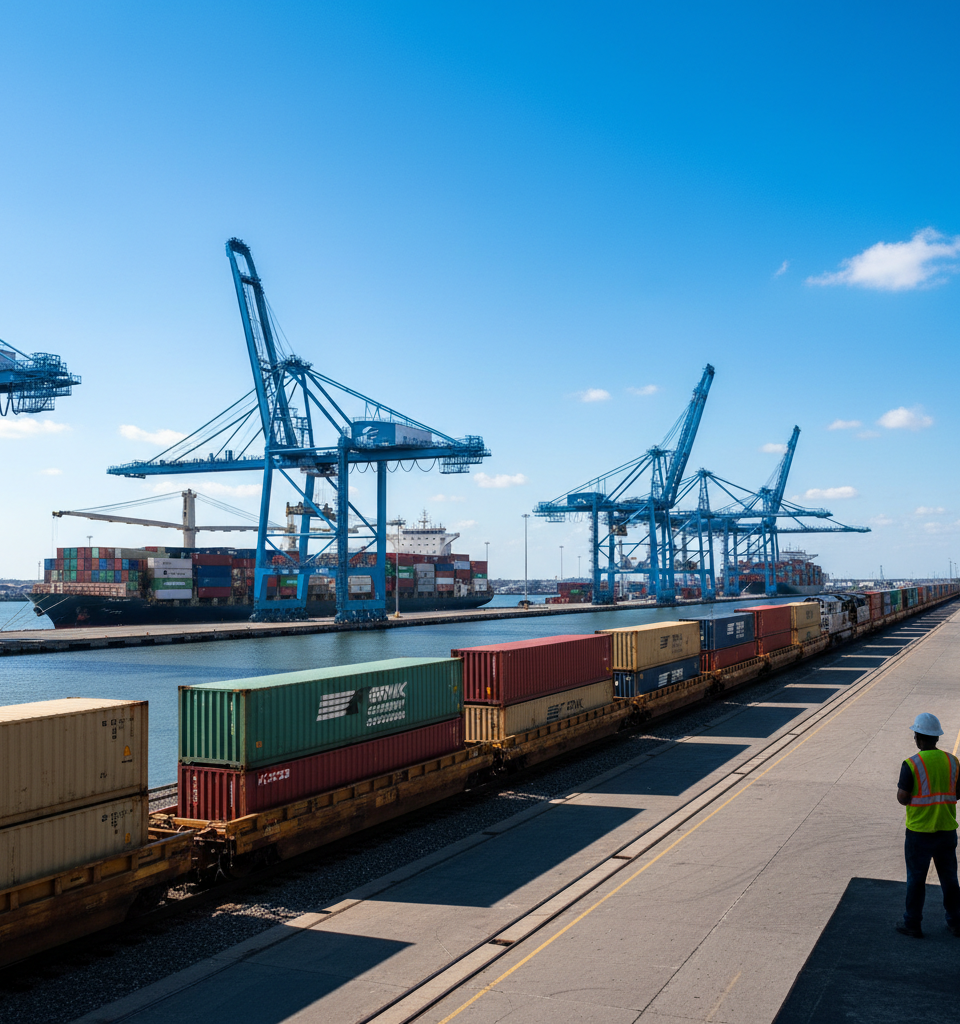
The South Carolina Ports Authority (SC Ports) and freight rail giant Norfolk Southern have officially launched a daily intermodal rail service connecting the Port of Charleston to Huntsville, Alabama. This new service significantly extends the port's inland reach, enhancing connectivity for cargo moving through the bustling Southeast region of the United States.
Enhancing Connectivity and Market Access
The direct rail link to Huntsville is poised to serve a broader geographical area. Beyond its immediate vicinity, the service strategically positions the Port of Charleston to access markets in Middle Tennessee. This expansion aims to offer shippers more efficient and environmentally friendly transportation options for goods traveling to and from the port.
Intermodal services, which combine different modes of transport like ship and rail, are critical for moving containers efficiently from port terminals deeper into the country. The integration of this new daily service means that businesses in Alabama and Middle Tennessee now have a more direct and regular route for their international freight through one of the East Coast's major ports. This can lead to reduced truck traffic on highways, lower fuel consumption, and potentially faster transit times for many goods.
Strategic Importance for the Southeast
Huntsville, Alabama, serves as a growing logistics and manufacturing hub, making it a natural fit for expanded intermodal connectivity. Its central location allows for effective distribution across a significant portion of the Southeast. By connecting directly to Huntsville, SC Ports aims to capture a larger share of the inland cargo market, competing with other major port systems.
This development underscores a broader trend in port logistics where inland port strategies and robust rail networks are seen as crucial differentiators. Ports are increasingly investing in or partnering on such services to extend their geographic influence and provide added value to their customers, ultimately strengthening their competitive position in the global trade landscape.
Future Implications
The daily service is expected to foster economic growth in the regions it serves by providing more reliable and cost-effective freight solutions. Businesses reliant on international trade, particularly those involved in manufacturing, retail, and distribution within Alabama and Middle Tennessee, stand to benefit from the enhanced logistical efficiency. As supply chain resilience remains a top priority for global businesses, such direct rail links offer a valuable alternative to solely trucking goods from port.
This new offering from SC Ports and Norfolk Southern signals a continued commitment to developing integrated transportation networks that can adapt to the evolving demands of global commerce. The success of this daily service could encourage further expansion of intermodal options to other key inland markets in the future, solidifying the Port of Charleston's role as a vital gateway for the Southeast.