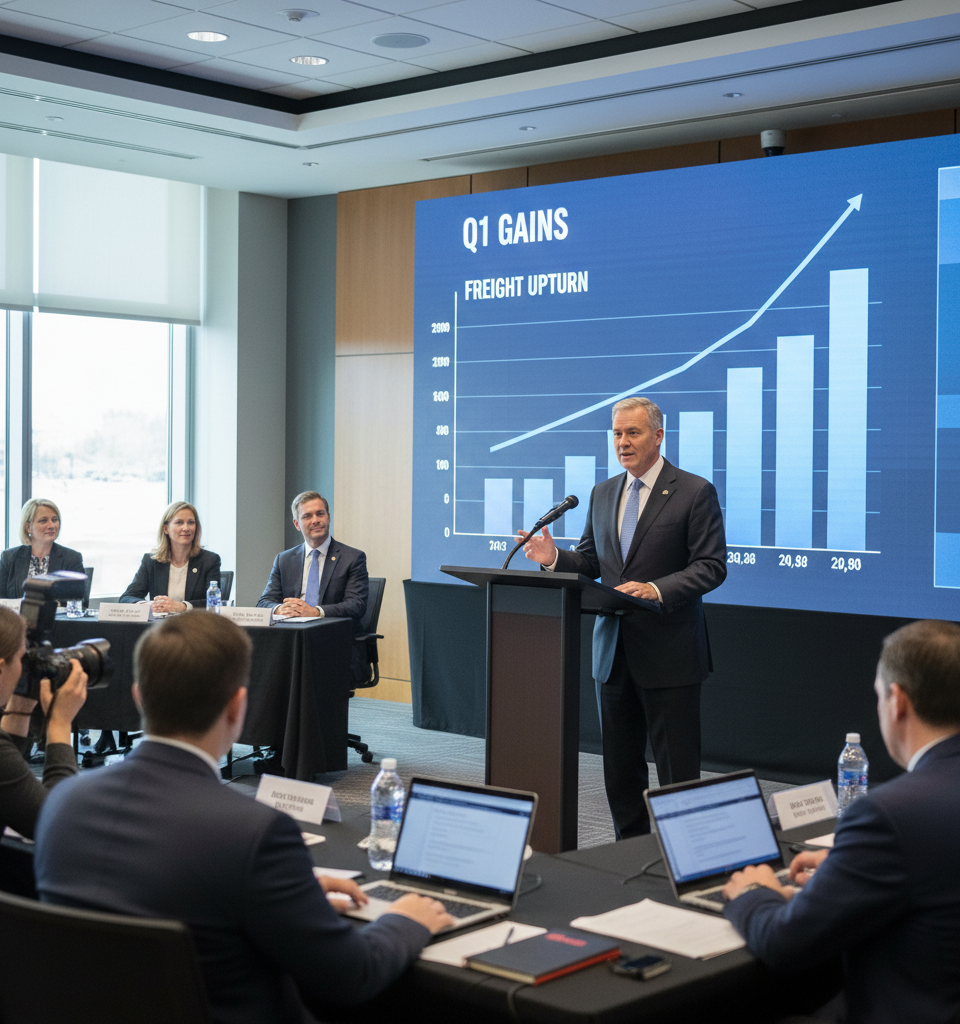
Green Bay, Wisconsin – Mark Rourke, Chief Executive Officer of Schneider National, one of North America’s largest trucking and logistics companies, declared optimistically on April 30 that the freight market’s cyclical upturn has finally taken root. This assertion accompanied the release of the company’s first-quarter financial results, injecteding a much-needed positive sentiment into an industry grappling with persistent overcapacity and muted demand for an extended period.
Context and Background
The freight industry operates in notoriously volatile cycles, characterized by periods of robust growth followed by sharp contractions. The sector has endured a challenging downturn since late 2022, marked by declining spot rates, increased operating costs, and reduced shipper demand. This environment led to numerous carrier bankruptcies, significant fleet reductions, and intense pricing pressure across trucking, intermodal, and logistics segments. Rourke’s statement, therefore, represents a significant departure from the cautious outlook that has dominated industry discourse, suggesting a potential inflection point after a prolonged period of adversity.
Key Details and Performance Highlights
Schneider's first-quarter report provided tangible data supporting Rourke's confidence. The company reported a net income of $50 million, or $0.28 per diluted share, for the quarter. While this represents a decrease from the $126 million, or $0.70 per diluted share, recorded in the same period last year, it exceeded analyst expectations and demonstrated resilience in a soft market. Revenues for the quarter totaled $1.29 billion, compared to $1.64 billion year-over-year. A key bright spot was the intermodal segment, which saw improved volumes. The truckload segment, despite facing rate pressures, showed signs of stabilization, while the logistics division continued to manage market volatility effectively. Rourke specifically highlighted signs of an improving demand environment and a more rationalized supply-side, both critical components for a sustainable upcycle.
Industry and Market Impact
Rourke's optimistic outlook carries significant weight given Schneider's position as an industry bellwether. If his assessment proves accurate, it could signal broader recovery across the trucking and logistics landscape. A confirmed upcycle would likely lead to higher freight rates, improved carrier profitability, and potentially renewed investment in fleet expansion and technology. For shippers, it implies an end to the highly favorable pricing environment they've enjoyed, necessitating closer attention to capacity planning and logistics partnerships. The announcement could also influence investor sentiment, potentially driving renewed interest in transportation stocks that have faced headwinds over the past year.
Expert Perspectives
Industry analysts have offered cautious agreement, acknowledging early signs but emphasizing the need for sustained trends. Analysts from firms like Stifel and Wolfe Research have noted that while spot rates have indeed shown sequential improvement since the beginning of the year, significant capacity still needs to exit the market before a true pricing power shift occurs. "While Rourke's optimism is certainly encouraging, the recovery is likely to be gradual," commented a senior analyst at a major investment bank, preferring to remain anonymous. "We are seeing green shoots, particularly in contract renewals showing less aggressive rate erosion, but the industry isn't out of the woods yet regarding oversupply."
What's Next: Future Implications
Looking ahead, the industry will be closely watching for several key indicators to validate Schneider's assessment. These include continued sequential improvements in spot and contract freight rates, further capacity reductions (especially among smaller carriers), and a sustained rebound in manufacturing and consumer spending. Schneider itself plans to leverage its strong balance sheet to strategically invest in its fleet and technology, positioning itself to capitalize on the anticipated upswing. The trucking season in late spring and early summer, often a barometer for annual demand, will be particularly critical in confirming whether this nascent upcycle has the momentum to become a full-fledged recovery, shaping operational strategies and financial performance across the entire supply chain for the foreseeable future.