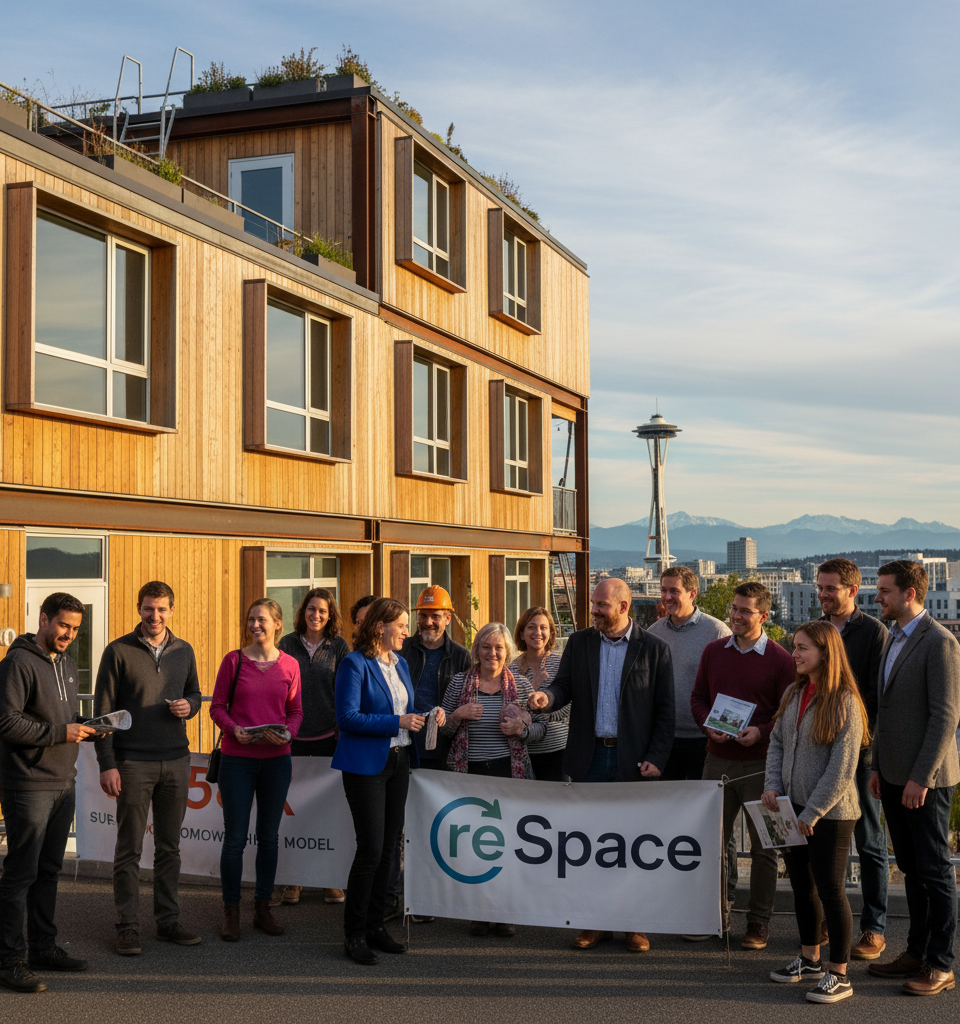
SEATTLE, WA – December 12, 2023 – In a significant move that could redefine urban homeownership, Seattle-based co-housing development firm reSpace is offering private residential suites starting at an unprecedented $124,500. This innovative model aims to provide an accessible entry point into the notoriously competitive Seattle housing market, traditionally out of reach for many. Through a unique blend of private living spaces within a larger, shared community framework, reSpace is directly addressing the affordability crisis gripping major metropolitan areas. Seattle has long been characterized by escalating home prices, with the median home value currently hovering around $830,000, presenting a formidable barrier to entry for first-time buyers and service-industry professionals. reSpace's co-housing model provides individuals with private bedrooms and bathrooms and shared access to communal kitchens, living areas, and amenities. This approach significantly reduces the individual's capital outlay while still granting them a deeded share in the property, offering the stability and equity-building potential of traditional homeownership without the prohibitive costs. At the core of reSpace's offering are individual units, described as 'private suites,' which convey full ownership to buyers. Prices for these suites reportedly start as low as $124,500, with some premium options reaching up to $250,000. Each suite includes a dedicated bedroom and en-suite bathroom, distinguishing it from mere room rentals. The communities are designed to foster interaction, featuring shared gourmet kitchens, spacious lounges, co-working spaces, and outdoor areas. This hybrid model seeks to balance personal privacy with the benefits of communal living, appealing to a diverse demographic including young professionals, remote workers, and individuals seeking a vibrant, built-in community. This novel approach comes at a critical juncture for the housing market. Traditional co-housing models typically involve a purchase of a share in a non-profit cooperative or a lease agreement. reSpace's innovation lies in offering actual deeded individual units within a condominium or stratified title structure, providing owners with tangible real estate assets. This distinction is crucial for mortgage eligibility and wealth building, setting it apart from rental-based co-living arrangements. The firm emphasizes that this is not simply a high-end dorm but a legitimate pathway to property ownership with all its inherent rights and responsibilities. Industry experts view reSpace's model with cautious optimism. Dr. Eleanor Vance, a urban planning specialist at the University of Washington, commented, "This represents a compelling evolution in affordable housing solutions. By dissecting the traditional home into core private spaces and shared amenities, reSpace significantly lowers the financial threshold for ownership. The key will be ensuring that the communal living aspect is well-managed and resonates with a broad buyer base who value community alongside equity." She also noted the importance of legal frameworks that protect owners' investments and clearly define shared responsibilities. Looking ahead, reSpace plans to expand its footprint within Seattle and explore opportunities in other high-cost metropolitan areas. The firm is actively seeking additional development sites and refining its community management protocols to ensure long-term success and owner satisfaction. Future developments may include integrating more smart home technology, enhanced amenity offerings, and potentially partnering with local non-profits to further subsidize entry costs for eligible buyers. The success of reSpace could pave the way for a new paradigm in urban residential real estate, emphasizing shared resources and community over expansive individual footprints. The potential ripple effect of reSpace's model on the broader housing market is significant. If successful, it could put downward pressure on starter home prices in urban cores by creating a viable, more affordable alternative. It also challenges developers to think creatively about land use efficiency and community-centric design. While questions remain about the long-term appreciation of these unique assets and the dynamics of community governance, reSpace has undeniably thrown a disruptive gauntlet at the feet of conventional real estate, offering a glimmer of hope for homeownership in an otherwise daunting market.
Seattle Co-Housing Firm reSpace Disrupts Market with Sub-$150k Homeownership Model
Key Takeaways
Read this first — then go as deep as you need.
Discussion
Loading comments...
Enjoying this article?
Get more like it delivered to your inbox — free.
This article was compiled by GlobalSell News from publicly available reporting and has been edited for clarity and length. For full details, read the original source.