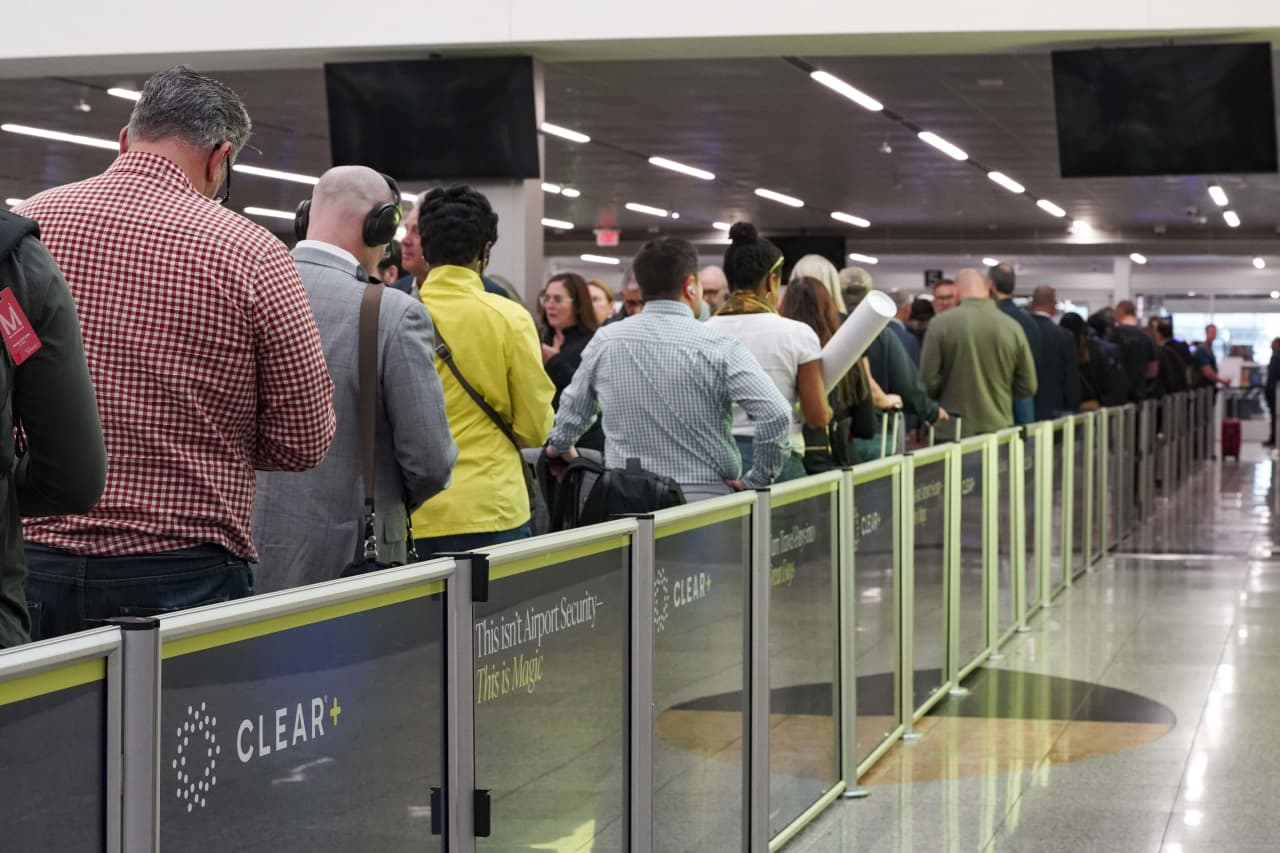
WASHINGTON D.C. - In a dramatic legislative maneuver, the U.S. Senate voted in the early hours of Friday morning to pass a spending bill that will fully fund the Transportation Security Administration (TSA) and avert a broader shutdown of the Department of Homeland Security (DHS). The bipartisan measure, passed shortly after midnight, is expected to swiftly mitigate the escalating chaos at airports nationwide, which had seen significant flight delays and security checkpoint backlogs due to staffing shortages among unpaid federal workers. However, a contentious element of the bill is its deliberate exclusion of funding for Immigration and Customs Enforcement (ICE), signaling a continued political impasse over border security and immigration policy.
The urgency of the Senate's action was underscored by mounting public frustration and economic impact. For weeks, the partial government shutdown had forced approximately 800,000 federal employees, including over 50,000 TSA agents, to work without pay. This unprecedented situation led to a pronounced decrease in TSA attendance, with call-out rates reportedly soaring by as much as 20-30% at some major airports, including Atlanta's Hartsfield-Jackson and New York's LaGuardia. The ripple effect included lengthy security lines, missed connections, and an overall degradation of the travel experience, threatening to severely impact the nation's air travel infrastructure and the broader economy.
The newly passed legislation, a short-term continuing resolution, provides essential appropriations to ensure that TSA agents, air traffic controllers, Coast Guard personnel, and other critical DHS components receive their salaries and operational funding. While specific dollar figures for the TSA's allocation within this resolution were not immediately disclosed, the overarching aim is to stabilize operations and restore public confidence in air travel security. This development offers immediate relief to millions of travelers and thousands of federal workers who have endured weeks of financial uncertainty and operational strain during the prolonged shutdown.
The decision to fund the TSA while leaving ICE without appropriations highlights a deep ideological divide within Congress. The Democratic-controlled House had previously passed a series of individual appropriations bills, including one for DHS that excluded funding for a border wall, a key demand of the Executive Branch. The Senate's move represents a compromise to address the most visible and economically damaging aspects of the shutdown without conceding on more contentious issues. This piecemeal approach to appropriations underscores the ongoing difficulties in reaching a comprehensive agreement on government funding and border security.
Industry experts and advocacy groups have lauded the funding of TSA as a critical step to restoring national security and economic stability. "The disruption to air travel was becoming unsustainable," stated Robert Harrison, an aviation security analyst. "The continuous operation of the TSA is non-negotiable for national security and the functioning of our economy. While this is a necessary step, the underlying issues causing these shutdowns remain unaddressed, posing a risk of future instability." The airline industry, which had been vocal about the financial and operational strain caused by the shutdown, is expected to see a return to normal service levels in the coming days.
However, the exclusion of ICE funding portends further legislative battles. While the immediate crisis at airports is defused, the broader standoff over border security funding, particularly the President's demand for billions of dollars for a border wall, shows no signs of abating. Critics argue that selectively funding agencies creates an unsustainable precedent and that a comprehensive, long-term solution is urgently needed to fully reopen the government and restore full operational capacity to all federal departments.
Looking ahead, the short-term nature of this funding bill means that Congress will soon face another deadline to approve full-year appropriations for DHS, including the contentious issue of ICE and border wall funding. The relief offered by this measure is temporary, and the underlying political deadlock continues to cast a long shadow. Lawmakers will be under renewed pressure to negotiate a broader budget deal that addresses all outstanding funding gaps, lest the nation plunge back into similar operational crises in the near future, potentially affecting other critical government functions.