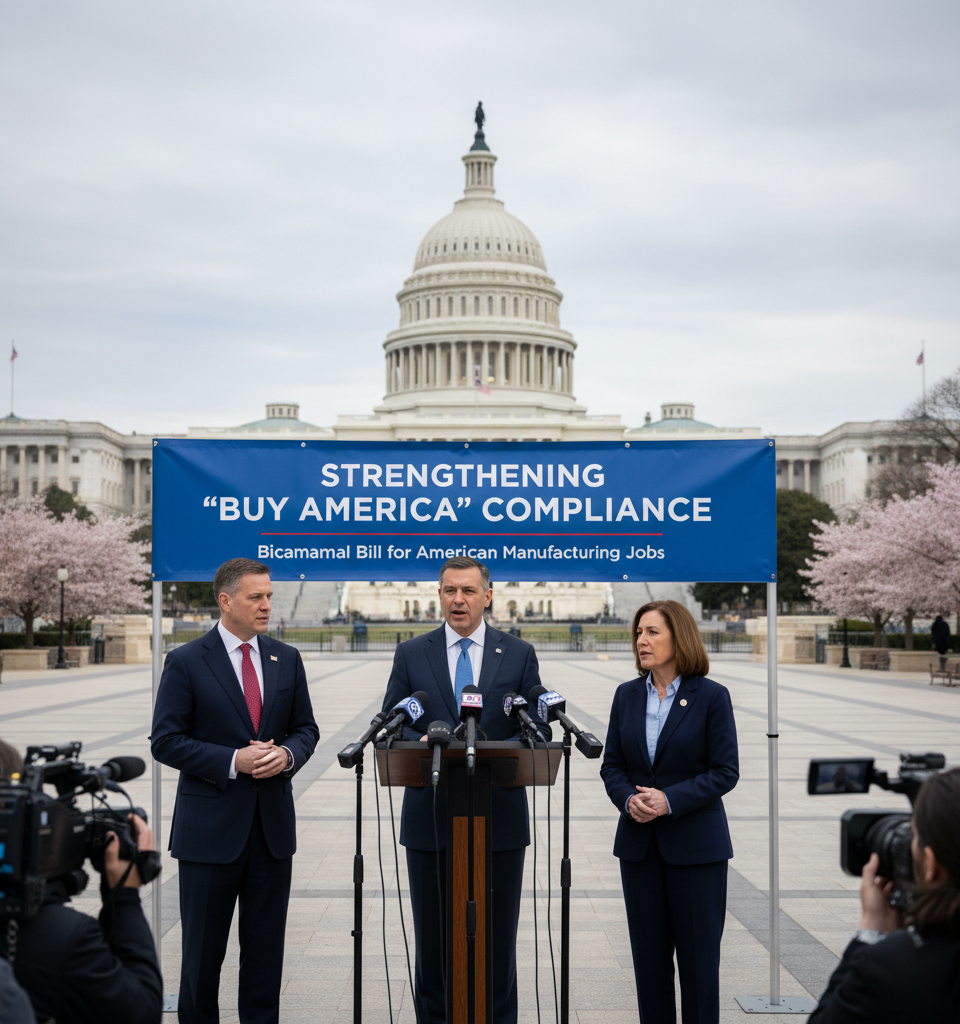
Washington D.C. — A bipartisan coalition of U.S. senators this week introduced a comprehensive bill designed to enforce stricter adherence to "Buy America" mandates across federally funded infrastructure projects. The proposed legislation, titled the "American Made Infrastructure Act," directly addresses findings from a recent Office of Inspector General (OIG) audit that exposed significant non-compliance within the Federal Aviation Administration (FAA) regarding domestic sourcing requirements for contracts funded by the landmark Infrastructure Investment and Jobs Act (IIJA).
Context of Growing Domestic Sourcing Demands
The push for enhanced "Buy America" compliance reflects a broader strategic imperative to bolster U.S. manufacturing, create domestic jobs, and reduce reliance on foreign supply chains. The IIJA, signed into law, allocated over $1.2 trillion for infrastructure improvements and explicitly stipulated that iron, steel, manufactured products, and construction materials used in these projects must be produced in the United States. This legislation, however, has faced implementation challenges, as evidenced by the FAA's oversight. The OIG report specifically highlighted that the FAA did not consistently include the necessary "Buy America" clauses in contracts, potentially undermining the law's intent and diverting taxpayer dollars away from American-made goods and labor.
Key Legislative Provisions and Specifics
The "American Made Infrastructure Act" seeks to close these loopholes and impose greater accountability. While specific bill numbers and lead sponsors were not immediately available, sources indicate its provisions include mandatory agency-level training on "Buy America" requirements, enhanced reporting mechanisms for compliance, and clearer definitions of what constitutes a "domestic product" under federal contracts. It is also expected to empower the OIG and similar oversight bodies with greater authority to conduct proactive audits and investigations. Furthermore, the bill is anticipated to introduce penalties or corrective action plans for agencies found in consistent non-compliance, creating a stronger deterrent against future lapses. The aim is to ensure that the approximately $100 billion in annual federal contracting opportunities truly benefit American workers and industries.
Impact on Industry and the Manufacturing Sector
This legislative initiative holds substantial implications for various sectors, particularly manufacturing, construction, and transportation. For U.S. manufacturers of steel, iron, and other construction materials, stricter enforcement of "Buy America" clauses promises a more level playing field and increased demand for their products. Conversely, companies relying on international supply chains for federally funded projects may need to reassess their sourcing strategies, potentially incurring adaptation costs. The construction industry, a significant beneficiary of IIJA funds, will also face renewed scrutiny to ensure all materials meet domestic content thresholds. This could drive investment in domestic production capacity and foster innovation within the American manufacturing base.
Expert Analysis and Economic Implications
Economists and trade policy experts generally commend efforts to strengthen "Buy America" provisions, arguing that they can stimulate domestic economic growth and enhance national security by reducing supply chain vulnerabilities. "This bill signals a clear commitment from Congress to ensure that federal investments translate directly into American jobs and industrial growth," stated Dr. Eleanor Vance, a senior fellow at the Institute for Economic Policy.
" However, other analysts caution that an overly stringent approach without sufficient domestic capacity could lead to project delays or increased costs, underscoring the need for careful implementation and flexibility, particularly for highly specialized components.
Looking Ahead: Legislative Hurdles and Enforcement
The path forward for the "American Made Infrastructure Act" will involve navigating the legislative process in both the Senate and the House of Representatives. While bipartisan support suggests a favorable trajectory, debates may arise over specific thresholds for domestic content, waiver processes, and the scope of penalties. If enacted, the real test will lie in its effective implementation and enforcement. Agencies like the FAA will need to overhaul their contracting procedures, invest in compliance training, and establish robust monitoring systems. The success of this legislation will ultimately be measured by its ability to demonstrably increase the percentage of American-made goods utilized in federal infrastructure projects, thus fulfilling the original intent of the IIJA and solidifying the nation's manufacturing backbone.