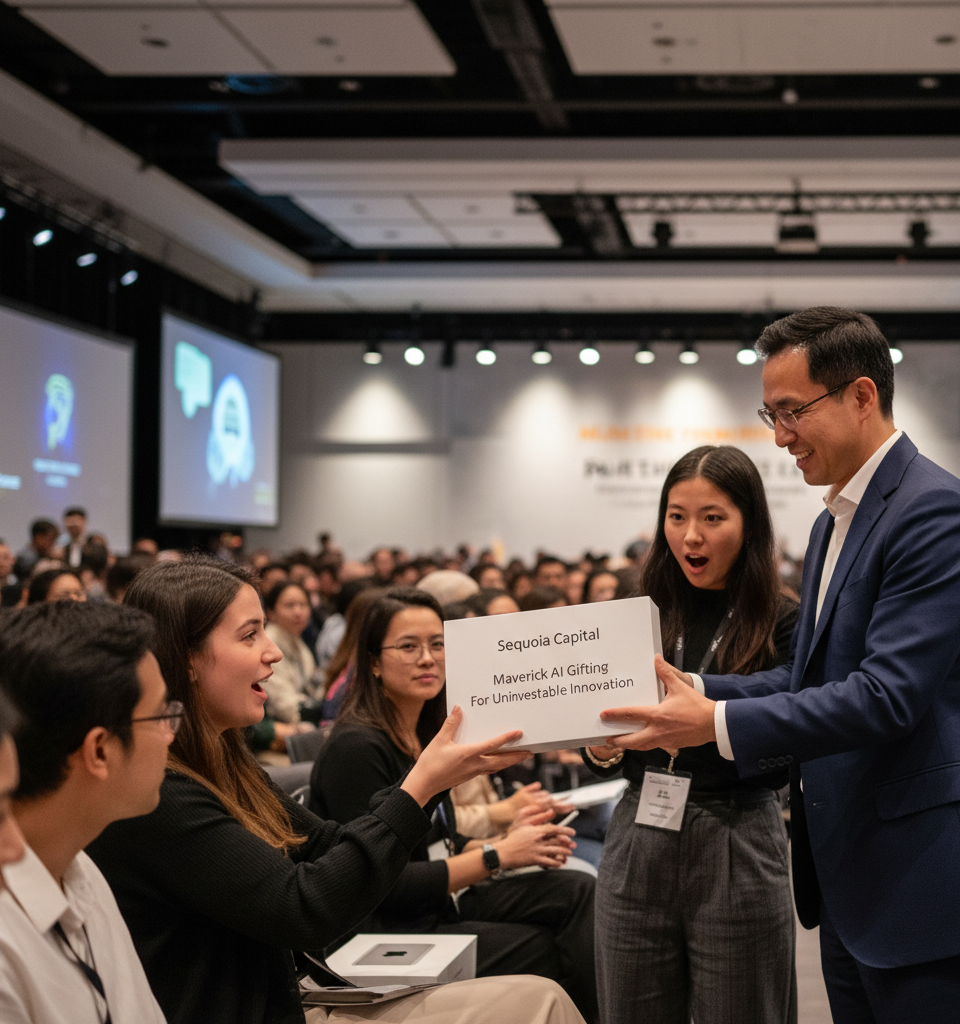
In an unprecedented move for a top-tier venture capital firm, Sequoia Capital, led by co-steward Alfred Lin, recently orchestrated the distribution of 200 specially prepared Apple Mac Mini computers to attendees of its exclusive ‘AI at the Frontier’ event. Each machine, personally procured by Lin, bore a custom engraving that visually merged elements of antique cartography with modern machine learning contour plots – a symbolic gesture bridging past exploration with future technological frontiers. This initiative, designed to empower developers and researchers with high-performance computational tools, deliberately targets projects and innovators who might not yet be ready for direct Sequoia investment, underscoring a long-term strategic play in the burgeoning artificial intelligence sector.
Contextualizing Sequoia's AI Gambit
This unconventional strategy deviates significantly from traditional venture capital models, which typically focus on direct equity investments in high-growth startups. Sequoia’s Mac Mini giveaway signals a proactive effort to engage with the AI community at its foundational level, fostering innovation and talent pool development. It harks back to earlier tech eras where foundational tools and platforms were often seeded to developers by large players, catalyzing ecosystems that later became fertile ground for investment. By democratizing access to crucial hardware, Sequoia is effectively creating a pipeline for future opportunities, building goodwill and influence within the rapidly evolving AI landscape. The firm has long been a bellwether in tech investment, with a portfolio boasting giants like Apple, Google, and Nvidia, making their moves closely watched by the industry.
Key Details and Symbolic Gestures The 200 Mac
Minis were not merely blank canvases; each came pre-loaded with two distinct “easter eggs.” Firstly, recipients discovered Sequoia’s core ethos statement, encapsulating the firm's belief in creative spirits and underdogs, reinforcing its commitment to unconventional innovators. Secondly, a generative AI model within each device produced a unique quote, further showcasing the very technology the event sought to promote. The choice of the Mac Mini, specifically the M-series chip models, is pertinent due to its robust performance-per-watt for local AI model inference, making it an ideal tool for AI development without immediate cloud reliance. While the specific financial outlay for 200 Mac Minis (ranging from approximately $599 to $1,799 per unit, depending on configuration) represents a notable expenditure, it is a relatively modest sum for a firm with billions under management, arguably a highly effective marketing and brand-building expense.
Industry Impact and Strategic Implications
Sequoia's initiative could set a new precedent for how venture capital firms engage with emerging technologies. Rather than solely chasing mature investment opportunities, providing foundational resources at an early stage can cultivate a loyal network of innovators. This approach mitigates the risk of being late to the next big breakthrough, particularly in a field as dynamic and fast-moving as AI. It encourages an open-source mentality within the VC space, where nurturing a broader ecosystem is seen as beneficial for long-term returns. Other VCs may observe this strategy closely, potentially adopting similar tactics to gain a competitive edge in attracting top AI talent and concepts, especially as the cost of basic AI infrastructure becomes more accessible.
Expert Perspectives on VC Evolution
Industry analysts view Sequoia's move as a sophisticated, long-term play. Dr. Emily Chen, a professor of innovation economics at Stanford, commented, "This isn't just about charity; it's about strategic ecosystem building. Sequoia is investing in the soil before the seeds are even planted. They're recognizing that the next trillion-dollar AI company might emerge from a bedroom coder, not necessarily a pre-vetted startup." She added that such initiatives help VCs identify emergent trends earlier and build rapport with potential founders before competitors. The implicit message is that Sequoia is not just a financier but a partner in foundational innovation, distinguishing itself from capital-only investors.
The Road Ahead: Future Implications
This gifting strategy could be a harbinger of more unconventional engagement models from leading venture capital firms. We might see an increased focus on developer programs, educational initiatives, and even the provision of computational resources as competition for AI talent intensifies. For Sequoia, the immediate future likely involves observing the projects catalyzed by these Mac Minis, identifying promising teams, and potentially using these early relationships to forge future investment opportunities. This move reasserts Sequoia’s reputation as an innovator not just in what they invest in, but how they invest and cultivate the future of technology, especially as AI continues to redefine industries globally. The long-term success of this specific initiative will be measured not in direct financial returns from the hardware, but in the quality and quantity of groundbreaking AI projects that eventually emerge from its recipients, some of which may very well become Sequoia's next portfolio companies.