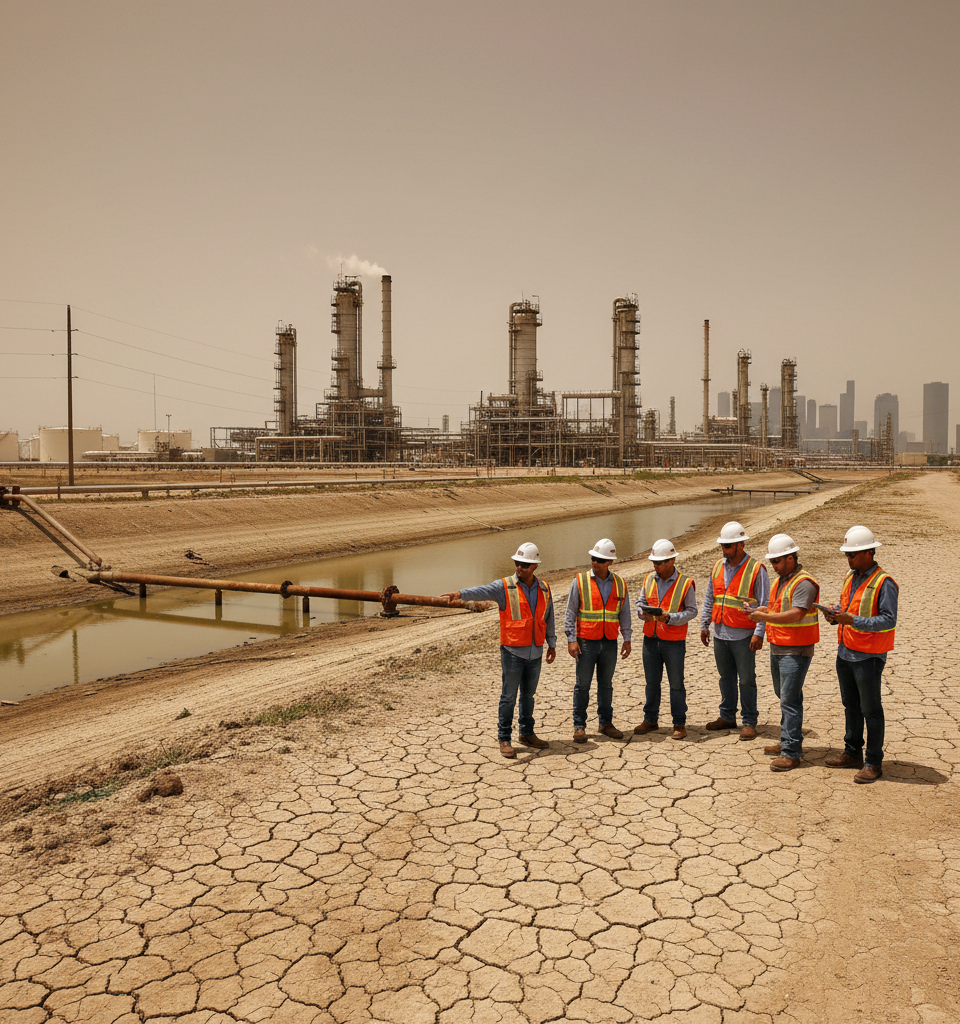
HOUSTON, TX (November 15, 2023) – A severe and protracted drought gripping the U.S. Gulf Coast, a region responsible for an estimated 5% of the nation's gasoline supply, is now posing an existential threat to its vital refining infrastructure. The dwindling availability of fresh water, crucial for refinery cooling and processing, is creating an unprecedented operational challenge that could hobble gasoline production and send ripples through an already volatile global energy market. The dire situation has led to extraordinary sentiments among industry insiders, with one source candidly expressing, “We are actively praying for a hurricane” – a testament to the desperate need for rainfall.
The Nexus of Critical Infrastructure and Climate Extremes
This unfolding environmental crisis comes at a particularly precarious time for U.S. consumers, who are already contending with elevated gasoline prices fueled by geopolitical instability, most notably the ongoing conflict in Iran. The Gulf Coast, home to a significant concentration of petrochemical and refining facilities, relies heavily on consistent freshwater access from rivers and aquifers. Without this essential resource, operations face potential curtailment, reduced throughput, or even temporary shutdowns, translating directly into higher pump prices and potential supply shortages across the country. The region's infrastructure is designed for a consistent water supply, not extended periods of severe aridity.
Operational Challenges and Economic Fallout
Refineries utilize vast quantities of water for steam generation, cooling towers, and various chemical processes. As river levels drop and water sources become salinized from coastal intrusion, the quality and quantity of available water diminish. This forces refiners to implement costly mitigation strategies, such as desalinization or trucking in water, or to scale back production. Each barrel of refined product lost due to drought-induced constraints adds upward pressure to global oil and gasoline benchmarks. According to recent data, Gulf Coast refineries collectively process millions of barrels of crude oil daily, transforming it into gasoline, diesel, and jet fuel that power the domestic economy.
Broader Market Implications Amidst Global Tensions
The potential disruption on the Gulf Coast arrives amidst an already turbulent global energy landscape. The conflict in Iran has significantly tightened crude oil markets, pushing Brent crude futures above $90 per barrel and WTI crude above $85 per barrel in recent weeks. Any significant reduction in U.S. refining capacity, particularly in a hub as critical as the Gulf Coast, would exacerbate these existing pressures, potentially driving gasoline prices beyond the $4.00 per gallon mark nationally. This confluence of domestic environmental disaster and international geopolitical strife creates a 'perfect storm' scenario for energy consumers and the broader economy.
Expert Commentary: Warnings of 'Uncharted Territory'
Energy sector analysts are voicing concerns about the unprecedented nature of this challenge. Dr. Emily Carter, a senior energy economist at Veritas Analytics, noted, "We're entering uncharted territory where climate-induced infrastructure disruption directly intersects with global supply shocks. Refiners have contingency plans for hurricanes, but prolonged drought management on this scale is a newer, less-practiced playbook." She added, "The downstream impacts on logistics, transportation costs, and consumer discretionary spending could be substantial if production slowdowns become widespread." The reliance on a weather event – a hurricane – to alleviate a drought underscores the gravity of the situation.
The Road Ahead: Mitigation and Adaptation Strategies
In the immediate term, refineries are likely to implement stricter water conservation measures, explore brackish water treatment, and potentially reduce non-essential water usage. However, for sustained relief, significant rainfall is imperative. Longer-term solutions may involve substantial investments in desalination plants, enhanced water recycling infrastructure, and diversified water sourcing strategies to diminish reliance on single river systems. Policymakers are also being pressed to consider the vulnerability of critical infrastructure to extreme weather patterns and incorporate climate resilience into future energy policies. The delicate balance between energy production and environmental sustainability stands at a critical crossroads.
The Unpredictable Hand of Nature in Energy Dynamics
The unfolding situation on the U.S. Gulf Coast serves as a stark reminder of how interconnected global energy markets are with regional environmental conditions. While geopolitical events often dominate headlines, the silent and often slow-moving crisis of climate change can have equally, if not more, profound impacts on critical supply chains. The prayers for a hurricane, a typically destructive force, articulate a desperate hope for replenishment, highlighting the unpredictable and profound challenges facing the energy industry in an era of heightened climate variability.