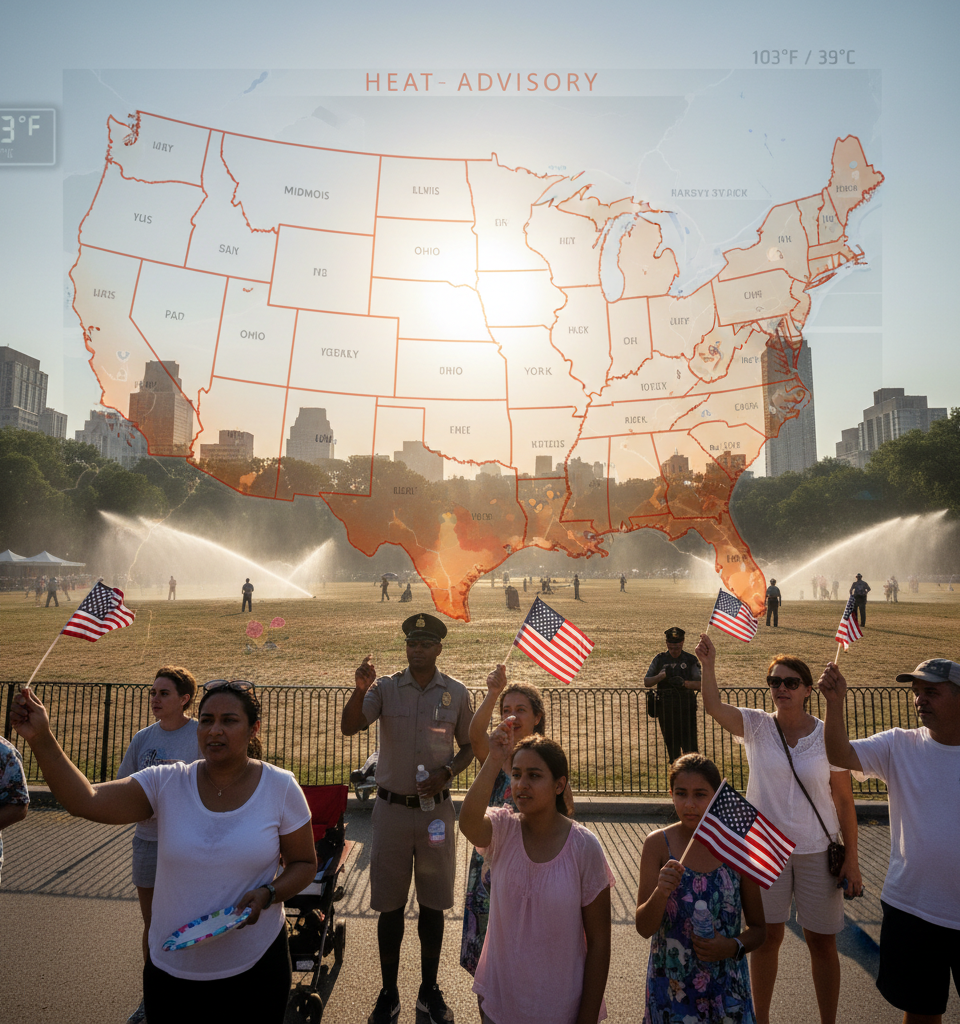
The National Weather Service (NWS) has activated widespread heat warnings and watches spanning much of the Midwest and East, anticipating an exceptionally hot Fourth of July weekend. Forecasters predict that temperatures in many areas could not only reach but potentially shatter existing records, posing significant health risks and operational challenges as holiday festivities commence.
Context of the Looming Heatwave
This impending heat event arrives as seasonal temperatures typically peak, but the current projections suggest an intensity that deviates from historical norms. Heatwaves of this magnitude can severely impact public health, strain infrastructure, and disrupt outdoor activities. The timing, coinciding with one of the most popular federal holidays, magnifies concerns given the usual uptick in outdoor gatherings, travel, and recreational activities. Historically, extreme heat during holiday weekends has led to increased emergency room visits for heat-related illnesses and placed considerable stress on utility grids.
Specifics of the Warnings
While specific temperature forecasts for individual cities were not detailed in the NWS announcement, the broad issuance of warnings and watches indicates a region-wide expectation of dangerous conditions. These alerts typically signify prolonged periods of excessively high temperatures and humidity, where the heat index—what the temperature feels like—reaches critical levels. The NWS advisories urge residents to take proactive measures to avoid heatstroke and exhaustion, particularly vulnerable populations such as the elderly, young children, and individuals with pre-existing health conditions. The agency's language suggests preparedness is paramount, as the anticipated heat may stretch emergency services and public health resources.
Potential Societal and Economic Impacts
The implications of such an intense heatwave extending across the Midwest and East are far-reaching. Economically, sectors reliant on outdoor activity, such as tourism and hospitality, could face disruptions as consumers opt for indoor alternatives. Power grids are expected to face substantial demand surges from widespread air conditioning use, raising concerns about potential brownouts or blackouts. Public transportation systems may also experience operational challenges due to thermal expansion on tracks or overheating equipment. The agricultural sector, already grappling with climate variability, could see adverse effects on crops and livestock.
Expert Meteorological Outlook
Meteorological experts are closely monitoring the evolving atmospheric conditions that are driving this exceptional heat. While not explicitly detailed, the underlying mechanisms likely involve a persistent high-pressure ridge, often referred to as a "heat dome," which traps warm air and suppresses cloud formation, leading to prolonged periods of clear skies and intense solar radiation. The NWS's preemptive warnings underscore the confidence in these atmospheric patterns and the high probability of their severe outcomes. The focus remains on accurate forecasting to allow communities ample time to implement mitigation strategies.
Preparing for the Holiday Weekend
Authorities across the affected regions are expected to issue local advisories, open cooling centers, and encourage community vigilance. Public health campaigns will likely reiterate critical safety messages: staying hydrated, seeking air-conditioned environments, avoiding strenuous outdoor activities during peak heat hours, and never leaving children or pets unattended in vehicles. The collective effort between meteorological agencies and local governments aims to minimize the potential health and safety impact of what is shaping up to be a historically hot Fourth of July weekend. The coming days will be crucial for residents to finalize their plans, considering the severe weather conditions and prioritizing safety over traditional holiday activities.