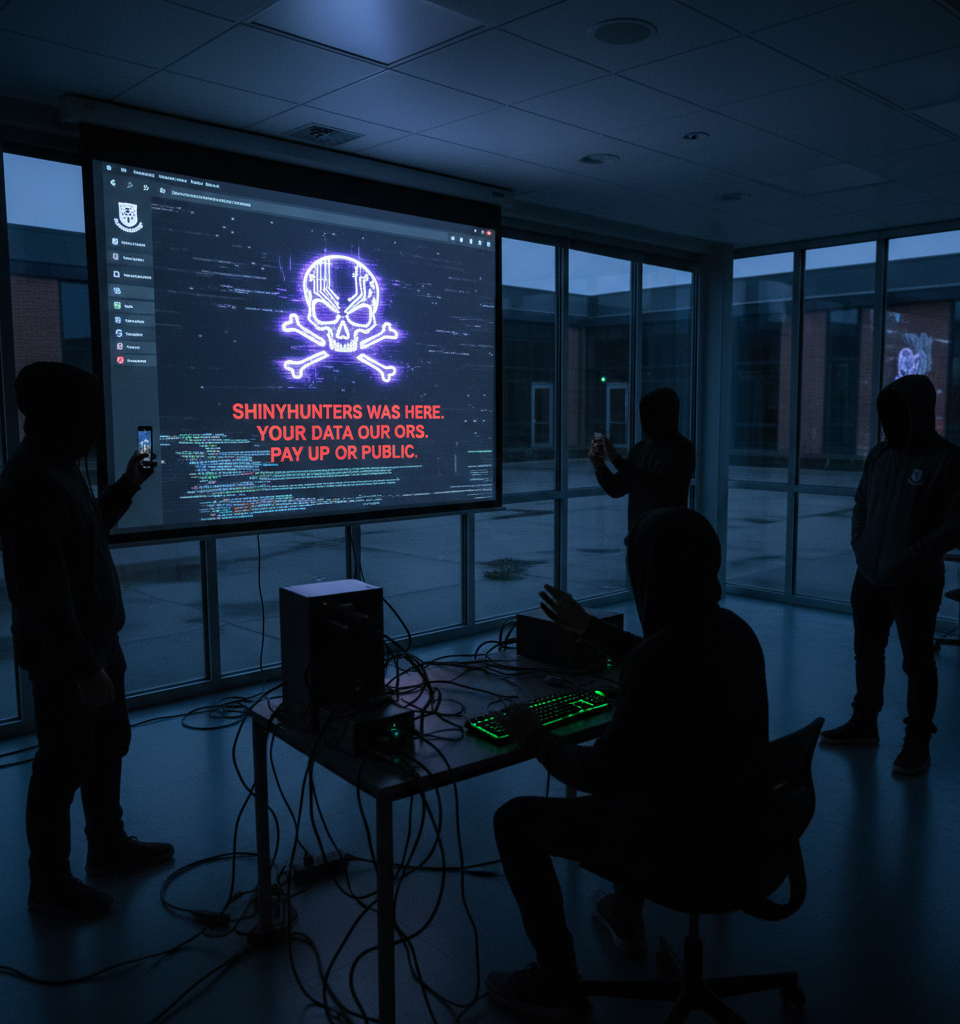
A prominent cybercrime group known as ShinyHunters has purportedly breached Instructure, the education technology giant behind the widely used Canvas Learning Management System (LMS), leading to the defacement of login pages for several affiliated schools. The hack, which surfaced recently, saw an extortion message displayed prominently on compromised portals, thrusting the issue of digital security in education into the spotlight once more.
Escalating Cyber Threats in Education
This alleged breach follows a pattern of increasing cyberattacks targeting the education sector, a trend exacerbated by the accelerated shift to remote learning platforms. Instructure's Canvas LMS is a critical tool for millions of students and educators globally, facilitating everything from coursework submission to virtual classroom engagement. Any compromise of such a central system can have far-reaching consequences, including potential data theft, disruption of academic activities, and erosion of trust in digital learning environments. ShinyHunters has a history of high-profile data breaches, including past claims against Instructure, making this incident a significant cause for concern and a stark reminder of the persistent threats faced by vital digital infrastructures.
The Anatomy of the Attack
The defacement, reported by multiple users, involved an extortion message on the login pages of specific educational institutions that utilize Instructure's services. While the exact number of affected schools remains under investigation, early reports suggest a targeted approach rather than a widespread system shutdown. The messages typically contained demands, though the specific nature and amount of any requested ransom have not been publicly disclosed. Instructure has acknowledged awareness of the claims and is actively investigating, stating that they are working to understand the full scope of the incident. This incident highlights the vulnerability of third-party platforms that serve as critical intermediaries for sensitive operations like education.
Broader Implications for EdTech and Data Security
The targeting of Instructure by a group like ShinyHunters carries significant implications for the broader education technology (EdTech) sector. It underscores the critical need for robust cybersecurity measures not only at the institutional level but also across the entire supply chain of educational software and services. Data breaches in education can expose sensitive personal information of students and staff, including grades, addresses, and other personally identifiable information (PII), potentially leading to identity theft and privacy violations. This incident could prompt a re-evaluation of cybersecurity protocols and vendor due diligence among educational institutions globally.
Expert Commentary on the Incident
Cybersecurity experts are weighing in on the seriousness of the situation. Dr. Evelyn Reed, a leading authority on education technology security, commented, "This incident is a grim reminder that no sector is immune to sophisticated cyber threats. The interconnectedness of modern educational systems means that a breach in one critical vendor can have a cascading effect across numerous institutions. Schools must prioritize multi-factor authentication, regular security audits, and comprehensive incident response plans, and vendors like Instructure bear a significant responsibility to protect their large user base." She added that the financial and reputational damage from such attacks can be substantial, necessitating proactive and transparent communication strategies.
The Path Forward: Mitigation and Prevention
As Instructure continues its investigation, the immediate focus will be on securing compromised systems, removing the defacement, and ensuring the integrity of the Canvas LMS. In the long term, this event will likely renew calls for enhanced cybersecurity investments and collaboration within the EdTech community. Educational institutions are advised to review and strengthen their security postures, including implementing stricter access controls, conducting regular vulnerability assessments, and educating users on phishing prevention. For students and educators, vigilance against suspicious activities and strong, unique passwords remains paramount. This incident serves as a critical juncture for reinforcing digital resilience across the educational landscape.
The full extent of the breach, including any potential data exfiltration and the precise motive behind the extortion, is still unfolding. However, the attack underscores the continuous cat-and-mouse game between cybercriminals and digital security teams, perpetually necessitating an adaptive and resilient approach to protecting invaluable educational infrastructures.