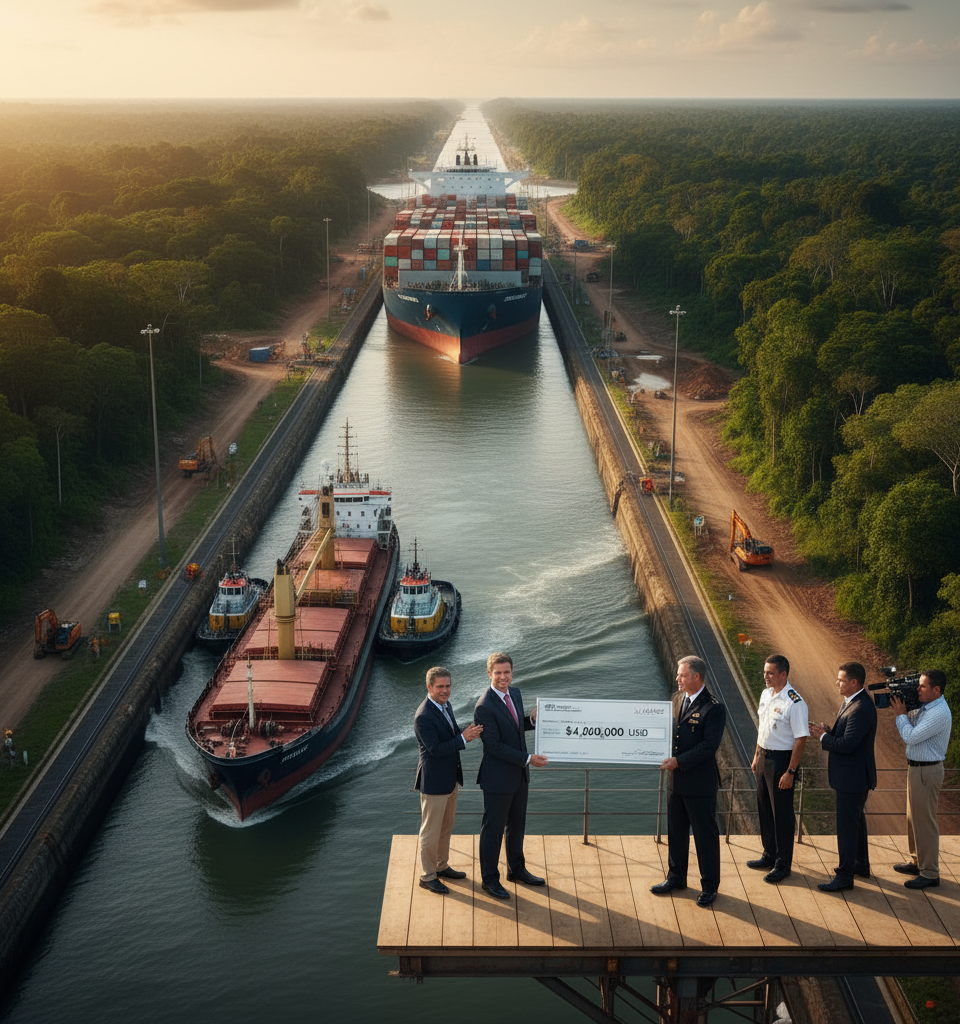
Panama City, Panama – May 19, 2026 – The global shipping industry is grappling with unprecedented congestion at the crucial Panama Canal, highlighted by a recent incident where a single vessel reportedly paid an extraordinary $4 million to circumvent a burgeoning backlog. This substantial payment underscores the acute pressures facing maritime logistics, as transit times through the vital waterway extend significantly.
Escalating Delays and Geopolitical Catalysts
Shipping companies are currently contending with an average delay of three and a half days for entry into the Panama Canal, a critical chokepoint connecting the Atlantic and Pacific Oceans. This intensified congestion is largely attributed to a surge in maritime traffic, which industry analysts link directly to the ongoing conflict in Iran. As geopolitical tensions escalate, shipping routes and trade patterns are undergoing rapid shifts, rerouting vessels through alternative, often more circuitous, paths or placing increased strain on existing arteries like the Panama Canal.
The Price of Expedited Passage
The reported $4 million payment for priority passage represents a stark illustration of the economic costs associated with supply chain disruptions. While the identity of the vessel or its cargo has not been publicly disclosed, such a significant outlay suggests either an extremely high-value consignment with stringent delivery deadlines or a company desperate to avoid further operational penalties incurred by delays. The Panama Canal Authority (ACP) operates a quota system and occasionally offers premium slots, though a payment of this magnitude is highly unusual and indicative of extreme market conditions.
Broader Economic and Logistical Implications
The burgeoning backlog at the Panama Canal has far-reaching implications for global trade. Delays in transit translate directly into increased operational costs for shipping lines, including fuel consumption, crew wages, and potential penalties for late deliveries. These costs are invariably passed on to consumers, contributing to inflationary pressures across various sectors. Furthermore, the unpredictability introduced by such delays complicates just-in-time inventory systems and supply chain planning, forcing businesses to carry larger buffer stocks or absorb higher air freight costs.
Geopolitical Instability Reshaping Trade Routes
The attribution of the traffic surge to the conflict in Iran highlights how geopolitical events ripple through global commerce. Instability in key maritime regions often forces rerouting, increasing demand on alternative, safer passages. This phenomenon is exerting immense pressure on established shipping infrastructure, revealing vulnerabilities in the global interconnectedness of trade routes. The Panama Canal, already facing challenges with water levels due to climate change, is now confronting an additional layer of complexity stemming from international conflict.
Industry Response and Future Outlook
Shipping analysts suggest that such exorbitant payments for expedited passage, if they become more common, could create a two-tiered system for canal access, disadvantaging smaller operators or goods with lower profit margins. Industry stakeholders are likely to re-evaluate their logistical strategies, potentially exploring alternative routes – such as the Suez Canal if conditions permit, or even circumnavigating Africa – despite the significantly longer transit times and higher fuel costs. The current situation underscores the urgent need for enhanced resilience in global supply chains against both environmental and geopolitical shocks. As the Iran conflict continues, the pressure on vital maritime arteries like the Panama Canal is expected to persist, demanding innovative solutions and adaptable strategies from the shipping industry.