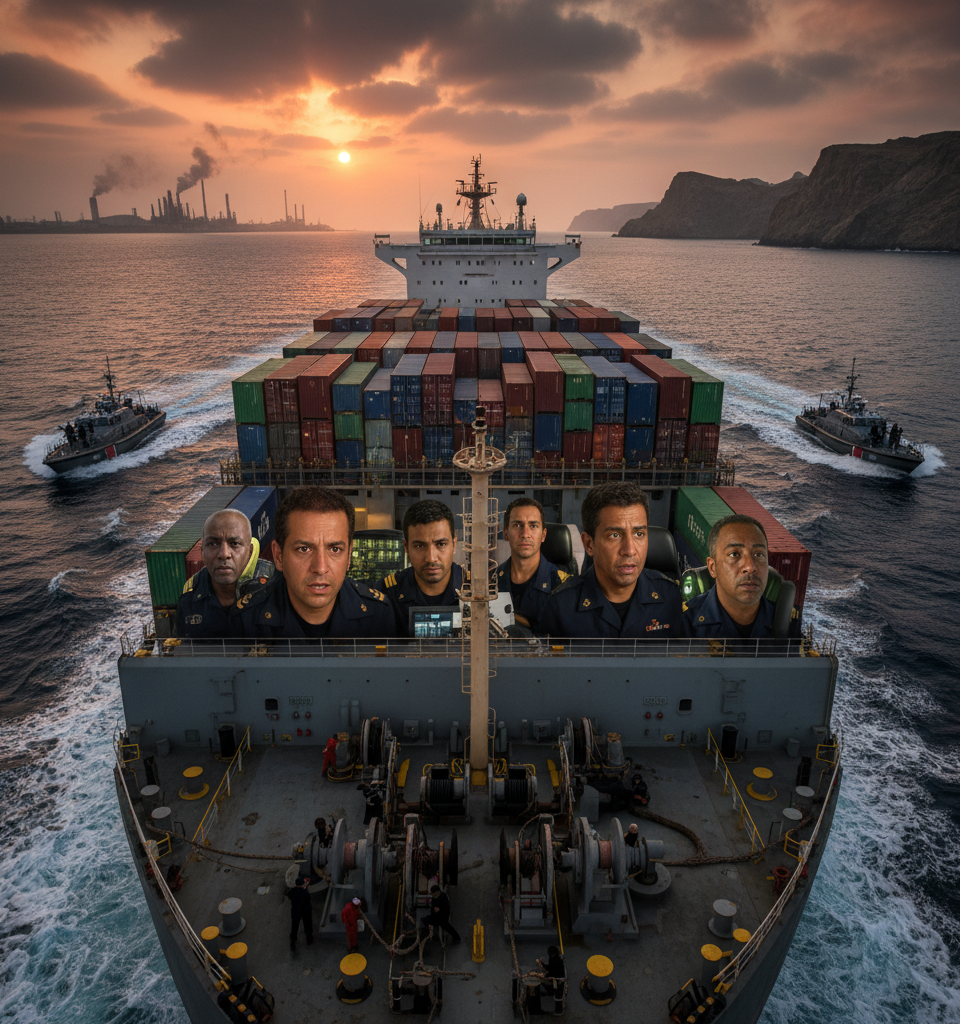
The global shipping industry finds itself in a precarious holding pattern, whipsawed by sustained geopolitical tensions surrounding the Strait of Hormuz. Following recent incidents and heightened military presence in the crucial waterway, maritime firms are undertaking urgent, often costly, evaluations of risk and safety, impacting timelines and operational strategies worldwide. This volatile equilibrium underscores the fragility of global supply chains and the profound economic ramifications of instability in key maritime chokepoints.
The Geopolitical Crucible
The Strait of Hormuz, a narrow passage between the Persian Gulf and the Gulf of Oman, is undeniably the world's most critical oil transit chokepoint, with approximately one-fifth of the world's total petroleum liquids consumption, or about 21 million barrels per day, passing through it in 2023. Historically, the region has been a focal point for international rivalries, but recent escalations, including vessel seizures, drone attacks, and increased naval patrols, have pushed shipping companies to the brink. This current state of affairs echoes past crises in the region, such as the "Tanker Wars" of the 1980s, highlighting the enduring vulnerability of this strategic corridor to geopolitical machinations and regional conflicts.
Operational Impacts and Escalating Costs
For shipping companies, the immediate consequence of the Hormuz uncertainty is a dramatic increase in operational costs and insurance premiums. War risk insurance surcharges for voyages through the Strait have reportedly surged by over 500% since the initial flare-ups earlier this year, sometimes adding hundreds of thousands of dollars to the cost of a single voyage for a large crude carrier. Beyond insurance, firms are contending with augmented security measures, rerouting vessels around the Arabian Peninsula—a significantly longer and more expensive journey adding thousands of nautical miles and several days to transit times—and the very real threat of asset damage or personnel danger. This translates directly into higher prices for consumers globally, particularly for energy commodities and goods reliant on oil for production and transport.
Industry-Wide Ripple Effects
The ripple effects of this prolonged uncertainty are cascading across the maritime sector and broader global economy. Major oil and gas companies, alongside container shipping lines, are being forced to diversify their supply chain strategies, seeking alternative routes or even considering longer-term investments in pipelines or non-maritime transport options where feasible, albeit at significant expense. The situation also places immense pressure on ship charter rates, as the reduced availability of vessels willing to navigate the high-risk zone, coupled with increased demand for those that do, drives prices upwards. Commodity markets, especially crude oil, have exhibited heightened volatility, with prices closely tracking any development in the Gulf region, illustrating the intertwined nature of geopolitics and global commerce.
Expert Insights on Risk Management
Maritime security analysts uniformly emphasize that effective risk management has become paramount, though increasingly complex. "Ultimately, it’s still going to come back to the primary issues of risk and safety that shippers have to evaluate," states one leading industry expert, highlighting the fundamental dilemma. Many firms are now implementing stringent internal risk assessment frameworks, scrutinizing routes, vessel flagging, crew nationality, and even cargo type to mitigate potential threats. The consensus among these experts is that a prolonged period of elevated risk in the Strait is likely, requiring a fundamental shift in operational planning rather than short-term adjustments.
Seeking Stability Amidst Volatility
Looking ahead, the international community, led by major maritime powers, continues diplomatic efforts aimed at de-escalation, but concrete breakthroughs remain elusive. For the shipping industry, the immediate future involves a continuation of heightened vigilance and adaptive strategies. Companies are actively exploring technological solutions for enhanced vessel tracking and communication in conflict zones, and considering pooled resources for security intelligence. The long-term implications could include a permanent recalibration of global shipping lanes, potentially diminishing the Strait of Hormuz's singular importance over time if alternative energy sources and transport networks gain prominence due to the sustained risk profile.
The current challenges in the Strait of Hormuz serve as a stark reminder of the interconnectedness of geopolitics, economics, and logistics. The shipping world, often an unseen cog in the global supply machine, remains on the front lines of this intricate dance, navigating both the literal and figurative choppy waters of international relations while striving to maintain the flow of global trade against formidable odds. Resolving the tensions in this vital waterway is not merely a regional concern but a global imperative impacting industries and consumers worldwide.