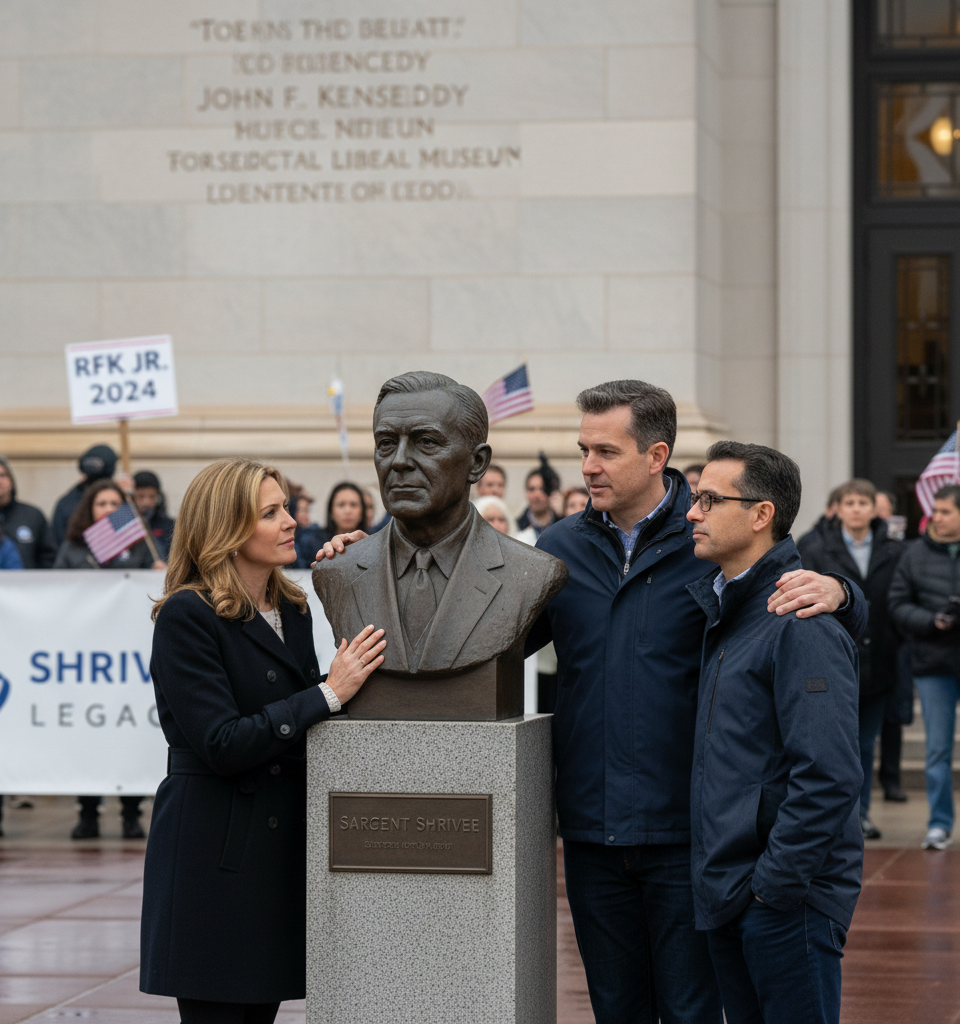
Maria Shriver and her brother, Timothy Shriver, have offered a poignant glimpse into their strategy for navigating the deep political divisions within their renowned family, specifically centered around the independent presidential candidacy of their cousin, Robert F. Kennedy Jr. In recent public statements, the siblings underscored the enduring influence of their late father, Sargent Shriver, on their approach to interpersonal conflict and maintaining familial bonds amidst stark ideological differences. This candid revelation comes at a time when political polarization continues to strain relationships across American society, making the Shrivers' insights particularly salient.
The Kennedy Legacy and Political Divergence The
Kennedy family, long synonymous with American political ambition and public service, is now grappling with an unprecedented internal split. Robert F. Kennedy Jr.'s decision to run for president as an independent has created a chasm, pitting close relatives against his campaign. This divergence is not merely a political disagreement but a profound personal challenge for a family known for its unity and collective engagement in public life. The Shriver siblings’ public commentary on the matter highlights the very personal cost of such political battles, demonstrating how even the most prominent families are not immune to the societal pressures of contemporary American politics.
Sargent Shriver's Enduring Lessons: A Moral Compass Central to Maria and Tim
Shriver's approach are the foundational principles instilled by their father, Sargent Shriver, a distinguished diplomat, peace activist, and the first director of the Peace Corps. They emphasized his teachings on respect, civil discourse, and the paramount importance of family unity above political allegiance. “Our father taught us that you can disagree without being disagreeable,” Maria Shriver reportedly stated in a recent interview, adding, “He instilled in us the belief that love and respect for family should always transcend political differences, no matter how profound.” This philosophy serves as a moral compass for the siblings, guiding their interactions with RFK Jr. and other family members despite the considerable public scrutiny and internal tensions.
Navigating the Political Landscape: A Broader Societal Reflection
This familial dynamic within the Shriver-Kennedy clan mirrors a broader societal trend where political affiliations are increasingly fracturing personal relationships. A 2023 Pew Research Center study indicated that approximately 34% of Americans report having fewer close friends due to political differences, a significant increase from a decade prior. The Shrivers’ public discourse offers a template, or at least a contemplation point, for individuals and families struggling with similar issues. Their commitment to maintaining family ties, despite public disapproval of one member’s political path, illustrates a deliberate effort to prioritize relational health over political alignment.
Expert Perspectives on Family Dynamics and Public Life
Family psychologists and political commentators view the Shrivers' shared perspective as a remarkable example of resilience and adherence to core values. Dr. Eleanor Vance, an expert in family psychology at Georgetown University, commented, “The Shrivers are demonstrating a sophisticated understanding of boundary setting and emotional intelligence. They are publicly acknowledging the disagreement while simultaneously reinforcing the enduring bonds of family, a distinction many families struggle to make.” This approach, according to Vance, is crucial for public figures whose private lives are often dissected under intense media scrutiny, offering a model for how to manage such complex situations with grace and integrity.
Future Implications and the Political Horizon As the 2024 presidential election cycle intensifies, the
Shriver-Kennedy family's internal dynamics will likely remain a topic of public interest. Robert F. Kennedy Jr.’s campaign continues to gain traction with certain demographics, though polls suggest his impact remains marginal against the leading candidates. The Shriver siblings’ ongoing dialogue about their family’s situation not only provides a human element to a highly charged political narrative but also keeps their father’s legacy of diplomacy and reconciliation at the forefront. Their efforts could well serve as a testament to the idea that even in divisive times, familial love and respect can, and perhaps should, endure.
A Legacy of Public Service Over Partisan Strife Ultimately, Maria and Timothy
Shriver are not merely discussing a family disagreement; they are articulating a philosophy rooted in their lineage that values public service, empathy, and maintaining human connection above partisan strife. By drawing on Sargent Shriver's profound influence, they are attempting to exemplify how to navigate the turbulent waters of modern politics without sacrificing the bonds that define a family. This approach, while challenging, offers a hopeful narrative — one where principles of unity and respect can, theoretically, coexist with deeply held, divergent political beliefs.