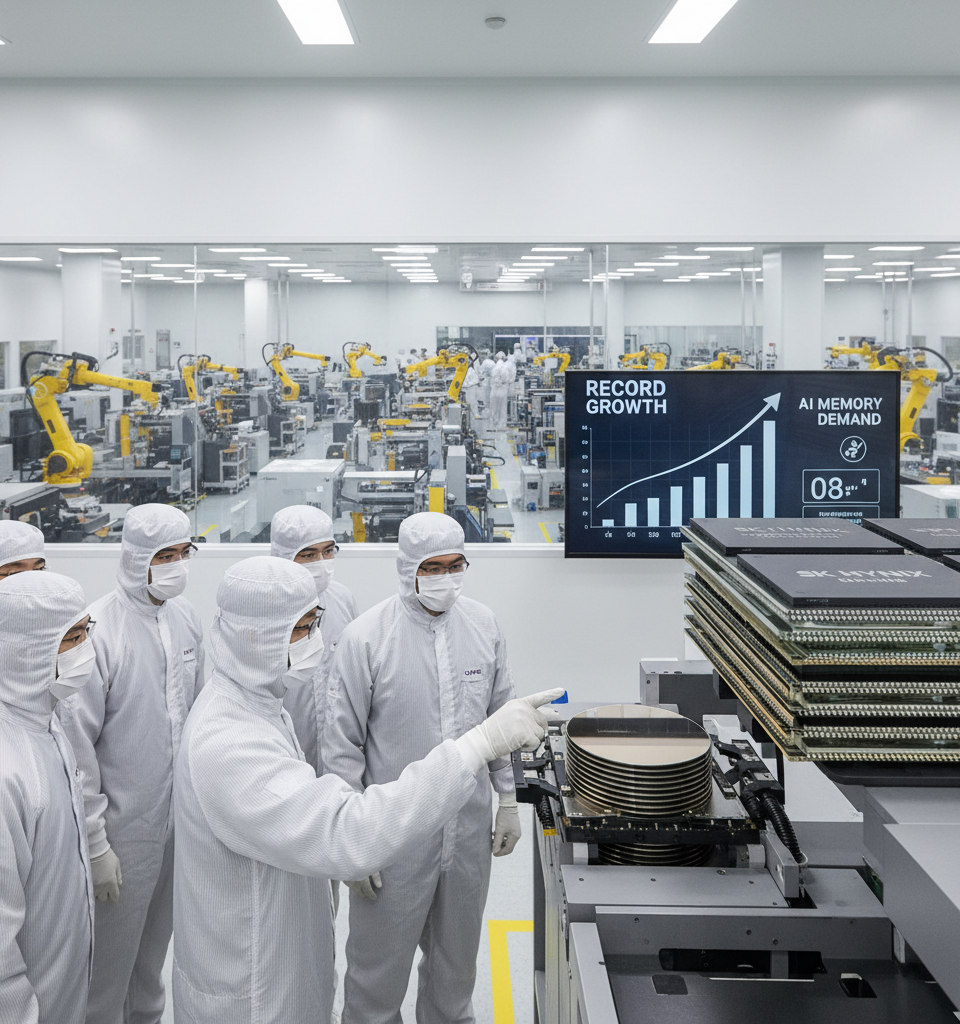
SK Hynix, a global leader in memory semiconductors, experienced a significant stock jump of 12% in trading, propelling its market valuation and cementing its position as the second most valuable company on South Korea's benchmark KOSPI index. This impressive rally is directly attributed to an escalating demand for specialized High Bandwidth Memory (HBM) chips, which are indispensable for the advanced AI servers being rapidly deployed by major technology companies. The surge underscores a profound transformation in the semiconductor landscape, where AI-driven innovations are reshaping market dynamics and investor expectations.
Context and Background
The current fervor around AI memory solutions marks a pivotal moment for the semiconductor industry, reminiscent of past technological paradigm shifts. Historically, the cost structure of an AI server was heavily skewed towards the graphics processing unit (GPU). However, with the exponential growth of large language models and other AI applications, the memory component, particularly HBM, has emerged as an equally, if not more, critical and costly element. This shift is not merely about volume but about the specialized performance and density HBM offers, which traditional DRAM cannot match for AI workloads. The increasing complexity and size of AI models necessitate memory solutions that can keep pace with the immense data throughput demanded by powerful GPUs, thus elevating HBM's strategic importance and market value.
Key Details and Market Dynamics
The dramatic increase in SK Hynix's valuation is underpinned by several key factors. Hyperscalers, including tech giants like Google, Amazon, Microsoft, and Meta, are projected to invest an astounding $725 billion in capital expenditure, much of which is earmarked for building out their AI infrastructure. A substantial portion of this investment flows directly into high-performance components like HBM. Concurrently, the price of HBM chips has seen an formidable increase, reportedly jumping by 20%, reflecting both tight supply and insatiable demand. This pricing power, combined with SK Hynix's leadership in HBM technology – particularly its advanced HBM3 and HBM3E products – has created a powerful tailwind for the company's financial performance and stock price. The company's strategic foresight in focusing on HBM development years ago is now paying significant dividends.
Industry and Market Impact
SK Hynix's ascent is emblematic of a broader recalibration within the semiconductor sector. While the mainstream memory market (DRAM and NAND) has faced cyclical downturns in the past, the niche but rapidly expanding HBM segment is demonstrating remarkable resilience and growth. This has prompted other memory manufacturers, including Samsung Electronics and Micron Technology, to intensify their efforts in HBM production, signaling a growing competitive landscape. The increased focus on HBM is also impacting the entire AI supply chain, from equipment manufacturers to packaging specialists, as they adapt to the stringent requirements and high volumes associated with these advanced memory solutions. The market is now keenly observing which players can most effectively scale their HBM production to meet the unprecedented demand.
Expert Perspective
Industry analysts and market observers are largely bullish on the future of HBM, though some caution about potential supply-demand imbalances. "The joke in semiconductor circles used to be about the GPU being the most expensive part of an AI server, but HBM is rapidly catching up, if not surpassing it, in terms of cost contribution and strategic value," noted a leading analyst from a prominent financial institution. Experts predict that the HBM market will continue its robust growth trajectory for the foreseeable future, driven by sustained AI investments.
However, concerns remain about the industry's ability to ramp up manufacturing capacity quickly enough to fully satisfy the explosive demand, leading to potential bottlenecks and continued price appreciation in the short to medium term. The complexity of HBM manufacturing, involving advanced stacking and packaging technologies, makes rapid expansion challenging.
Supply Chain Considerations
While demand for HBM is undeniable, the central challenge remains the balance between supply and demand. The intricate manufacturing process for HBM, which involves stacking multiple DRAM dies and connecting them with through-silicon vias (TSVs), is both time-consuming and expensive. Yield rates for these advanced processes are crucial. Observers are keenly monitoring the capital expenditure plans of all major memory manufacturers to gauge when supply might begin to catch up with the current voracious demand. Any sustained bottleneck in HBM supply could potentially impede the rollout of AI infrastructure, impacting the growth trajectories of hyperscalers and potentially delaying the broader adoption of advanced AI applications across industries.
What's Next
The trajectory for SK Hynix and the broader HBM market appears set for continued expansion, albeit with potential volatility related to supply chain constraints. Anticipated developments include further advancements in HBM technology, such as higher bandwidth and greater capacities with successive generations like HBM4. Companies will also likely explore diversified manufacturing strategies, including partnerships and increased internal investment, to mitigate risks and capitalize on market opportunities.
The coming quarters will be critical in assessing how memory manufacturers manage to scale their production capabilities while maintaining technological leadership. The race to dominate the AI memory market is in full swing, promising significant shifts and innovations in the semiconductor industry for years to come. Regulatory scrutiny and geopolitical factors, particularly concerning technology exports and intellectual property, could also emerge as significant considerations for the global AI supply chain.
Continued innovation in HBM technology, further investments in manufacturing capacity, and strategic partnerships will be key determinants of success in this rapidly evolving market. The sustained growth of AI applications across various sectors ensures that HBM will remain a critical technology, making memory suppliers like SK Hynix pivotal players in the global technological landscape. The market will be closely watching for signs of industry consolidation, new entrants, or disruptive technologies that could alter the current competitive dynamics.