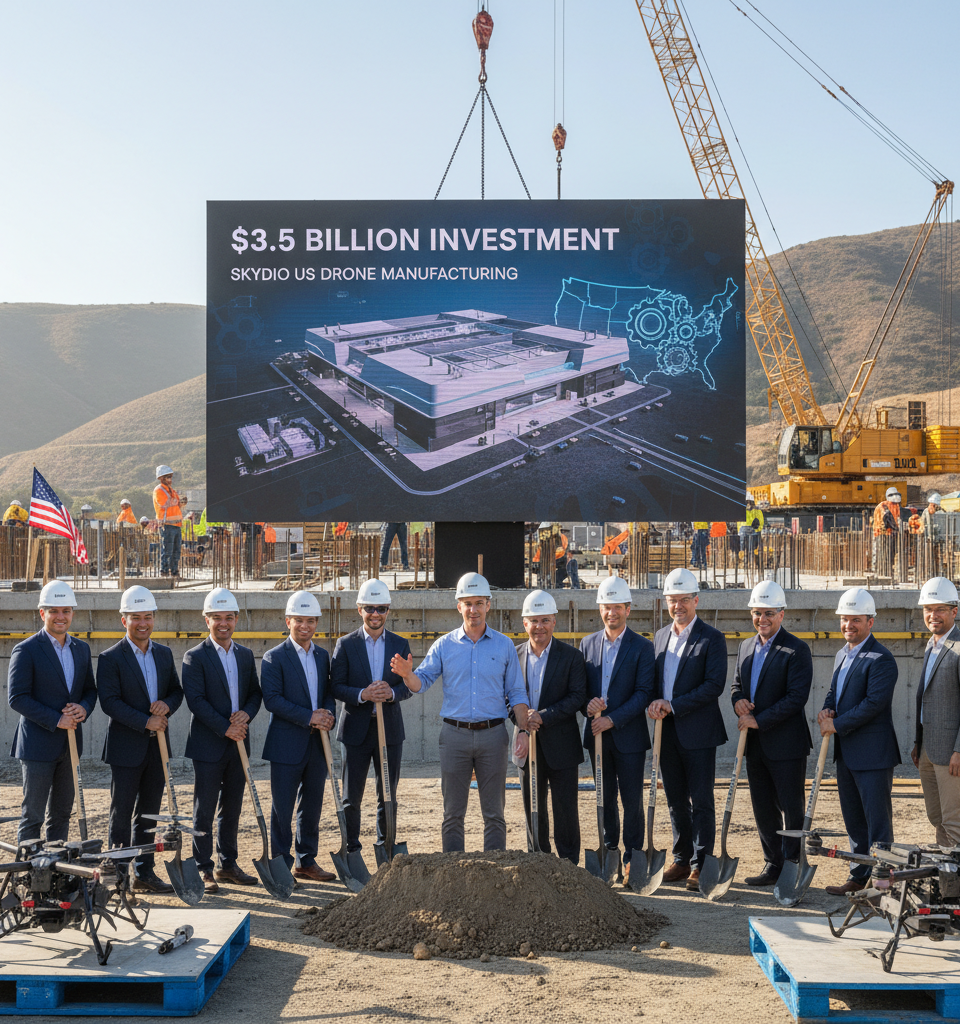
5 billion to dramatically scale its manufacturing operations within the United States. This substantial capital allocation is earmarked for the construction of a fifth facility in California, which the company states will be an astonishing "five times larger" than its existing production sites. The initiative, revealed recently, underscores a powerful trend toward reshoring critical technology manufacturing and aims to solidify the nation's leadership in autonomous systems amidst escalating geostrategic competition.
This colossal investment arrives at a critical juncture for both Skydio and the broader American technology landscape. For years, the drone industry, like many other tech sectors, has grappled with supply chain vulnerabilities heavily reliant on overseas production, particularly from China. The Skydio announcement directly addresses these concerns, signaling a profound shift towards self-sufficiency and national security in the burgeoning field of unmanned aerial vehicles (UAVs).
The company’s long-standing advocacy for American-made drones, exemplified by its commitment to supply government agencies and enterprise clients with secure, domestically produced technology, provides essential context for this strategic expansion. The core of Skydio's expansion plan centers on this new, state-of-the-art facility in California. While specific details regarding its exact location within the Golden State and the precise timeline for its completion were not immediately disclosed, the sheer scale of the investment suggests a multi-year project with significant job creation implications.
The company anticipates that this mega-facility will not only boost production capacity exponentially but also serve as a hub for advanced research and development, fostering innovation across hardware, software, and artificial intelligence relevant to drone operations. This move aligns with broader governmental efforts, such as the American Security Drone Act, which seeks to prohibit federal agencies from purchasing drones manufactured by adversaries, further incentivizing domestic production.
Industry and Market Impact Skydio's $3.5 billion commitment is poised to send ripples throughout the drone industry, potentially triggering a significant realignment of manufacturing capabilities within the United States.
This investment is not merely about increasing output; it's a strategic play to onshore crucial intellectual property and supply chain components, thereby reducing reliance on foreign entities. For competitors, it sets a new benchmark for investment in domestic production and could pressure other American drone manufacturers to follow suit. Moreover, it positions the U.S. as a more formidable global player in drone technology, challenging the dominance of certain foreign manufacturers and offering a secure alternative for defense, infrastructure inspection, public safety, and other critical applications.
Expert Perspective Industry analysts are largely hailing
Skydio’s announcement as a game-changer. Dr. Eleanor Vance, a senior aerospace defense analyst at Meridian Research Group, commented, "This isn't just about a bigger factory; it's a strategic assertion of American technological sovereignty. Skydio is putting serious capital behind the 'Made in America' ethos for a sector that is increasingly vital for national security and economic competitiveness. We anticipate this will create a positive feedback loop, attracting more talent and investment into the U.S. drone ecosystem." Others point to the long-term economic benefits, including skilled job creation and the strengthening of the domestic industrial base, particularly in advanced manufacturing.
What's Next The immediate next steps for
Skydio will involve the meticulous planning and execution of this ambitious manufacturing expansion. This includes securing the specific site, commencing construction, and initiating a substantial hiring drive to staff the new facility. Beyond the immediate operational aspects, the move is expected to have broader policy implications. It could galvanize further governmental support for domestic drone manufacturing through incentives, grants, and regulatory frameworks designed to bolster American companies. Furthermore, this expansion could accelerate the development and deployment of more sophisticated AI-powered drone systems for a wider array of commercial and defense applications, solidifying the U.S.'s technological edge in autonomous flight. The industry will be closely watching for further announcements regarding job creation figures and specific technology advancements stemming from this historic investment.