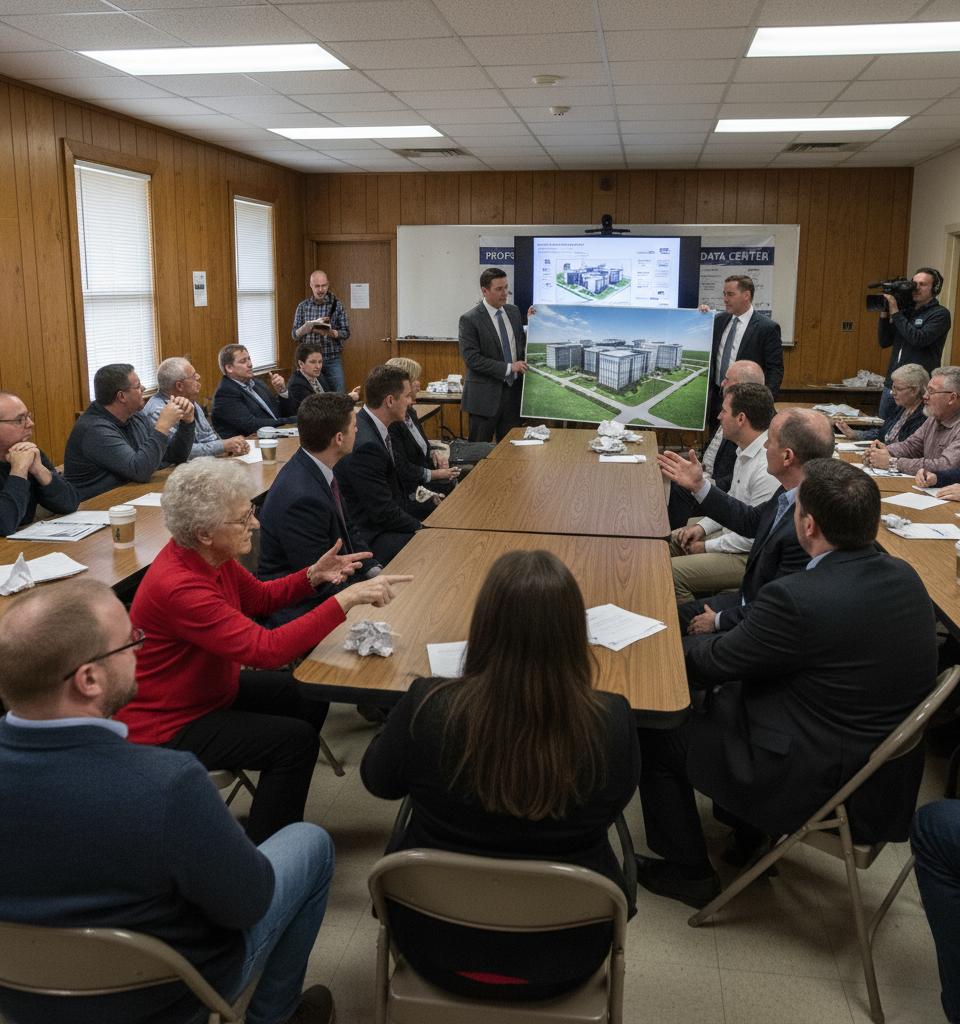
A divisive proposal to construct six sprawling data center campuses, housing a total of 51 data warehouses, has plunged a small Pennsylvania town into profound civic discord. The project, championed by developers as a boon for economic growth and technological advancement, faces fierce opposition from a significant segment of the community, who fear its irreversible impact on local infrastructure, natural resources, and the town's bucolic character. The controversy highlights a growing national tension as the insatiable demand for digital infrastructure clashes with the preservation of local environments and community integrity.
The Roots of Discord
This contentious plan emerges against a backdrop of increasing demand for data processing and storage, driven by cloud computing, artificial intelligence, and the burgeoning digital economy. For years, the town has maintained a tranquil, largely residential identity, with a population that appreciates its open spaces and access to nature. The sudden scale of the proposed data center development, which would dramatically alter the town's landscape and resource consumption profiles, has understandably sparked alarm. Residents are now forced to weigh the promise of new tax revenues and jobs against potential environmental degradation, increased noise, and the industrialization of their community.
Project Scope and Community Concerns
Developers have outlined an ambitious project that would transform thousands of acres, requiring significant electrical power and water resources. The 51 data warehouses are designed to support the processing and storage needs of major tech companies, underpinning much of the modern digital economy. Proponents emphasize the substantial long-term tax revenue projections, potentially in the tens of millions of dollars annually, which could fund local schools and public services without raising property taxes.
They also point to the creation of hundreds of construction jobs and dozens of high-paying technical positions. However, a coalition of residents and environmental groups voices strong opposition, citing concerns over massive electricity consumption, which could strain the regional grid and increase reliance on fossil fuels; significant water usage for cooling; and the potential for increased noise pollution from cooling towers and backup generators. They also express fears about the visual impact of such large, industrial facilities on the town's aesthetics and property values.
Broader Industry Implications
The dispute in this Pennsylvania town mirrors a larger trend across the United States and globally, where communities are increasingly confronting the physical footprint of the digital world. The data center industry, critical for almost every aspect of contemporary life, is projected to grow substantially, with global market size expected to reach over $500 billion by the mid-2020s. This growth invariably requires vast tracts of land, substantial energy, and reliable infrastructure, leading developers to seek out sites that offer competitive land prices, tax incentives, and robust power grids. As more of our lives move online, the demand for these digital factories will only intensify, making these local land-use battles more common and more intense.
Expert Perspectives on Sustainable Development
Industry analysts and environmental experts offer varied perspectives. Many acknowledge the undeniable necessity of data centers for economic progress and innovation. However, they also stress the imperative for sustainable development practices. "The conversation needs to shift from 'if' data centers will be built to 'how' they can be integrated responsibly," notes Dr. Evelyn Reed, an urban planning specialist. "This means prioritizing renewable energy sources, advanced cooling technologies that minimize water usage, and thoughtful site selection that mitigates environmental and community impact." Others suggest that local governments must employ stronger negotiating positions, leveraging the economic benefits to secure commitments from developers for community investments, green energy offsets, and robust environmental protections.
The Path Forward
The town council is currently navigating a complex legal and political landscape, facing intense pressure from both sides. Public hearings have been marked by passionate testimonies, with residents demanding more stringent environmental impact assessments and transparent details regarding the project's long-term resource demands. Developers are engaging in ongoing discussions, attempting to address specific community concerns and potentially modify aspects of the proposal. The ultimate decision, expected in the coming months, will likely have profound implications not only for this community but also could set a precedent for how similar projects are evaluated and approved in other towns grappling with the footprint of the digital age. The outcome will be keenly watched by developers, environmentalists, and communities nationwide.