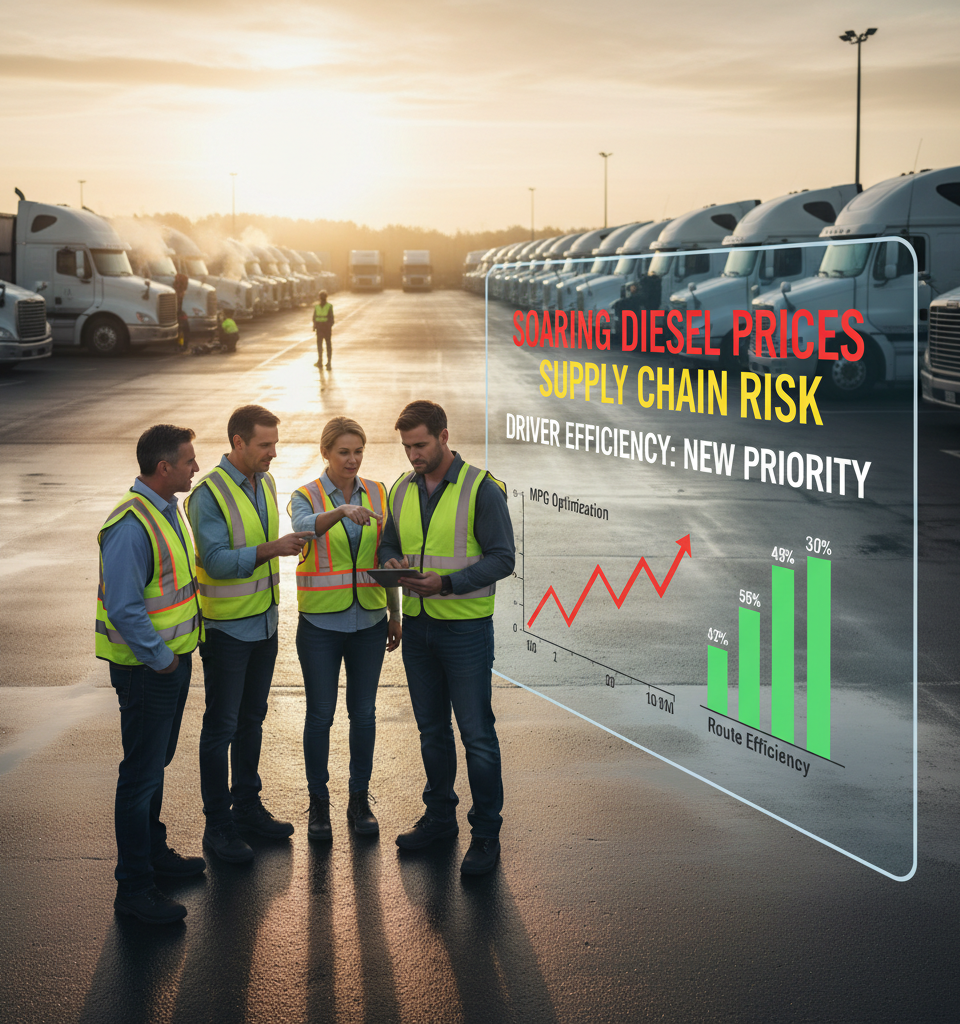
**New York, NY — ** — The global logistics and transportation industry is grappling with an unprecedented surge in diesel fuel prices, a direct consequence of escalating geopolitical tensions centered around the Strait of Hormuz. In a stunning escalation, diesel costs have reportedly spiked by nearly 50% in the last five weeks alone, reaching an average of $5.62 per gallon. Analysts are now projecting further increases, potentially exceeding $6 per gallon, should disruptions in the vital shipping lane persist into the summer, forcing carriers to adjust surcharges and compelling shippers to absorb significant new fees.
The Geopolitical Undercurrent: A Volatile Strait and its Ripple Effects
This dramatic price increase is firmly rooted in concerns over the stability of the Strait of Hormuz, a narrow waterway critical for global oil shipments. Any perceived threat or actual disruption in this region immediately sends shockwaves through the energy markets, driving up crude oil and refined product prices. The swiftness of this recent surge highlights the fragility of the global supply chain, demonstrating how geopolitical events, however localized, can have profound and immediate economic consequences worldwide, particularly for fuel-dependent industries like transportation.
Economic Fallout: Surcharges, Shippers, and a Search for Solace
The immediate fallout for the trucking and logistics sector is severe. Transportation companies are rapidly recalibrating their fuel surcharges, passing on a significant portion of these increased costs to their clients. Shippers, already navigating a complex economic landscape, are now faced with the difficult decision of absorbing these new fees or attempting to pass them down to consumers, potentially contributing to inflationary pressures. The widespread clamor for solutions underscores the critical nature of this crisis, impacting everything from consumer goods delivery to the movement of industrial raw materials.
Beyond Aerodynamics: The Unexpected Power of the Driver
Amidst this operational and financial turbulence, an intriguing lesson is emerging: the most potent lever available to fleets for managing their fuel budget isn't a cutting-edge aerodynamic package, nor is it a newly designed, hyper-efficient engine specification. Instead, industry insiders are increasingly pointing to the crucial, often underestimated, role of the driver. Optimizing driver behavior through effective training, route planning, and performance management is proving to be a more immediate and impactful strategy for fuel consumption reduction than capital-intensive technological upgrades.
Expert Insights: Human Factor Over Hardware in Fuel Efficiency
Transportation analysts are reinforcing this view, emphasizing that while technological advancements offer long-term gains, the human element provides immediate flexibility. "We’ve spent decades perfecting engine efficiency and vehicle aerodynamics, but the variable that consistently offers the most significant, untapped potential for fuel savings is the person behind the wheel," states Dr. Eleanor Vance, a leading logistics economist. "Aggressive driving, unnecessary idling, and suboptimal route choices can easily negate the benefits of even the most advanced hardware. Investing in driver training and incentive programs for fuel-efficient driving offers a superior return on investment in the current climate."
The Road Ahead: A Shift Towards Driver-Centric Strategies
Looking ahead, observers anticipate a significant shift in strategic priorities within the trucking industry. Fleets are expected to intensify efforts in driver education, focusing on techniques such as progressive shifting, maintaining consistent speeds, minimizing idle times, and leveraging engine braking. Furthermore, advanced telematics systems, once primarily used for tracking, will likely see expanded integration for real-time driver coaching and performance feedback. The long-term implication is a move towards a more holistic approach to fuel management, recognizing that the synergy between human skill and vehicle technology is paramount.
This crisis, while challenging, is forcing a re-evaluation of fundamental operational assumptions. As diesel prices continue to fluctuate in response to global events, the ability to empower and optimize the performance of individual drivers may well become the defining competitive advantage for logistics companies navigating an increasingly volatile and costly operating environment.