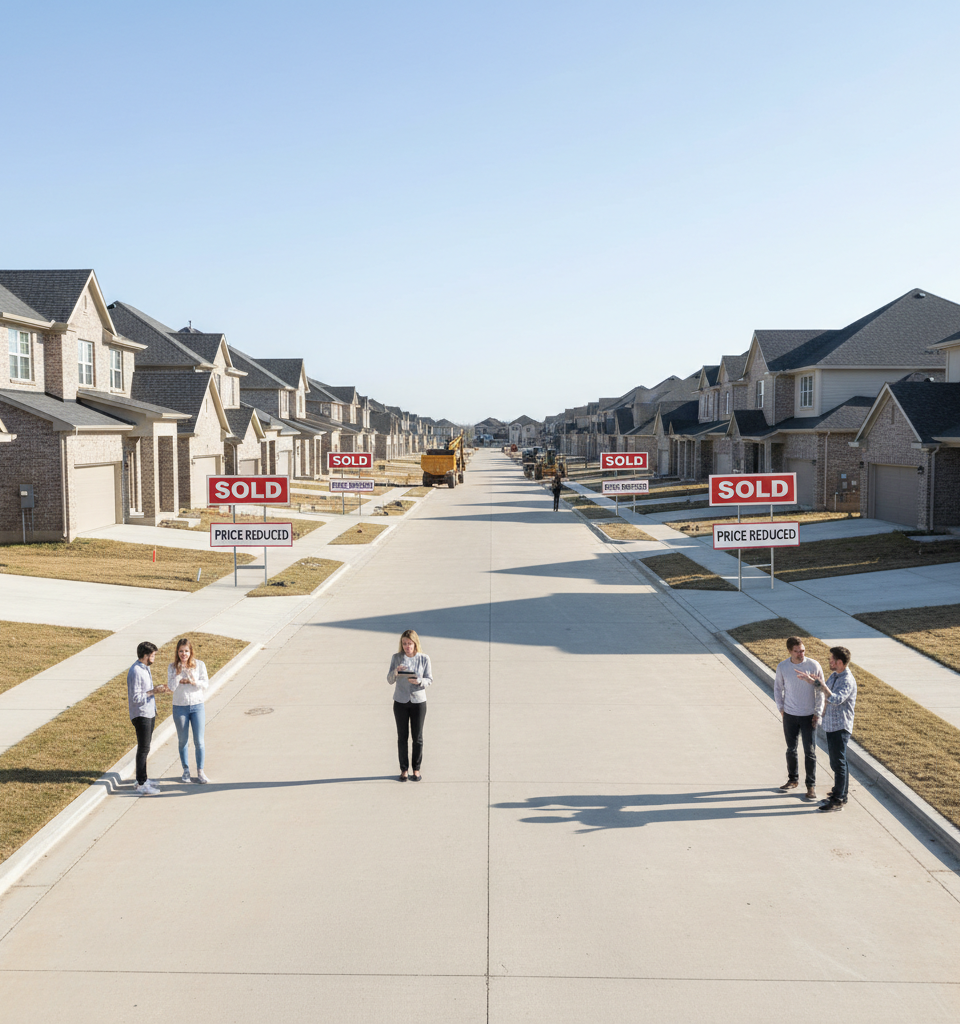
New York, NY — [Date] — The U.S. housing market is entering a precarious new phase, characterized by stubbornly high buyer demand juxtaposed with an accelerating disconnect between seller asking prices and buyer comfort levels, largely fueled by a rapid ascent in mortgage interest rates. This growing friction is leading to an increasing number of stalled transactions and withdrawn listings, despite consistent underlying interest from prospective homeowners, according to recent analyses of national real estate data.
This evolving scenario marks a significant departure from the frenzied, seller-dominated market conditions of the past two years. During the pandemic-induced housing boom, low interest rates and limited inventory ignited unprecedented bidding wars, often pushing sale prices well above asking. The current environment, while still facing housing supply constraints, is seeing affordability severely challenged by the Federal Reserve's aggressive rate hikes aimed at taming inflation. This recalibration is now forcing both buyers and sellers to confront new realities.
Recent data from major real estate platforms and industry associations underscore this widening gap. A report from Redfin indicated that nearly 60,000 home-purchase agreements were canceled in July, equivalent to 15.2% of all homes that went under contract, representing the highest percentage since the early months of the pandemic. This figure is up from 12.7% a year prior. Similarly, the National Association of Realtors (NAR) reported a noticeable dip in pending home sales, attributing the decline to affordability concerns. Average 30-year fixed mortgage rates, which hovered below 3% for much of 2020 and 2021, have now surged past 7%, effectively diminishing purchasing power by tens of thousands of dollars for the average American household.
Industry Impact and Regional Disparities
The impact of this pricing standoff is not uniform across all markets. Hotbeds like Boise, Phoenix, and Austin, which experienced some of the steepest price appreciation during the pandemic, are now seeing some of the highest rates of contract cancellations and price reductions. Conversely, more stable or less speculative markets are exhibiting greater resilience. The ripple effects extend beyond individual transactions, influencing mortgage lenders, real estate agents, and homebuilders who are all adjusting to a market where deals require more negotiation and are less assured.
Expert Insights into Market Dynamics
Real estate economists and analysts are closely monitoring these trends. Dr. Sarah Chen, Chief Economist at Horizon Analytics, commented, "What we're witnessing is a classic battle of expectations. Sellers, accustomed to peak valuations, are hesitant to budge, while buyers are facing significantly higher monthly payments due to elevated rates. The market needs to find a new equilibrium, and that often involves a period of price discovery — which translates into fewer completed sales in the short term." She added, "Demand is fundamentally still strong, driven by demographics and a persistent housing shortage, but affordability has become the dominant constraint."
What's Next for the Housing Market
Looking ahead, market participants anticipate this period of adjustment to continue through late 2023 and into early 2024. While a widespread price crash akin to 2008 is largely dismissed by most experts due to stronger lending standards and robust employment, a sustained period of moderating price growth or even modest price depreciation in some overvalued markets is increasingly probable. The coming months will likely see more sellers come to terms with the new affordability landscape, potentially leading to more price cuts and a gradual cooling of overall price appreciation. Buyers, in turn, may find themselves with more negotiation leverage, albeit with higher financing costs. The Federal Reserve's future monetary policy decisions will undoubtedly play a pivotal role in shaping the direction of mortgage rates and, consequently, the broader housing market trajectory.