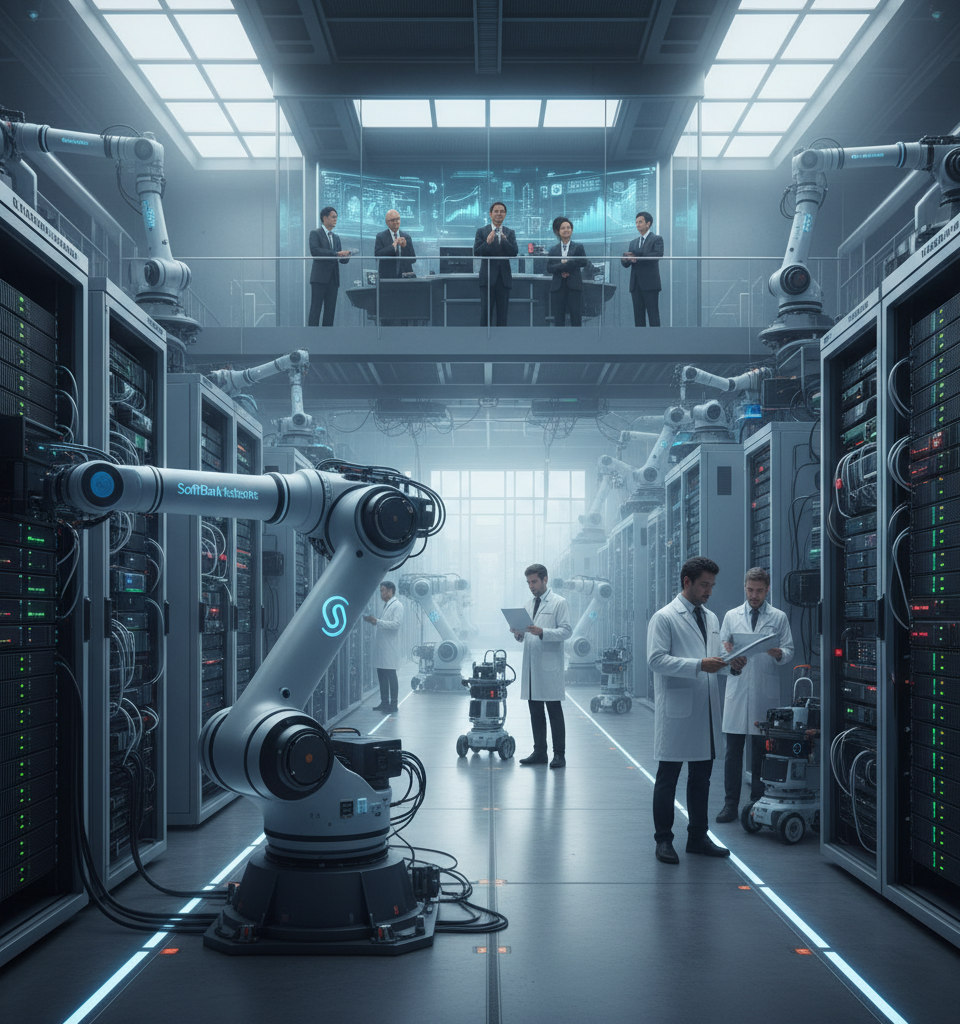
In a bold strategic maneuver, Japanese conglomerate SoftBank Group is reportedly forming a new robotics company singularly focused on the automated construction and operation of advanced data centers. This nascent venture, still largely under wraps, aims to harness the power of artificial intelligence and robotics to streamline the typically labor-intensive and time-consuming process of building critical digital infrastructure. The initiative signals SoftBank's deep commitment to the foundational elements of the AI revolution, positioning itself not just as an investor, but as an active developer of the underlying physical architecture. Early indications suggest the new entity could pursue an ambitious initial public offering (IPO) reaching an astonishing valuation of $100 billion, signaling significant market confidence in its disruptive potential.
Context and Strategic Imperative
The move comes amid an unprecedented global surge in demand for data centers, driven primarily by the rapid proliferation of generative AI models, cloud computing expansion, and increased digitalization across all industries. Traditional data center construction struggles to keep pace with this exponential growth, facing challenges in labor availability, supply chain inefficiencies, and increasing costs. SoftBank's vision directly addresses these bottlenecks, proposing a futuristic approach where robots and AI collaborate to design, assemble, and perhaps even maintain these complex facilities. This venture echoes SoftBank CEO Masayoshi Son's long-standing belief in the transformative power of AI and his willingness to make multi-billion dollar bets on technology that reshapes industries, recalling past investments in companies like Arm and Boston Dynamics.
Key Operational Details and Vision
While specific operational details remain scarce, sources close to the matter indicate that the new company will integrate advanced robotic assembly systems, predictive AI for site optimization, and automated quality control to dramatically reduce construction timelines and operational expenses. The goal is not merely to build faster, but to build more efficiently and sustainably, potentially incorporating advanced cooling systems and renewable energy integration at an industrial scale. The conceptual framework suggests a pivot from human-centric construction to a highly automated, module-based methodology, where robots handle heavy lifting, precision placements, and repetitive tasks, thereby freeing human oversight for more complex problem-solving and innovation. This also aims to mitigate the risk of human error and improve safety standards on construction sites.
Industry and Market Impact
The potential entry of a SoftBank-backed, robot-driven data center constructor could send shockwaves through both the construction and data center industries. Currently, the data center construction market is dominated by traditional contractors and specialized engineering firms. This new model could introduce unprecedented competition, forcing existing players to accelerate their adoption of automation and AI. Furthermore, it could significantly alter the supply-demand dynamics for data center capacity, potentially lowering costs for hyperscale cloud providers and enterprises. The reported $100 billion IPO valuation, if realized, would place this new entity among the world's most valuable infrastructure companies, highlighting the market's bullish outlook on technology-driven solutions to infrastructure challenges.
Expert Analysis and Projections
Industry analysts are cautiously optimistic, acknowledging SoftBank's track record of identifying and scaling disruptive technologies. "This isn't just about building data centers; it's about redefining infrastructure development for the AI era," commented one leading technology analyst on background. "If SoftBank can successfully execute this vision, the implications for efficiency, speed, and cost reduction in critical infrastructure could be monumental." Concerns include the massive capital expenditure required, the complexity of deploying such advanced robotics at scale, and the potential for regulatory hurdles or unforeseen technical glitches. However, the sheer scale of SoftBank's financial backing and its strategic position at the nexus of AI and robotics mitigate some of these risks.
Future Implications and Next Steps
The launch of this new company represents a significant pivot for SoftBank towards actively building the physical backbone of the digital economy, rather than solely investing in its components. Future developments will likely include strategic partnerships with key technology providers, potential acquisitions of complementary robotics or automation firms, and major investment rounds as the company scales its operations. The success of this venture could not only reshape the data center industry but also serve as a blueprint for AI and robotics integration in other large-scale infrastructure projects, from smart cities to advanced manufacturing facilities. All eyes will be on SoftBank for further announcements regarding this ambitious and potentially transformative undertaking, particularly as details regarding its technology stack and market entry strategy emerge.