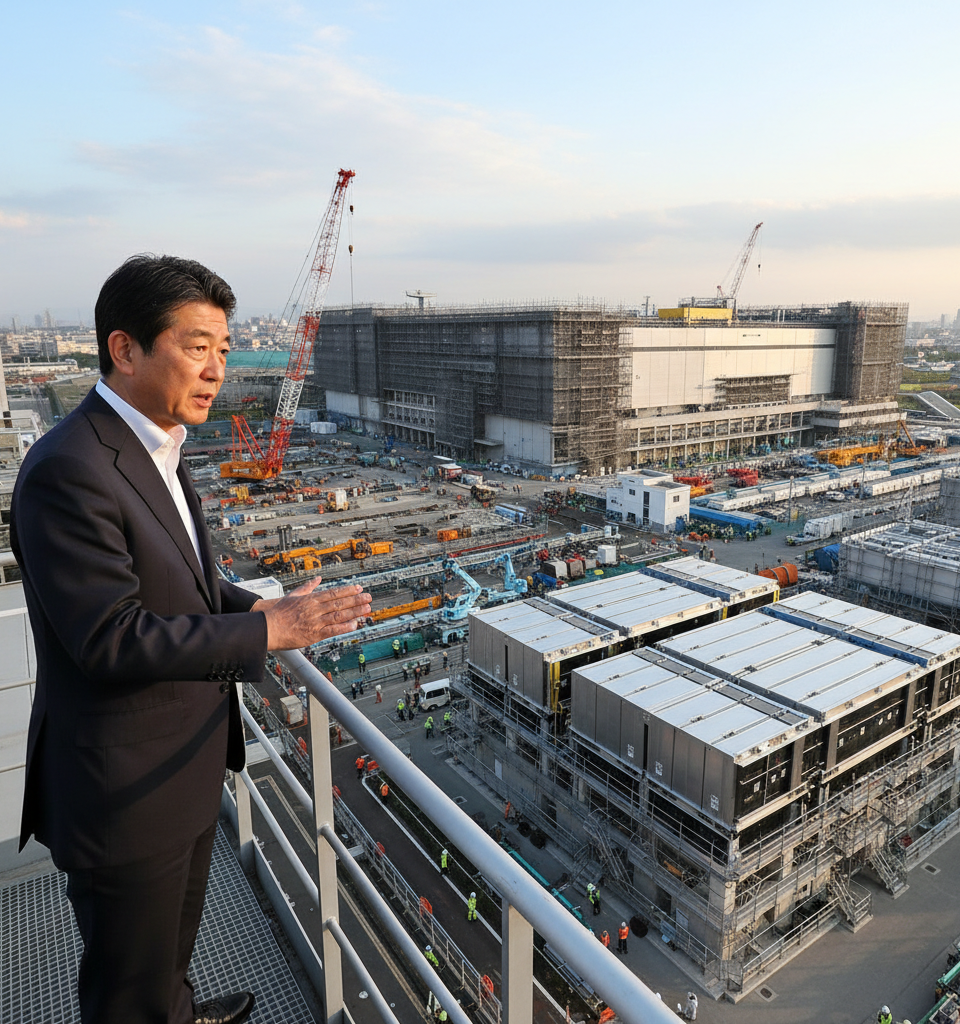
SoftBank Corp. has unveiled ambitious plans to repurpose a substantial section of Sharp’s erstwhile LCD manufacturing plant in Sakai, Osaka, into a cornerstone facility for producing advanced batteries specifically designed for artificial intelligence (AI) data centers. This pivotal development underscores SoftBank’s aggressive push into the AI computing sector, aiming to establish one of Japan’s most significant battery production lines.
While a five-year timeline, placing projected production commencement around 2031, has been outlined, the urgency of powering rapidly expanding AI infrastructure suggests an accelerated rollout might be strategically pursued. This initiative comes at a critical juncture for the burgeoning AI industry, where the immense computational demands of large language models and other AI applications are creating unprecedented energy requirements. SoftBank's move to create an in-house battery production capability is a direct response to this growing challenge, positioning the company to control a vital component of its expansive AI ecosystem.
The historical context of the Sharp Sakai plant, once a symbol of Japan's LCD dominance, now transitioning to a high-tech energy production hub, also marks a significant economic and industrial shift within the region.
Key Strategic Details and Investments
The conversion of the Sakai plant represents a multi-faceted strategic play by SoftBank. The company has been meticulously building a vertical integration stack spanning critical components for AI, including investments in chip technologies through Arm Holdings, Graphcore, and Ampere Computing. Furthermore, SoftBank's involvement in modular data center manufacturing via Lordstown Motors and energy generation assets significantly bolsters its end-to-end control. Specific financial figures for the battery plant conversion have not yet been publicly disclosed, but experts anticipate a substantial investment, potentially running into hundreds of millions of dollars, given the scale and advanced nature of battery production required for high-density AI data centers. The focus will likely be on developing high-capacity, fast-charging, and durable battery solutions to ensure uninterrupted power supply for critical AI operations.
Industry Impact and Market Dynamics
This bold step by SoftBank is poised to send ripples across the AI infrastructure, energy storage, and manufacturing sectors. By establishing a dedicated battery facility, SoftBank aims to mitigate supply chain risks and potentially reduce operational costs associated with procuring large-scale energy storage solutions from third parties. The move also signals a growing trend among major tech players to invest directly in the ancillary infrastructure necessary to support their core AI and computing ambitions. It could spur other technology giants to consider similar vertical integration strategies, particularly as the demand for sustainable and reliable energy solutions for data centers continues to escalate. The Japanese government, keen on revitalizing its manufacturing sector and bolstering its position in futuristic technologies, is likely to view this investment favorably, potentially offering incentives or support.
Expert Analysis and Future Implications
Industry analysts view SoftBank's battery plant initiative as a prescient and necessary step in the race for AI dominance. "The energy demands of AI are becoming a bottleneck, and SoftBank's move is a proactive solution to secure a critical resource," stated Dr. Kenji Tanaka, a senior analyst specializing in technology infrastructure at Tokyo Securities. "Controlling the battery supply chain will provide them with a significant competitive advantage in terms of cost, customizability, and resilience." Concerns, however, remain around the highly competitive and capital-intensive nature of battery manufacturing, as well as the technical challenges of scaling production to meet the aggressive growth trajectory of AI. Looking ahead, the successful implementation of this battery production facility could solidify SoftBank's position as a holistic provider of AI infrastructure. Future developments may include exploring advanced battery chemistries, such as solid-state batteries, which promise higher energy density and improved safety. Furthermore, SoftBank is likely to integrate renewable energy sources more deeply into its data center operations, with these locally produced batteries playing a crucial role in grid stabilization and peak-shaving. The Sakai plant could also become a hub for research and development in energy storage for AI applications, fostering innovation and attracting top talent to the region. This strategic pivot not only addresses the immediate power needs of AI data centers but also positions SoftBank as a key player in the broader energy transition, leveraging its vast resources to build a resilient and self-sufficient AI ecosystem. The world will be watching closely to see how quickly SoftBank can bring this vision to fruition and the impact it will have on the global AI and energy landscapes.