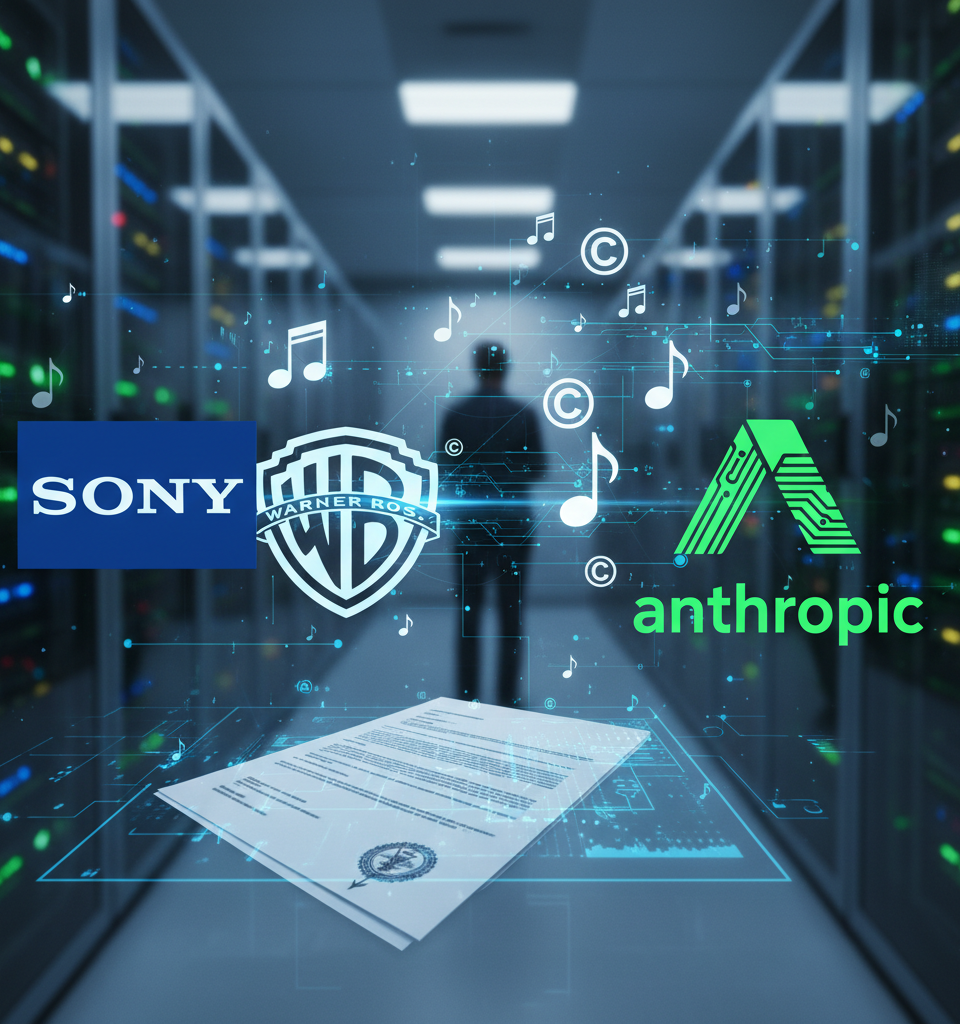
The legal battle between established content creators and emerging artificial intelligence developers intensified today, September 6, 2026. Music publishing giants Sony Music Publishing and Warner Chappell Music have filed a lawsuit against AI developer Anthropic. The lawsuit, lodged in a federal court, claims 'blatant violation' of copyright law, alleging widespread unauthorized use of their protected musical works within Anthropic's AI systems.
This legal challenge raises significant questions for businesses engaged in global digital trade and cross-border innovation. The outcome could redefine intellectual property rights in the age of AI, impacting how international content is sourced, licensed, and protected, potentially creating new compliance burdens or licensing opportunities for global sellers.
The core of the complaint from Sony and Warner centers on the allegation that Anthropic, a prominent AI developer known for its Claude family of AI models, has ingested and processed vast amounts of copyrighted material without permission or compensation. The lawsuit specifically cites 'thousands of instances' where their copyrighted works, including lyrics and musical compositions, were allegedly used to train Anthropic's AI models. This practice, the plaintiffs contend, allows Anthropic's AI to generate outputs that are either direct copies or derivative works of their original content, thereby infringing on their exclusive rights.
Broad Industry Implications
This lawsuit is not an isolated event but rather the latest in a growing series of legal confrontations between copyright holders and AI companies. It underscores a fundamental tension: AI developers argue that using publicly available data for training is transformative and falls under fair use, while content creators assert that their intellectual property is being exploited without proper licensing. The music industry, particularly sensitive to copyright infringement due to its historical struggles with digital piracy, is taking a proactive stance to protect its catalog in the AI era.
The potential impact on the broader AI and creative industries is substantial. A ruling in favor of Sony and Warner could necessitate significant changes in how AI models are trained, potentially leading to more stringent licensing requirements for data used in development. This could increase operational costs for AI firms and slow the pace of innovation, or conversely, establish clearer frameworks for ethical AI development and compensation for creators. Conversely, if Anthropic prevails, it could set a precedent that broadens the scope of fair use in AI training, potentially diminishing the control content owners have over their works.
The Precedent-Setting Nature of the Case
Legal experts suggest this case could be a landmark decision, shaping the future legal landscape for artificial intelligence. Similar lawsuits involving authors and visual artists against AI developers like OpenAI and Stability AI are also progressing through the courts. The outcomes of these cases are anticipated to establish critical precedents regarding data ingestion, derivative works, and fair use within the context of generative AI. The challenge lies in applying existing copyright law, which was not conceived with AI in mind, to novel technological capabilities.
What Comes Next
As the legal process unfolds, both sides are expected to present extensive technical and legal arguments. Anthropic will likely argue its use of copyrighted material constitutes fair use, essential for the advancement of AI. Sony and Warner, on the other hand, will aim to demonstrate direct harm and unauthorized commercial exploitation of their protected works. The legal proceedings are expected to be lengthy, potentially spanning several years, with significant discovery and expert testimony. The eventual ruling, or any settlement reached, will be closely watched by technology companies, creative industries, and legal scholars worldwide, as it will undoubtedly influence future AI development and content licensing strategies across global markets.