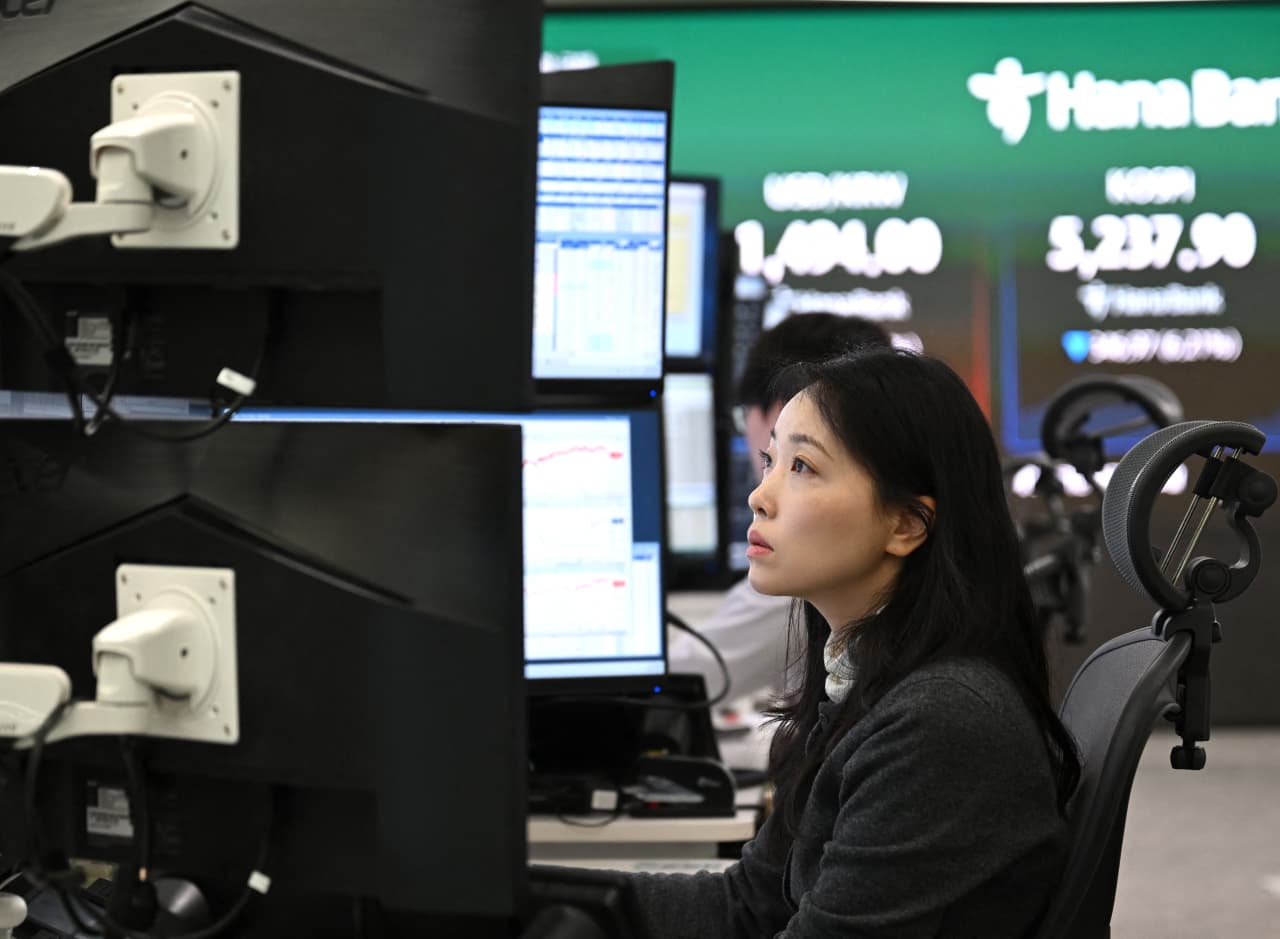
Seoul, South Korea – The once-heralded South Korean stock market, projected just months ago as the world's strongest performer for the year 2026, has abruptly veered off course, experiencing a sharp downturn that rendered it the worst-performing major market throughout March. This dramatic reversal underscores a significant shift in the global economic landscape, as the twin pillars of sustained low energy costs and the insatiable demand for AI-driven memory chips, which profoundly benefited the Korean economy, begin to falter.
The Fading Tailwind: Energy and AI
For much of 2024 and extending into 2025, South Korea reaped substantial benefits from a period of relatively inexpensive global energy prices. As a significant industrial powerhouse and a net energy importer, reduced energy expenditures translated directly into lower operational costs for its manufacturing sector, boosting competitiveness and corporate profits. Concurrently, the unprecedented global surge in artificial intelligence development fueled a massive, sustained demand for advanced memory chips, particularly those produced by Korean giants like Samsung Electronics and SK Hynix. This confluence of factors provided an exceptional tailwind, propelling the Korean market to impressive returns and forecasts of continued dominance.
However, both these fundamental drivers are now showing signs of weakness, casting a long shadow over the market. Global energy prices have begun to tick upwards, eroding the cost advantage enjoyed by Korean industries. More critically, the initial explosive growth in AI-related hardware demand, while still strong, appears to be normalizing from its peak, leading to concerns about the sustainability of the previously supercharged returns for memory chip manufacturers. This sudden shift has caught investors off guard, leading to a rapid reassessment of Korea's economic outlook.
Market Contraction and Investor Reaction
Throughout March, the benchmark Korea Composite Stock Price Index (KOSPI) witnessed a decline exceeding 7%, marking its steepest monthly fall in over two years. This contraction wiped out billions in market capitalization and sent jitters through both domestic and international investor communities. Major players in the memory chip sector, which comprise a significant portion of the KOSPI's weighting, experienced particularly steep corrections. Samsung Electronics, for instance, saw its share price drop by approximately 8% in March alone, while SK Hynix, another bellwether, recorded an even sharper decline of nearly 12%. Foreign institutional investors, who had previously been net buyers, turned into significant sellers, liquidating positions in anticipation of further volatility.
Broader Economic Implications
The impact extends beyond just equity markets, raising concerns about South Korea's broader economic trajectory. The manufacturing sector, heavily reliant on export demand for semiconductors and other electronics, could face reduced earnings guidance if global demand moderates further. While the Bank of Korea has maintained a relatively stable monetary policy stance, sustained market weakness and potential economic slowdown could pressure policymakers to reconsider their approach. The government, keen to maintain economic stability, is now closely monitoring export data and global trade indicators for signs of recovery or further deterioration.
Expert Analysis and Outlook
Analysts are divided on the short-to-medium-term outlook for South Korea. Dr. Kim Min-Joon, a senior economist at the Korea Economic Institute, commented, "The euphoria surrounding the AI boom led to some unrealistic expectations for sustained, exponential growth in memory chip demand. What we're seeing now is a healthy, albeit painful, recalibration. The underlying technology demand for AI remains robust, but the pace has become more realistic. Investors need to differentiate between a structural slowdown and a normalization of growth." Others, however, are more cautious, pointing to geopolitical uncertainties and a potential global economic soft patch as additional risks for export-dependent economies like South Korea.
Navigating the Future
Looking ahead, the South Korean market faces a period of introspection and potential restructuring. Companies may need to diversify their revenue streams, reduce reliance on single-product categories, and continue to innovate to maintain their competitive edge. Government incentives for new growth sectors and diversification away from traditional manufacturing may also play a crucial role. For investors, the volatility may present buying opportunities for fundamentally strong companies whose valuations have been compressed, but a more selective and cautious approach is advised. The days of effortless gains driven by external tailwinds appear to be over, ushering in an era where strategic foresight and resilience will be paramount for South Korea's economic health.
The global economic landscape remains fluid, and South Korea’s journey from anticipated market leader to current underperformer serves as a stark reminder of the rapid shifts that can occur in interconnected financial markets, particularly those heavily reliant on specific technological and commodity cycles.