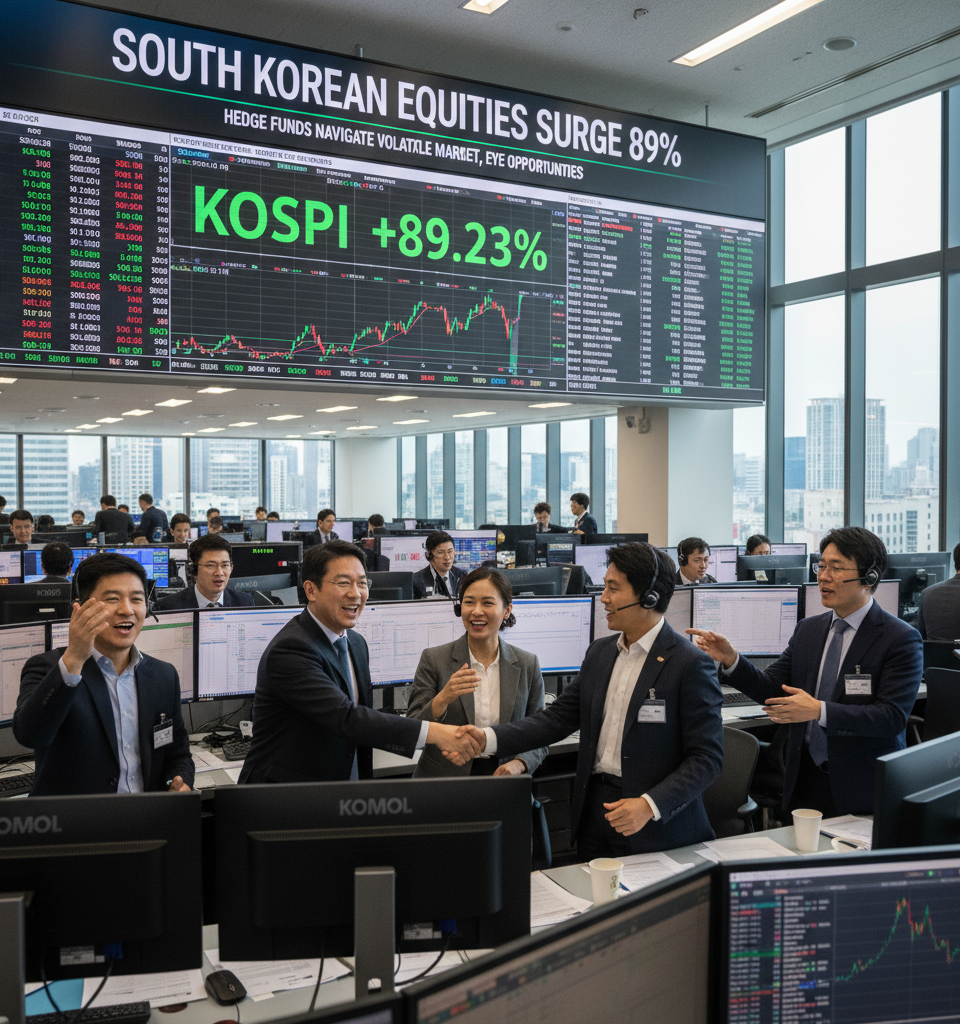
South Korea's KOSPI index has seen an extraordinary 89% appreciation this year, marking it as one of the best-performing major equity markets globally. This remarkable surge has attracted the keen interest of hedge fund managers, who are now diligently analyzing the underlying factors driving this growth and strategizing how to best position themselves within this rapidly evolving environment. The unprecedented rally presents both significant opportunities for outsized returns and considerable risks given its rapid ascent.
Context and Background of the Rally
This dramatic upswing in South Korean equities is largely attributable to a confluence of factors, including robust export performance, particularly in the technology sector, and a global recovery narrative post-pandemic. The country's strong manufacturing base and its pivotal role in the global supply chain, especially concerning semiconductors and electric vehicle components, have propelled its industries forward. Furthermore, substantial government stimulus measures and historically low interest rates have provided a fertile ground for corporate earnings growth and investor confidence, with foreign capital inflows also playing a significant role in fueling the rally. This contrasts sharply with periods of relative stagnation seen in previous years, placing South Korea firmly in the spotlight for international investors.
Key Drivers and Market Specifics
The bulk of the gains has been concentrated in technology giants and manufacturers. Companies like Samsung Electronics and SK Hynix, critical players in the global semiconductor industry, have seen their valuations soar. The electric vehicle battery sector, home to innovators such as LG Energy Solution and Samsung SDI, has also been a major beneficiary, aligning with global shifts towards sustainable energy. Data from market analytics firms indicates that institutional investors, both domestic and foreign, have poured billions into these sectors, driving up share prices. Executives at several listed companies have expressed cautious optimism, acknowledging tailwinds from global demand but also recognizing potential headwinds from supply chain disruptions and geopolitical uncertainties.
Broad Market and Industry Impact
The strong performance of the South Korean market has significant implications for global investment portfolios. It underscores the potential for growth in emerging and developed Asian markets, challenging the traditional dominance of Western economies in terms of investment returns. The surge also impacts related industries globally, particularly those dependent on Korean-made components or technologies. For example, a robust semiconductor sector in South Korea has ripple effects across consumer electronics, automotive, and data center industries worldwide. This creates both opportunities and competitive pressures for companies operating in these interconnected value chains.
Hedge Fund Perspectives and Strategies
Seasoned hedge fund managers are approaching the Korean market with a blend of enthusiasm and prudence. Several funds are reportedly employing a long-short strategy, balancing bullish bets on top-tier tech and EV battery stocks with short positions in less resilient, overvalued companies. Others are focusing on deep-value plays in less cyclical sectors, anticipating a broader market rotation. A New York-based hedge fund manager, speaking on condition of anonymity, noted, "The sheer momentum is undeniable, but selectivity is paramount. We're scrutinizing balance sheets and growth sustainability, not just chasing trends." Analysts from firms like Goldman Sachs and JPMorgan have highlighted the importance of fundamental analysis, advising diversification within the Korean market rather than concentrating solely on headline-grabbing mega-caps.
Future Outlook and Potential Developments
The critical question for investors is whether this rally is sustainable. Future performance will largely depend on the global economic trajectory, particularly demand for technology and semiconductors, and the continued stability of international trade relations. Domestically, ongoing corporate governance reforms and potential shifts in monetary policy could also influence market direction. Upcoming earnings reports from key conglomerates are expected to provide further insights into the health of corporate balance sheets. Analysts expect continued volatility but also potential for further, albeit moderated, growth as global economies continue to recover and digital transformation accelerates, placing Korea's tech-heavy market in a favorable position.