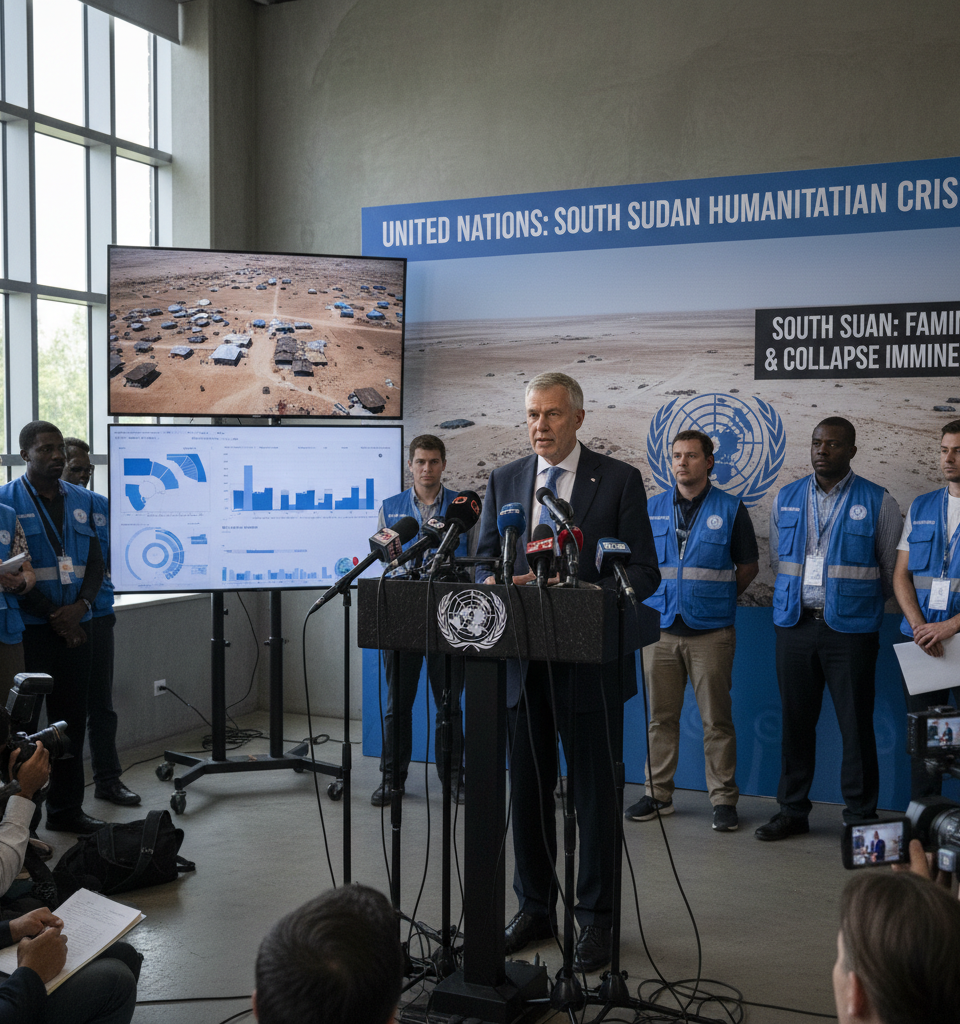
JUBA, SOUTH SUDAN – South Sudan faces an imminent and multifaceted catastrophe, with the United Nations' top aid official, Tom Fletcher, issuing a stark warning that the nation is at grave risk of descending into a "full-scale famine and collapse." The alarming declaration, made during a recent briefing, highlights the escalating humanitarian emergency gripping the world's youngest country, where years of intermittent conflict, widespread displacement, and severe economic downturns have pushed millions to the brink.
A Nation Under Siege: Context of a Deepening Crisis
This crisis is not a sudden one but rather the culmination of prolonged instability since South Sudan gained independence in 2011. The optimism of nationhood has been repeatedly overshadowed by internal conflict, notably a civil war from 2013 to 2018, which devastated infrastructure, displaced over 4 million people, and disrupted food production. Even with a fragile peace agreement in place, localized violence persists, exacerbating food insecurity and limiting humanitarian access. The current threat of famine is intertwined with global food price inflation, impacts of climate change manifesting as recurrent floods and droughts, and a severely weakened national economy.
Unpacking the Peril: Key Details and Alarming Statistics
Fletcher’s assessment points to several critical indicators. An estimated 7.76 million people – over two-thirds of the population – are currently facing severe food insecurity, categorized as IPC Phase 3 (Crisis), Phase 4 (Emergency), or Phase 5 (Catastrophe). Among these, approximately 1.4 million children under the age of five are projected to suffer from acute malnutrition this year, a figure that represents one of the highest rates globally. The economic fallout is equally devastating; the South Sudanese Pound has depreciated sharply against the U.S. dollar, driving up the cost of essential goods, while oil revenues, the country's primary income source, remain vulnerable to global market fluctuations and internal mismanagement. Humanitarian operations, vital for survival, are severely underfunded, with a projected 2024 humanitarian response plan requiring over $1.7 billion, less than 20% of which has been secured to date.
Widespread Impact: Beyond Food Insecurity
The ripple effects of this impending famine extend far beyond immediate hunger. A full-scale collapse in South Sudan would trigger massive cross-border displacement, placing immense pressure on neighboring countries like Uganda, Sudan, and Kenya, which are already hosting large refugee populations. Regional stability would be further jeopardized, potentially igniting new conflicts over scarce resources or exacerbating existing tensions. Furthermore, the limited developmental progress made in health and education sectors since independence would be entirely erased, trapping future generations in a cycle of poverty and vulnerability. The international aid architecture would face an unprecedented challenge in responding to such a widespread and complex emergency.
Experts Weigh In: A Call for Coordinated Action
Development economists and human rights advocates echo Fletcher's grave concerns, emphasizing the urgent need for a multifaceted approach. Dr. Anya Singh, a senior researcher specializing in East African affairs at the Council on Foreign Relations, notes, "South Sudan's crisis is a nexus of governance failures, climate vulnerability, and entrenched conflict. A purely humanitarian response, while critical, addresses symptoms, not root causes. Sustainable solutions require robust peacebuilding, climate adaptation strategies, and transparent economic governance." She stresses that donor fatigue poses a significant hurdle, but the cost of inaction would far outweigh the investment required for preventative measures and comprehensive relief.
The Path Ahead: Urgent Interventions and Future Implications
Averting a full-scale famine in South Sudan necessitates immediate and substantial action. This includes a rapid scale-up of food assistance, nutritional support programs, and emergency health services. Crucially, increased funding for humanitarian operations is paramount. Beyond immediate relief, the international community must press for greater accountability in governance, invest in climate-resilient agriculture, and support genuine peace processes that address the underlying drivers of conflict. Without a concerted and sustained effort, South Sudan risks becoming another tragic example of a nation overwhelmed by interacting crises, with long-term consequences for its population and regional stability.
International Responsibility and the Cost of Delay
As the alarm bells ring louder, the global community faces a critical moment of decision. The human cost of a full-scale famine would be immeasurable, leading to countless preventable deaths, widespread suffering, and long-term societal damage. The economic cost of responding to a full-blown catastrophe would also be orders of magnitude higher than proactive investments in prevention and resilience. The coming months will be pivotal in determining whether South Sudan can pull back from the precipice or if it will indeed succumb to the looming disaster predicted by the UN aid chief.