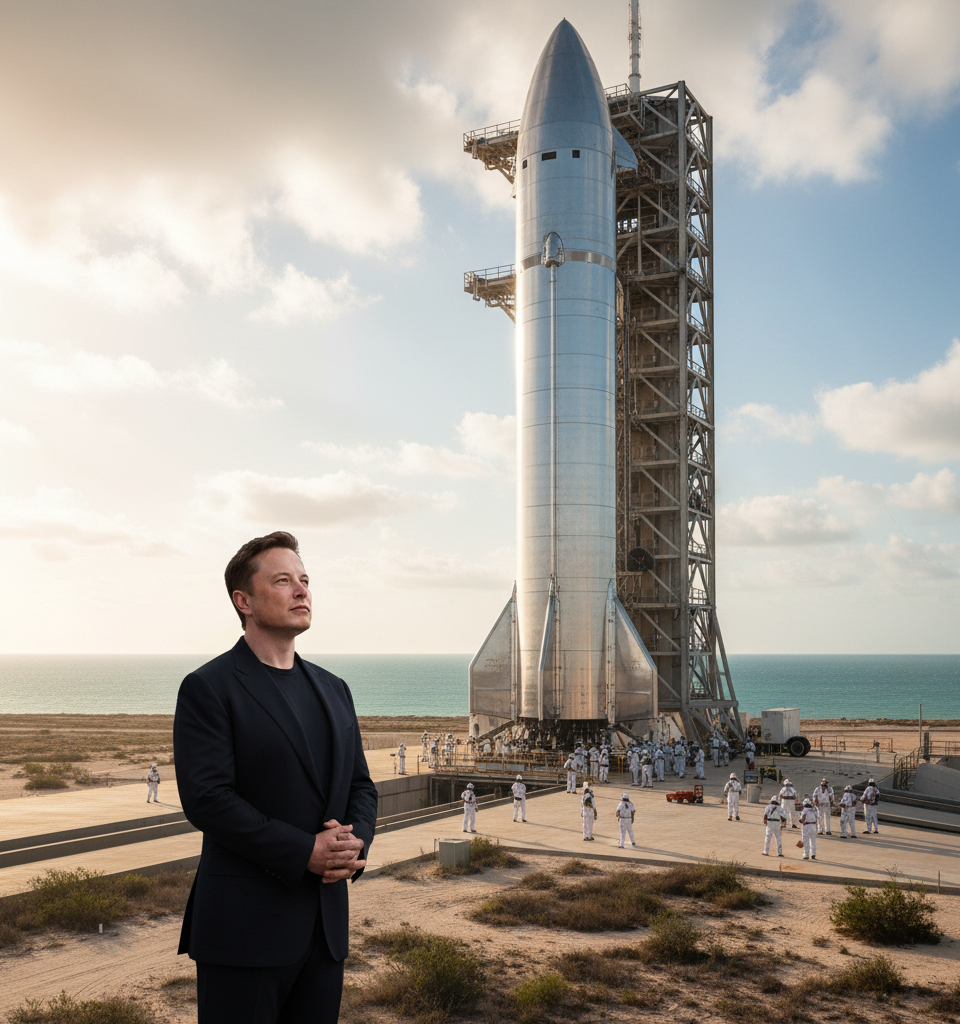
SpaceX, the private aerospace manufacturer and space transportation services company founded by Elon Musk, is poised to potentially announce its initial public offering (IPO) as early as next week, according to a recent Reuters report. The move, if confirmed, would represent a transformative event for the company, providing a gateway to substantial public capital and fundamentally altering its financial landscape as it pursues audacious goals such as Martian colonization and expanding its Starlink satellite internet constellation.
Context and Background
For years, industry observers and investors have speculated on when – not if – SpaceX would go public. Held tightly under private ownership since its inception in 2002, the company has grown into one of the world's most valuable privately held enterprises, with a valuation estimated to be north of $180 billion in its most recent funding rounds. This valuation reflects its dominance in the commercial launch market, its innovative reusable rocket technology, and the rapid expansion of Starlink, which now boasts over 2.6 million subscribers globally. An IPO would allow early investors and employees to realize returns on their investments while providing a war chest for future ventures that require immense capital outlays.
Key Details and Specifics
While specific financial details, such as the target valuation for the IPO or the number of shares to be offered, remain undisclosed, the sheer scale of SpaceX suggests it would be one of the largest technology IPOs in recent memory. The Reuters report, citing anonymous sources familiar with the matter, indicated that the formal announcement could come within days. An IPO would potentially involve listing on a major U.S. stock exchange, such as the NASDAQ or NYSE, opening its shares to a broad base of institutional and retail investors. Revenues for SpaceX reportedly exceeded $9 billion in the last fiscal year, primarily driven by launch services for NASA and commercial clients, alongside growing Starlink subscriptions.
Industry and Market Impact
The public listing of SpaceX would send significant ripples across multiple sectors. In the space industry, it could galvanize further investment into commercial space, pushing competitors to innovate faster and seek more capital. For the broader tech market, it would provide a much-needed jolt, potentially signaling a resurgence in the IPO market after a relatively quiet period. Investors seeking exposure to disruptive technologies and the burgeoning space economy would find a new, high-profile opportunity. However, it also raises questions about how the company's long-term, high-risk endeavors, like Starship's development and ambitious Mars missions, will be perceived by public market scrutiny and demands for quarterly returns.
Expert Perspective
Analysts generally view an IPO as a logical next step for SpaceX, albeit one that comes with new pressures. “SpaceX has consistently defied expectations, demonstrating both technological prowess and impressive execution,” commented Sarah Jenkins, a senior aerospace analyst at Quantum Capital. “Going public will provide the liquidity and access to capital necessary for their truly monumental undertakings. However, public markets demand transparency and consistent financial performance, which can be a double-edged sword for a company known for its bold, sometimes unpredictable, developmental cycles.” Others point out that Starlink, with its recurring revenue model, could be a key driver for investor attractiveness, providing a more stable financial footing alongside the high-stakes launch business.
What’s Next
Following any initial announcement, a rigorous process of regulatory filings, investor roadshows, and pricing discussions would ensue. The actual trading of shares could commence several weeks or months after the initial declaration, depending on market conditions and regulatory approvals. The capital raised would likely accelerate development of Starship, SpaceX's next-generation fully reusable launch vehicle designed for deep-space travel, and further expand Starlink's global coverage, particularly in underserved regions. The long-term implications include potentially intensified competition in satellite internet and heavy-lift launch markets, as well as a heightened public fascination with space exploration investments. All eyes will be on SpaceX for confirmation of this pivotal financial maneuver in the coming days.