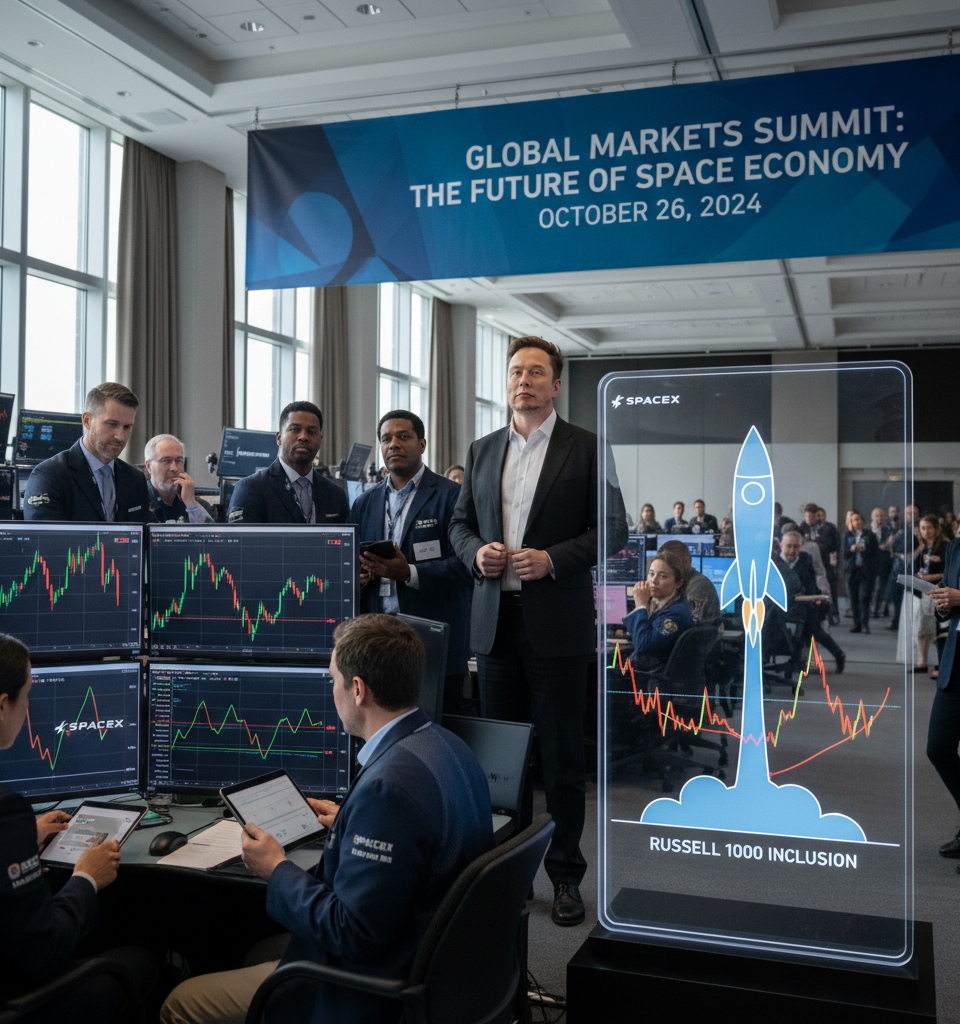
SpaceX is on the cusp of a significant financial market milestone, as the innovative aerospace company is slated for inclusion in the prestigious Russell 1000 index after the close of trading this Friday. This impending event is widely expected to trigger increased trading activity and, consequently, greater volatility in the company's publicly available stock. The Russell 1000, a market-capitalization weighted index comprising the 1,000 largest companies in the U.S. equity market, serves as a crucial benchmark for institutional investors and mutual funds, often leading to mandatory buying or selling by funds that track the index.
Context and Background
For a company like SpaceX, known for its ambitious projects in space exploration and satellite internet, joining such a prominent index marks a transition into a new echelon of market visibility and liquidity. Historically, a company's inclusion in major indices like the Russell 1000 or the S&P 500 often correlates with an immediate surge in demand for its shares, predominantly from passive investment vehicles designed to replicate these benchmarks. This initial demand surge can be followed by periods of adjustment as the market fully absorbs the new institutional ownership.
Key Details of Index Inclusion
The formal accession to the Russell 1000 will materialize after the market closes on Friday, 2026-06-26. This timing is critical, as many passive funds and exchange-traded funds (ETFs) will execute trades to align their portfolios with the updated index composition during the rebalance period. The immediate effect could be an uptick in trading volume for SpaceX shares, as portfolio managers adjust their holdings. Beyond the Russell 1000, market observers anticipate that this inclusion will act as a precursor for SpaceX to qualify for and be added to other major stock market indexes in the near future, further embedding its presence within the broader investment landscape.
Industry and Market Impact
The ripple effects of this index inclusion could extend beyond SpaceX itself. It signifies a growing recognition of the commercial space industry's maturity and its increasing economic footprint. As more aerospace and defense technology companies achieve significant market capitalizations, their potential inclusion in broad market indices could draw greater mainstream investment interest into the sector. This institutional validation could lead to increased capital flows into related companies, fostering further innovation and growth within the developing space economy.
What This Means for Investors
For current and prospective investors, the imminent Russell 1000 inclusion suggests a period of potentially heightened stock price fluctuations. While increased institutional demand typically provides a supportive floor for share prices, the mechanical buying and selling by index funds can also lead to short-term price discovery and volatility. Active investors may attempt to capitalize on these movements, while long-term holders might view this as a positive indicator of the company's sustained growth and broader market acceptance. It underscores the importance of a comprehensive investment strategy, particularly around significant market events such as index rebalancings.
Future Implications
Looking ahead, the inclusion of SpaceX in the Russell 1000 is more than just a procedural change; it represents a coming-of-age moment for a company that has redefined space travel and satellite communication. As the company continues to innovate with projects like Starship and Starlink, its increased visibility and integration into major financial indices could provide greater access to capital markets, potentially fueling future ambitious endeavors. The expectation of subsequent inclusions in other major indexes suggests a sustained period where SpaceX's market performance will be under closer scrutiny by a wider array of institutional investors, potentially solidifying its position as a cornerstone of the modern industrial and technological economy.