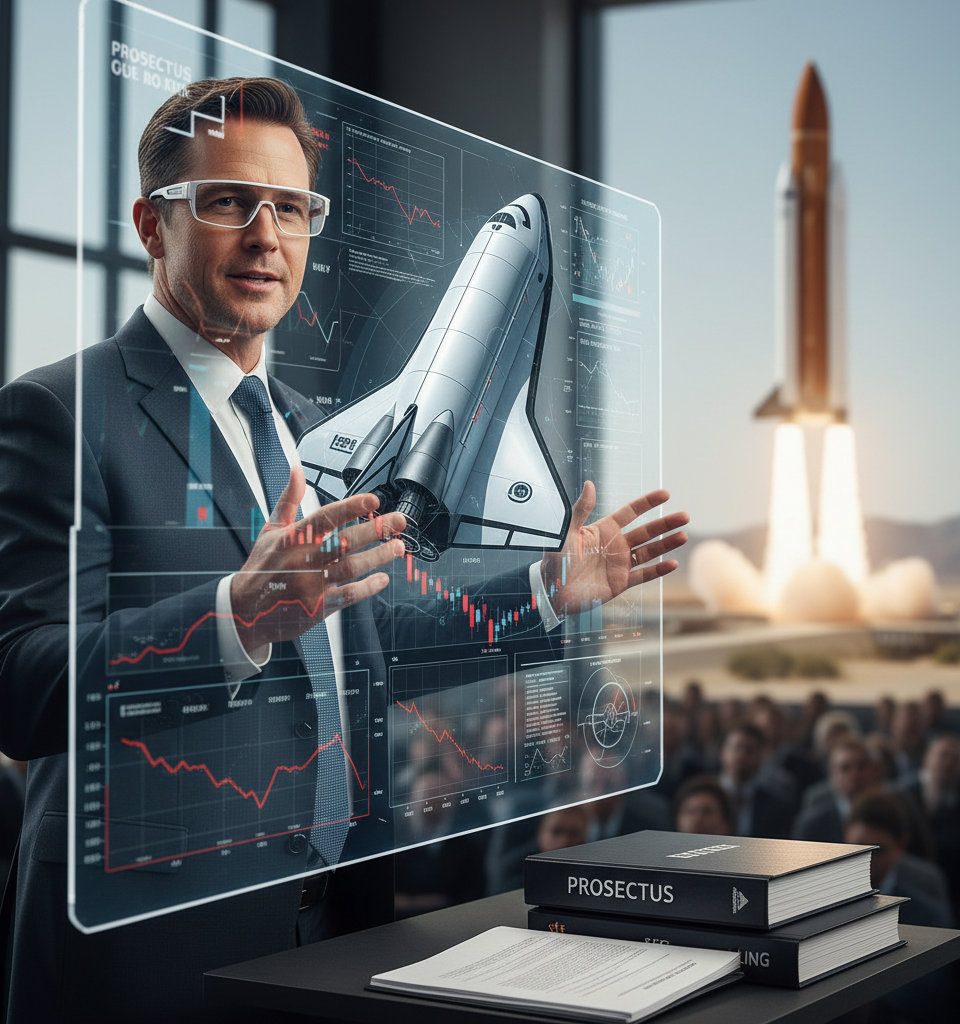
A Collision of Declarations and Disclosures
The divergence between Musk's public optimism and SpaceX's cautious pre-IPO disclosures underscores the inherent tightrope walk faced by high-growth, innovation-driven companies preparing for public markets. While Musk's pronouncements often serve to galvanize support and attract talent, regulatory filings like the S-1 are legally binding documents requiring a comprehensive enumeration of risks to prospective investors. This disparity highlights the pressure on SpaceX to maintain investor confidence while navigating the stringent transparency requirements of a multi-billion dollar IPO, reportedly targeting a valuation of $1.75 trillion.
The Promise and Peril of Space-Based Computing
SpaceX's orbital AI data center concept envisions a constellation of satellites equipped with powerful computing capabilities, offering ultra-low latency data processing and artificial intelligence functionalities from space. Proponents argue such a system could revolutionize various sectors, from real-time global data analysis for climate modeling to enhanced connectivity for autonomous vehicles and ubiquitous AI services. However, the S-1 filing's language points to profound challenges, including managing extreme thermal fluctuations in orbit, ensuring radiation hardening for sensitive electronics, developing robust inter-satellite communication networks, and the sheer cost of launching, maintaining, and upgrading such sophisticated infrastructure.
Industry Repercussions and Competitive Landscape
The revelation from SpaceX's filing sends ripples through both the burgeoning space technology sector and the data center industry. While the long-term vision of orbital data processing remains compelling, these risks could temper investor enthusiasm for other ventures exploring similar extraterrestrial computing solutions. Companies like Amazon Web Services (AWS) and Microsoft Azure have actively explored edge computing solutions on Earth for various remote applications; a truly space-based alternative faces a much higher bar. The market's perception of SpaceX's ability to execute on its most ambitious projects could influence valuation across the entire NewSpace economy.
Expert Analysis: A Dose of Reality
Industry analysts are weighing in on the implications. Dr. Anya Sharma, a space technology economist at the Aerospace Research Institute, commented, "Musk's 'no-brainer' comment was undoubtedly aspirational. The S-1 filing, however, represents the cold, hard realities of engineering and economics. Building and operating data centers in space involves challenges that simply haven't been solved at scale. This disclosure is a prudent and legally necessary move to manage investor expectations." Another analyst, Mr. David Chen of Galactic Capital, added, "It's critical for investors to understand the speculative nature of such endeavors. While SpaceX has an unparalleled track record, even they are not immune to the laws of physics and economics when pushing the boundaries of what's possible."
Navigating the Path to Public Markets
SpaceX's path to an IPO, reportedly spearheaded by Goldman Sachs and JPMorgan Chase, involves a meticulous vetting process. The S-1 filing, once publicly released, will be a trove of information for investors assessing the company's financial health, growth trajectory, and, crucially, its risk profile. The delicate balance for SpaceX will be to articulate an ambitious future while responsibly outlining the substantial hurdles ahead. The company's valuation, rumored to be as high as $1.75 trillion, hinges not just on its current successes with Starlink and Starship but also on the perceived future value of these groundbreaking, albeit risky, projects.
The Road Ahead: Innovation Under Scrutiny
Looking ahead, the next few years will be critical for SpaceX's orbital AI data center initiative. Success will depend on overcoming persistent engineering challenges, securing substantial further investment beyond the IPO, and demonstrating a clear path to commercial profitability. While the filing tempers expectations, it doesn't necessarily halt the project. Instead, it frames it within the context of high-risk, high-reward innovation characteristic of the space industry. The market will closely watch for any progress updates, key milestones, and, most importantly, further clarity on how SpaceX plans to bridge the chasm between visionary aspiration and operational reality in the hostile environment of space. SpaceX's dual narrative — unbridled optimism from its CEO and pragmatic risk assessment in its official documents — encapsulates the volatile yet compelling nature of investing in frontier technologies. The coming months will reveal how investors reconcile these contrasting perspectives as the company inches closer to its monumental market debut.