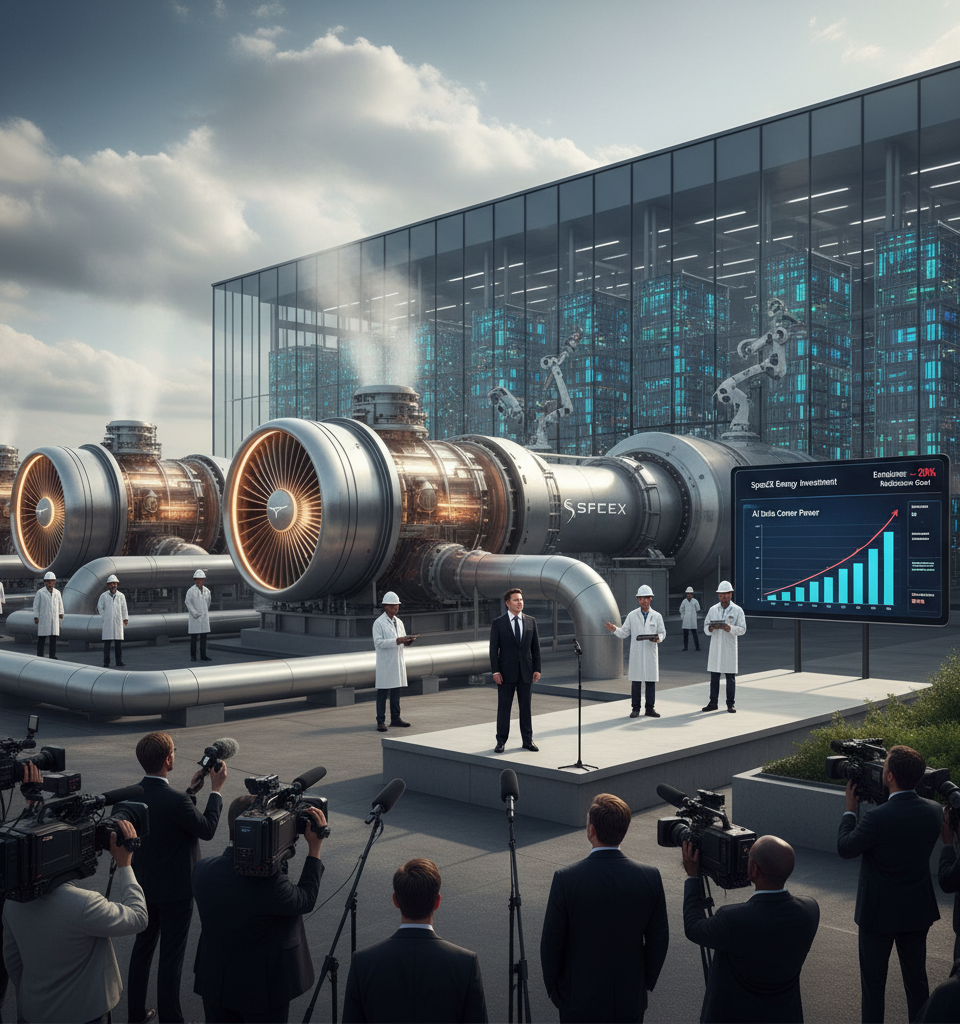
SpaceX, the aerospace manufacturer and satellite communications corporation founded by Elon Musk, is set to invest a substantial $2.8 billion in gas turbines to bolster the infrastructure for its artificial intelligence (AI) data centers. This strategic capital allocation highlights the company's deepening commitment to establishing a significant presence in the competitive cloud computing market, even as it navigates increasing criticism over the environmental implications of its energy choices.
The venture into large-scale AI data centers signifies a pivotal expansion for SpaceX beyond its traditional realms of rocketry and satellite internet. The colossal investment in gas turbines points towards a self-reliant approach to energy provision for these compute-heavy facilities, aiming to meet the demanding power requirements that advanced AI operations entail. This move aligns with a broader trend among major tech companies to secure robust and independent power sources for their expanding data center footprints.
Strategic Rationale and Market Positioning
SpaceX's foray into AI data centers, powered by this multi-billion dollar turbine acquisition, positions it as a potential disruptor in the cloud computing landscape. The sheer scale of the investment suggests a long-term vision to offer high-performance computing capabilities, likely leveraging the company's existing technological prowess and infrastructure. By directly controlling its power generation, SpaceX could aim for greater operational efficiency, reduced latency, and potentially lower costs for its future cloud services, thus challenging established players in the sector.
This investment also comes at a time when the demand for AI computing resources is skyrocketing across industries. As AI models become more complex and data-intensive, the need for robust, scalable, and reliable data center infrastructure has become paramount. SpaceX appears to be betting on this escalating demand, aiming to capture a significant share of the market by building out its own specialized infrastructure.
Environmental Scrutiny and Energy Choices
The decision to power these AI data centers with gas turbines has not been without controversy. Elon Musk's AI unit is reportedly facing complaints concerning the carbon emissions associated with these fossil fuel-powered units. Gas turbines, while offering reliable and on-demand power generation, are known contributors to greenhouse gas emissions, directly conflicting with global efforts to transition towards cleaner energy sources and reduce carbon footprints.
This criticism places SpaceX in a delicate position, balancing its aggressive growth ambitions in AI and cloud computing with growing environmental concerns. The substantial investment in gas turbines suggests that, for now, the company prioritizes immediate power reliability and availability over potentially slower or more complex renewable energy integration for its AI infrastructure. The long-term implications of this energy strategy on SpaceX's environmental reputation and regulatory standing remain to be seen, particularly as pressure mounts on corporations to adopt sustainable practices.
Industry Impact and Future Outlook
SpaceX's entry as a major player in cloud computing, underpinned by this significant infrastructure investment, could intensify competition across the sector. Existing cloud providers may need to innovate further or reassess their strategies to contend with a new, well-funded entrant backed by Elon Musk's ventures. The move could also catalyze further investments in power infrastructure within the data center industry, as companies seek to secure their energy supplies amidst rising demand.
Looking ahead, it will be crucial to observe how SpaceX addresses the environmental concerns surrounding its use of gas turbines. The company may eventually explore hybrid energy solutions or invest in carbon capture technologies to mitigate its emissions. Furthermore, the commercial rollout and specific offerings of SpaceX's AI cloud computing services will be keenly watched by industry analysts and potential customers alike, as the company seeks to carve out its niche in an increasingly crowded and essential technological domain.