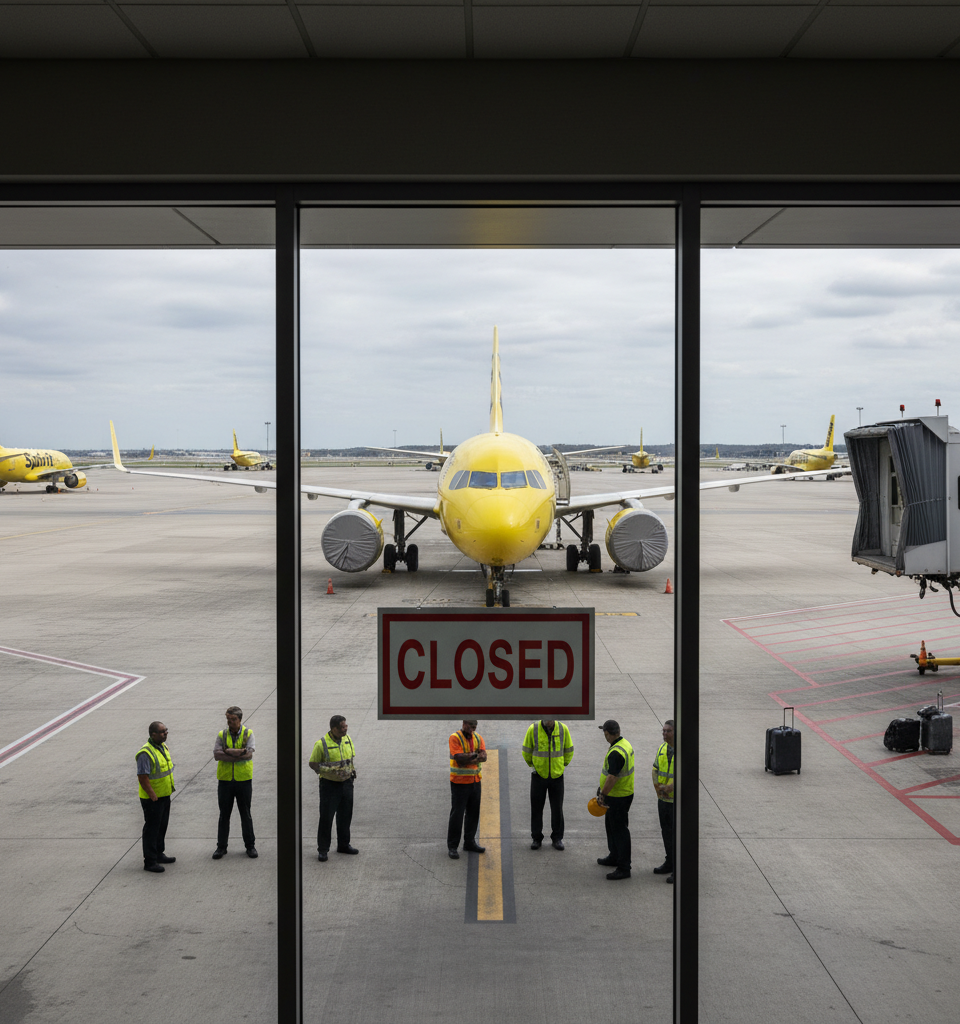
Spirit Airlines, a name synonymous with accessible air travel for millions, has officially grounded all flights and ceased operations after failing to secure a last-minute government bailout. Negotiations with key bondholders, which stretched into the early hours of this week, ultimately proved unfruitful, leaving the airline with no viable path forward. The sudden cessation of services has stranded thousands of passengers and sent shockwaves through the aviation industry, effectively ending Spirit's nearly four-decade run as a dominant force in ultra-low-cost air travel.
Context and Background
The airline's demise comes amidst a challenging economic climate, exacerbated by lingering effects of global crises. Spirit Airlines carved out a significant niche by offering bare-bones fares, pioneering the "unbundling" of services – charging separately for everything from checked bags to seat selection. This model, while often criticized by consumers for its hidden costs, allowed millions to fly who might otherwise have been priced out of air travel. Founded in 1983, Spirit grew from a trucking company into the seventh-largest airline in North America by passenger volume, boasting a fleet of over 200 aircraft and serving more than 80 destinations across the Americas. Its business model, however, was particularly susceptible to economic downturns and fluctuating fuel prices, which have seen significant volatility in recent years.
Key Details of the Collapse
The immediate trigger for the shutdown was the breakdown in talks with bondholders regarding a government-backed financial rescue package. S. Treasury Department, which sought significant equity dilution and stringent operational oversight in exchange for liquidity.
" The airline had reportedly been operating on razor-thin margins for months, accumulating substantial debt. Estimates suggest Spirit's outstanding debt exceeded $5 billion, with critical payments due imminently that it could not meet without external assistance.
Industry and Market Impact
The collapse of Spirit Airlines is poised to have a multifaceted impact on the broader aviation landscape. For travelers, the most immediate consequence will be a reduction in competitive pricing, particularly on routes previously dominated by Spirit. The airline's aggressive pricing strategy often forced competitors to lower their fares, making air travel more accessible. With Spirit out of the picture, analysts predict a potential uptick in airfares across the board, especially in leisure travel markets. Major U.S. carriers like American Airlines, Delta, and United, as well as low-cost rivals such as Frontier Airlines and Allegiant Air, are likely to absorb Spirit's former routes and passenger share. This consolidation could lead to less choice and potentially higher prices for consumers in the long run.
Expert Perspective
Airline industry analysts are largely in agreement that Spirit's business model, while successful for a time, faced insurmountable pressures. "Spirit's ultra-low-cost model required constant vigilance on expenses and high load factors," explained aviation consultant Dr. Evelyn Harris. "In an environment of spiraling fuel costs, labor shortages, and fierce competition, their margins became unsustainable. The proposed merger with JetBlue, which fell through, might have been their last best hope." Dr. Harris further noted that the airline's financial structure, heavily reliant on lease agreements and specific debt instruments, made it particularly vulnerable to shifts in investor confidence and credit markets. "This isn't just about discounted tickets; it's about the financial architecture of a major airline," she emphasized.
What's Next for Travelers and Employees
The immediate priority for regulators and remaining airlines is to assist the tens of thousands of Spirit passengers who now find themselves with canceled flights. The Department of Transportation has indicated it is working with other carriers to facilitate re-bookings, though options and compensation remain unclear. Affected passengers are advised to contact their credit card companies for potential refunds.
For Spirit's approximately 10,000 employees, the future is grim. Layoffs are anticipated to be widespread and immediate, though some rival airlines have indicated they may offer accelerated hiring processes for Spirit's experienced staff. The airline's assets, including its fleet of Airbus A320 family aircraft and critical landing slots, are expected to be liquidated, likely attracting bids from other carriers looking to expand their operations.
The full reverberations of Spirit's bankruptcy are expected to unfold over the coming months, reshaping the competitive landscape of American air travel for years to come.