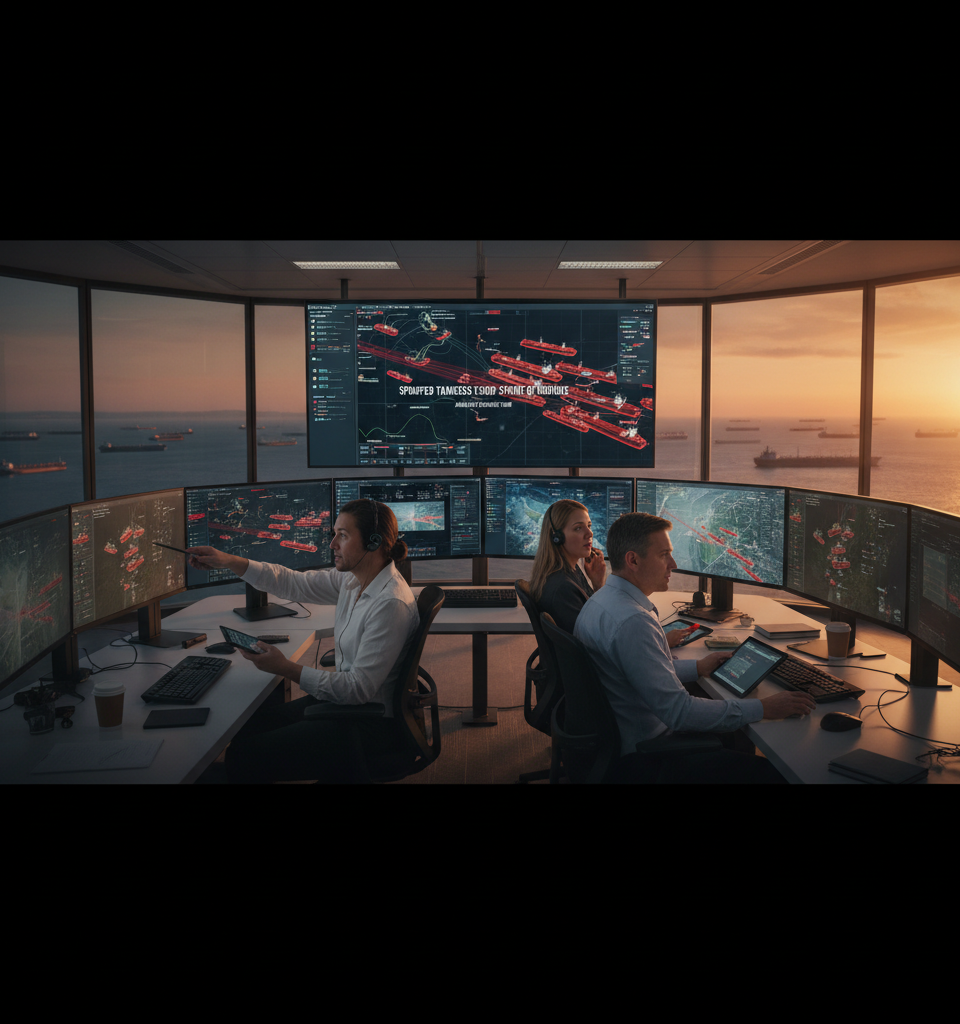
Marine insurers and oil traders are grappling with an escalating challenge in the Strait of Hormuz: a growing fleet of tankers employing GPS spoofing and other tactics to obscure their movements. This phenomenon, often termed "ghost shipping," is creating significant uncertainty in one of the world's most strategically important maritime chokepoints and is compelling industry stakeholders to devise innovative tracking methodologies.
The Strait of Hormuz, a narrow passage between the Persian Gulf and the Arabian Sea, facilitates approximately one-fifth of the world's total oil consumption. Any disruption or lack of transparency in this waterway holds profound implications for global energy markets and supply chains. The increasing volume of unidentified or untraceable vessels raises red flags for maritime security, potential sanctions evasion, and environmental risks, prompting a concerted effort among analysts to penetrate this veil of secrecy.
The Rise of Maritime Opacity
For years, sophisticated tracking systems have allowed real-time monitoring of global shipping traffic, providing unparalleled transparency. However, recent trends indicate a deliberate effort by some operators to circumvent these systems. Methods range from simply turning off Automatic Identification System (AIS) transponders – a practice often associated with illicit activities – to more advanced GPS spoofing, where a vessel's reported location is intentionally falsified to appear elsewhere or even disappear entirely from tracking screens. This deliberate obfuscation is making it increasingly difficult for legitimate actors to ascertain the true operational status and cargo of tankers navigating the critical strait.
The implications for marine insurers are particularly acute. Without reliable data on a vessel's whereabouts and activities, assessing risk becomes a speculative endeavor. This could lead to higher premiums, altered coverage terms, or even a reluctance to insure certain voyages or vessels, injecting volatility into the already complex global shipping insurance market. Oil traders, similarly, face heightened counterparty risk and uncertainty regarding the provenance and legitimacy of crude and refined products transported through the region.
Innovative Tracking Methodologies Emerge
In response to this escalating challenge, analysts are getting creative, moving beyond traditional satellite AIS tracking. Firms specializing in maritime intelligence are reportedly combining a patchwork of data sources, including satellite imagery, radar data, and even terrestrial signals, to piece together the movements of these 'disappearing' ships. Advanced analytical tools and artificial intelligence are being employed to identify patterns, anomalies, and potential spoofing events, allowing for a more comprehensive understanding of maritime traffic even when official transponders are offline or manipulated.
These innovative approaches are not merely about identifying a vessel's location; they also aim to cross-reference reported movements with port calls, cargo declarations, and other logistical data to build a more robust picture of a ship's operational history. The goal is to provide marine insurers, oil traders, and government agencies with actionable intelligence that can help mitigate risks associated with opaque shipping practices in a region already prone to geopolitical tensions.
Broader Market Impact and Future Outlook
The persistence of spoofed and dark tankers in the Strait of Hormuz could have long-term consequences for global trade practices and regulatory frameworks. Increased instances of sanctions evasion, for example, could prompt stricter enforcement measures and greater scrutiny of shipping companies and their ownership structures. The lack of transparency could also contribute to price volatility in oil markets as traders become more wary of potential supply disruptions or the legitimacy of available cargoes.
Looking ahead, the development and deployment of more resilient and tamper-proof tracking technologies are likely to become a priority. Regulatory bodies may also consider enhancing international standards for AIS usage and imposing harsher penalties for deliberate signal manipulation. For now, however, the onus remains on independent analysts and specialized firms to develop cutting-edge solutions to monitor and understand the complex and increasingly opaque maritime activities unfolding in the Strait of Hormuz.