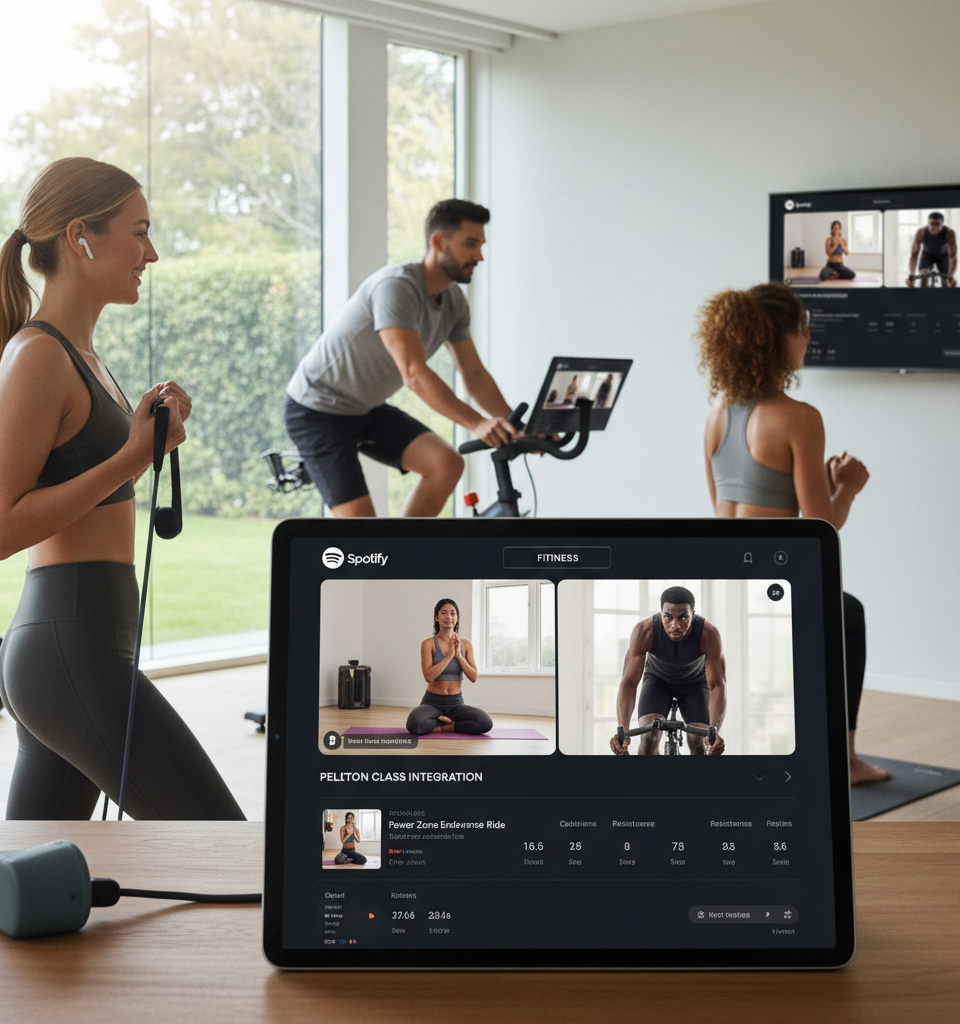
A. (NYSE: SPOT) has officially announced its aggressive foray into the fitness content market, marking a significant strategic pivot for the audio streaming behemoth. This expansion introduces a dedicated suite of workout videos, expertly curated fitness playlists, and direct integration with Peloton classes, aiming to capture a share of the rapidly growing digital wellness industry.
The new offerings will be accessible at no additional cost to both Spotify's extensive free user base and its premium subscribers, effective immediately across all major platforms, representing a bold move to diversify its content portfolio and enhance user engagement within its ecosystem. This strategic maneuver comes as Spotify seeks to broaden its appeal beyond purely audio-centric experiences, tapping into a sector that has witnessed explosive growth, particularly in the wake of global shifts towards home-based exercise. While Spotify has long been a staple for workout soundtracks, this marks its first direct venture into visual and instructional fitness content.
The company's prior expansions into podcasts and audiobooks have demonstrated its capability to successfully diversify, and this move into fitness content aligns with its ambition to be the ultimate audio and lifestyle platform. The global digital fitness market, valued at approximately $18 billion in 2022, is projected to reach over $70 billion by 2030, presenting a lucrative opportunity for a company with Spotify's scale and reach. The new fitness hub within the Spotify application will feature a diverse range of content designed to cater to various fitness levels and preferences.
This includes guided workout videos led by professional trainers, covering disciplines such as HIIT, yoga, strength training, and dance. **, allowing users to access a selection of Peloton's popular on-demand classes directly within the Spotify app. Additionally, Spotify will leverage its renowned algorithmic prowess to create personalized workout playlists, seamlessly integrating music with fitness instruction.
Users will be able to search for workouts by type, duration, and even musical genre, ensuring a highly customized experience. This direct integration with Peloton is particularly notable, given Peloton's established brand equity and loyal user base in the connected fitness space. Spotify's entry into fitness content is poised to send ripples across several industries.
For existing fitness app providers, particularly those offering subscription-based video workouts, Spotify's move represents a formidable new competitor backed by an installed base of over 574 million monthly active users globally. The free accessibility of much of this content could pressure competitors to innovate or reconsider pricing models. Moreover, for device manufacturers and wearables companies, this could further drive demand for products that seamlessly integrate with Spotify's ecosystem.
The partnership with Peloton also signifies a potential shift in how major players in the digital fitness landscape collaborate, possibly opening doors for future cross-platform integrations. Industry analysts are largely optimistic about Spotify's strategic direction. Mark Mahaney, a senior analyst at Evercore ISI, commented, "Spotify has consistently shown an ability to penetrate new content verticals by leveraging its massive user base and superior recommendation engine.
This move into fitness is a natural extension and could significantly enhance time spent on the platform and reduce churn, especially among younger demographics." Others, like Rich Greenfield of LightShed Partners, caution that execution will be key. "While the user base is there, Spotify will need to ensure the quality of its content and build a robust community around fitness to genuinely compete with established players who have years of dedicated fitness content production infrastructure," he noted.
The long-term success hinges on user adoption and the ability to convert these new engagements into sustained loyalty. Looking ahead, Spotify's commitment to fitness content is expected to evolve rapidly. The company has indicated plans to continuously expand its library with fresh content, potentially exploring partnerships with more fitness brands and individual trainers.
There's also speculation about advanced features, such as AI-powered personalized workout plans, integration with health tracking devices, and even subscription tiers that offer premium fitness content or one-on-one coaching for an additional fee. This initial launch represents the first significant step in what could become a substantial new revenue stream and a core pillar of Spotify's future content strategy, cementing its position not just as an audio platform, but as a holistic lifestyle companion for its global audience. The success of this venture will be closely monitored, as it could serve as a blueprint for other digital platforms looking to expand their offerings into adjacent lifestyle categories.
Spotify's ability to leverage its existing technological infrastructure, vast user data, and brand recognition provides a unique advantage in a crowded market. The integration of audio and visual content under one roof offers a compelling value proposition that could redefine how users engage with both entertainment and well-being applications. This pivot underscores Spotify's ambition to be an indispensable part of its users' daily routines, beyond just their listening habits.