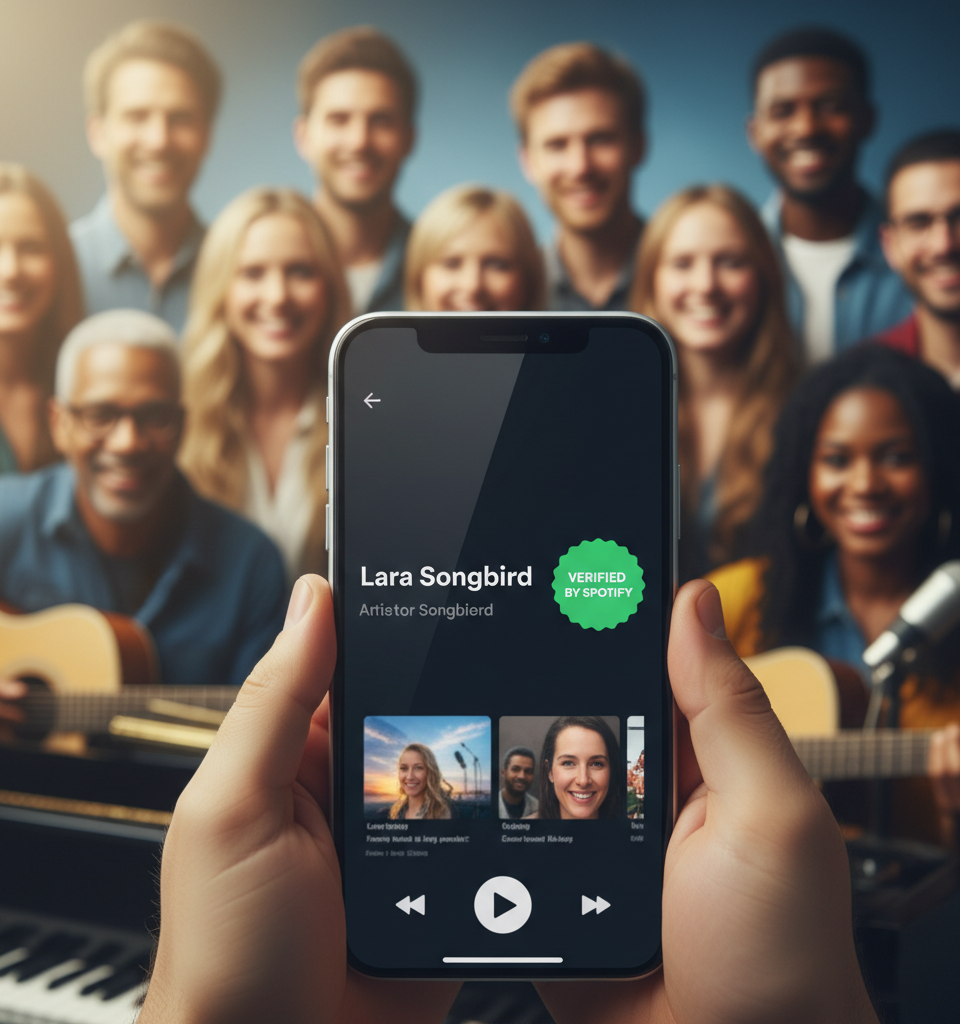
Music streaming giant Spotify has officially rolled out its new “Verified by Spotify” badge, a strategic response to the escalating challenge posed by artificial intelligence in the music industry. The badge, which began appearing on select artist profiles earlier this week, aims to clearly distinguish legitimate human artists from the rapidly proliferating number of AI-generated profiles and tracks that have begun to saturate streaming platforms. This initiative is designed to instill greater trust and transparency for listeners and reinforce the platform's commitment to authentic human creativity.
The proliferation of AI-generated music has become an undeniable force, with analysts estimating that AI-created content could soon account for a significant percentage of new uploads across major streaming services. Industry reports indicate that some platforms have seen upwards of 10% of new monthly tracks attributed to AI, making it increasingly difficult for both listeners and industry professionals to discern genuine artistic endeavors. This development has sparked widespread discussions regarding intellectual property, fair compensation, and the very definition of artistry in the digital age. Spotify's badge is a direct acknowledgment of this paradigm shift, seeking to safeguard the human element in an increasingly automated creative ecosystem.
To qualify for the “Verified by Spotify” badge, artists must meet a stringent set of criteria focused on establishing a verifiable presence both on and off the platform. Spotify's verification process involves corroborating an artist's identity through external indicators such as official tour dates, merchandise availability, active social media profiles, and legitimate linked websites. While the exact numerical thresholds for followers or streams have not been made public, Spotify emphasizes the importance of a holistic digital footprint that demonstrates genuine engagement and activity beyond mere algorithmic generation. This multi-faceted approach aims to create a robust barrier against purely synthetic identities.
The introduction of this verification system is expected to have a significant ripple effect across the broader music industry. For independent artists struggling to gain visibility amidst the noise, the badge could become a crucial differentiator, signaling authenticity and quality to potential fans and industry scouts. Major labels are also likely to leverage this feature to quickly identify and promote their signed artists, ensuring their human-created content stands out. Furthermore, the initiative could prompt other streaming platforms, such as Apple Music and Amazon Music, to develop similar verification systems to maintain competitive parity and address the collective industry challenge of AI saturation.
Industry experts and analysts have largely welcomed Spotify's move, viewing it as a necessary step in an evolving digital landscape. Dr. Evelyn Reed, a digital media ethicist at the University of Austin, commented, "This badge isn't just about distinguishing human from machine; it's about preserving the cultural value of human expression. As AI becomes more sophisticated, mechanisms like this are vital for listeners to make informed choices about what they consume and support." Financial analysts suggest that the badge could also indirectly improve content quality, potentially leading to higher listener engagement and subscription retention, as users are more likely to invest time and money into artists they perceive as genuine.
Looking ahead, the “Verified by Spotify” badge is likely just the initial volley in an ongoing battle to define authenticity in digital music. Future iterations could involve deeper integration with blockchain technology for immutable identity verification, or even AI-assisted detection tools to flag suspicious activity more proactively. The company has indicated it will continuously refine its criteria as AI capabilities advance, ensuring the verification process remains robust. This initiative sets a precedent for how major platforms will navigate the complex interplay between technological advancement and the intrinsic value of human creativity, with implications far beyond just the music industry.