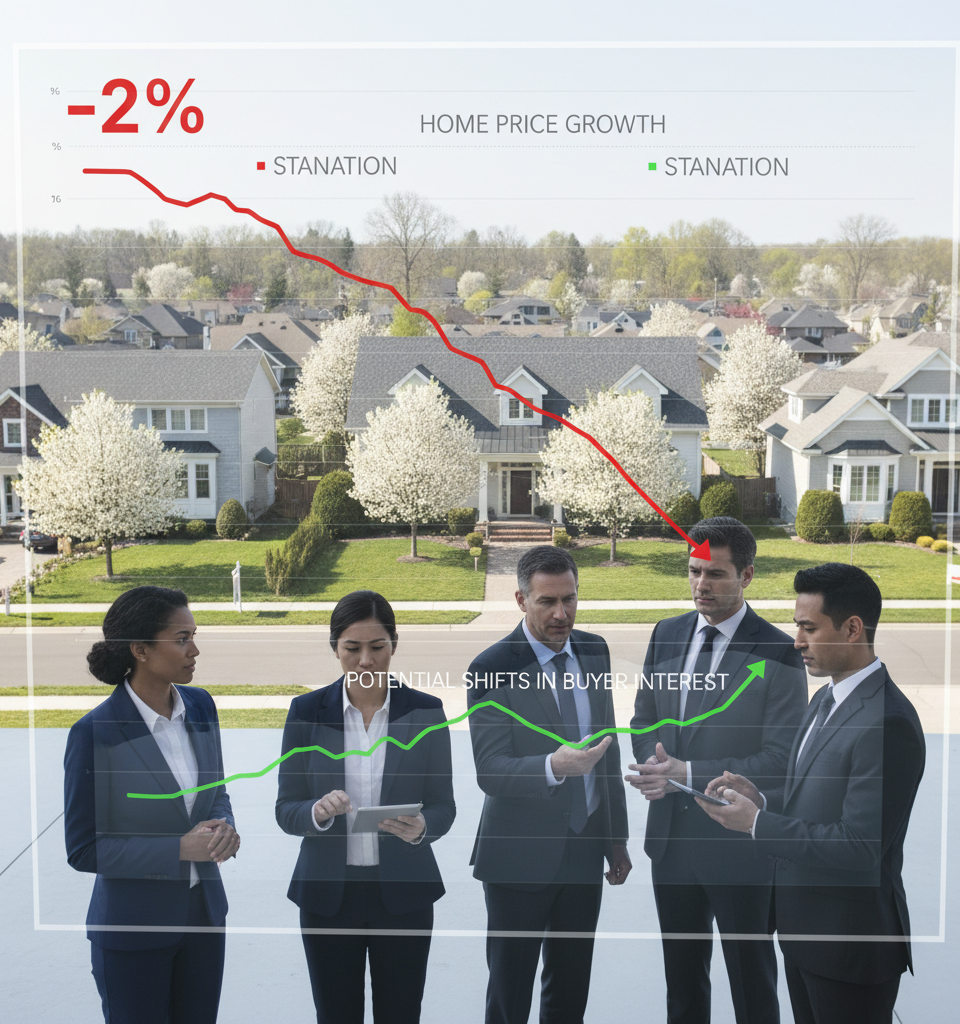
The spring housing market is presenting a multifaceted picture, marked by continued sluggishness and a notable trend of negative home price growth across major indicators. This complex environment, impacting prospective buyers and sellers nationwide, suggests an ongoing period of adjustment following the rapid shifts of recent years. While top-line figures point to stagnation, a deeper dive reveals nuances that could signal a delicate balance of deterrents and emerging opportunities within the residential real estate sector.
The current market conditions are a direct consequence of a confluence of factors, including elevated interest rates, persistent inflation, and a general tightening of credit conditions. This stands in stark contrast to the red-hot market of 2020-2022, which saw unprecedented price appreciation and frenzied bidding wars. Historically, spring typically heralds a robust period for real estate activity, but recent months have deviated significantly from this pattern, extending a buyer's market trend that began to solidify in late last year. This extended slump highlights the deep impact of macro-economic pressures on what is usually a highly seasonal market.
Key Data Reveals Headwinds and Emerging Opportunities
Monthly data consistently shows a housing market grappling with significant headwinds. Home prices, on a national average, have continued their downward trajectory, with some regions experiencing declines exceeding 5% year-over-year. Inventory levels, while improving in some areas, remain constrained, preventing a full rebalancing of supply and demand. Furthermore, the average time on market for properties has increased, indicating reduced buyer urgency and a greater willingness to negotiate. For instance, recent reports indicate that seller concessions, such as contributions to closing costs or price reductions, are becoming increasingly common, observed in roughly 30% of recent transactions. This marks a notable departure from the competitive environment seen previously, where such concessions were rare.
Broad Market Implications and Buyer Dynamics
The prolonged period of market contraction carries significant implications across the broader economy. Reduced transactional volume impacts ancillary industries, from mortgage lending and title services to home improvement and construction. For potential homebuyers, the negative price growth, though initially appearing daunting, could present a window of opportunity. While borrowing costs remain elevated, the erosion of peak pricing offers a different equation. "Buyers are no longer compelled to overpay, and sellers are demonstrating a newfound flexibility," notes Sarah Chen, a senior economist at Zenith Analytics. This shift in power dynamics slowly favors those with available capital and a willingness to navigate a more deliberate purchasing process.
Expert Outlook: A Gradual Rebalancing Anticipated
Real estate analysts largely concur that the market is in a period of necessary rebalancing. "We're seeing a healthy recalibration after an unsustainable boom," states Dr. Marcus Thorne, a housing market specialist at the Institute for Economic Studies. "While negative price growth is never a pleasant headline, it’s a corrective measure that ultimately brings affordability back into focus." Dr. Thorne predicts that while a dramatic rebound isn't imminent, the latter half of the year could see a stabilization in prices, especially if inflation moderates further and there's a clearer indication from central banks regarding future interest rate policy. He also points to regional variations, with some sunbelt markets showing more resilience than others.
The Path Forward: Patience and Strategic Positioning
Looking ahead, the trajectory of the housing market will largely hinge on persistent economic indicators. Any significant shifts in inflation, employment figures, or Federal Reserve policy will undoubtedly ripple through interest rates and, subsequently, housing affordability. For buyers, the current environment demands patience and strategic positioning, focusing on value and the increasing prevalence of seller flexibility.
For sellers, realistic pricing and well-prepared properties will be paramount. The coming months are expected to continue this period of cautious optimism tempered by economic realities, with market participants closely monitoring for definitive signals of a sustained recovery or further adjustments. The overall sentiment suggests that while outright "deals" in the traditional sense may not be widespread, the conditions for more favorable negotiations and less aggressive competition are undeniably improving.