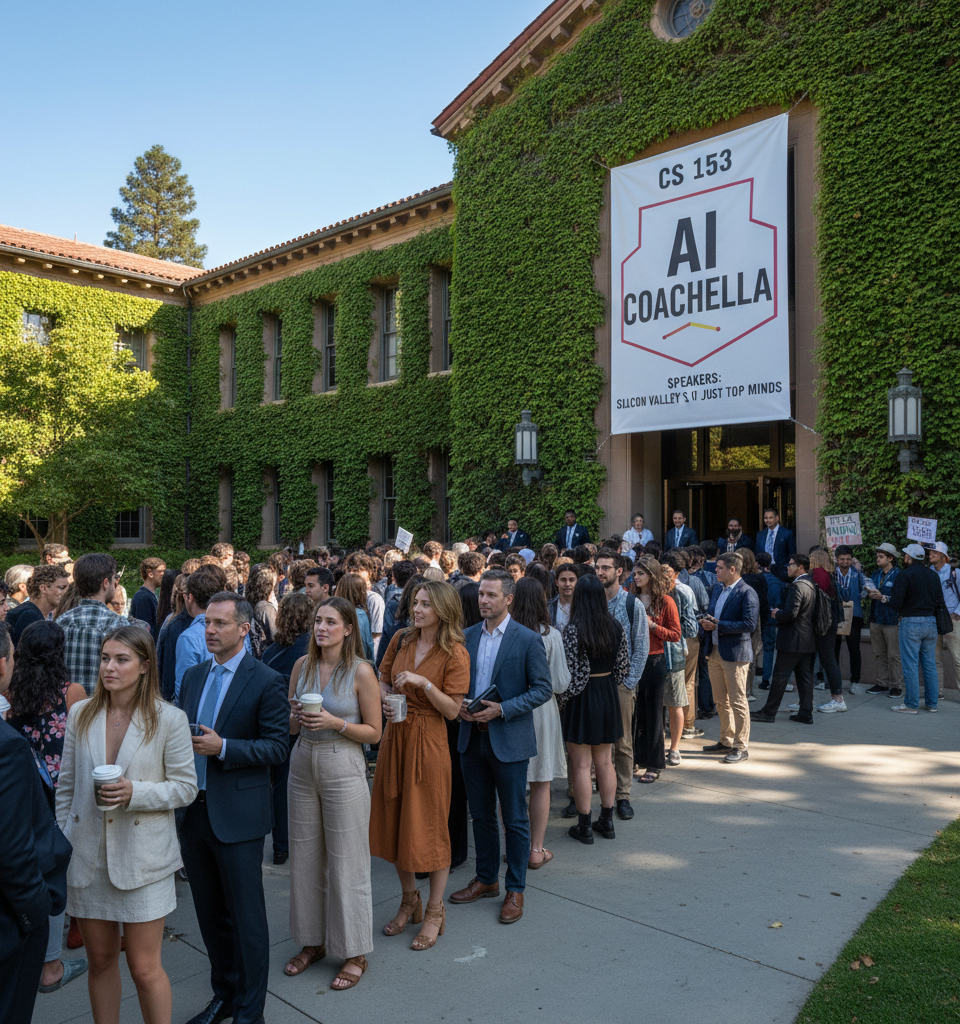
The Allure of Exclusivity and Academic Innovation
The stratospheric popularity of CS 153 underscores the intense demand for specialized knowledge in generative AI, a field rapidly reshaping global industries. Traditionally, such direct, in-depth access to industry titans is reserved for venture capitalists or C-suite executives. Stanford, and specifically the course's instructors, Chris Manning and Michael James, have tapped into this hunger, positioning the class not just as an academic offering but as a direct pipeline to the bleeding edge of technological development. The university's proximity to Silicon Valley naturally fosters such convergences, yet the sheer scale and commercial firepower behind CS 153 highlight a new paradigm in academic-industry collaboration, where practical application and entrepreneurial drive are as valued as theoretical understanding. Key to the course's structure is its project-based learning model, challenging students to develop and refine AI products under the mentorship of industry experts. This hands-on approach, combined with the allure of networking with potential future employers and investors, has fueled its viral spread on platforms like X (formerly Twitter). The class operates without a traditional syllabus, adapting week-to-week to current industry trends and guest speaker availability, fostering a dynamic and responsive learning environment that mirrors the fast-paced nature of AI development itself.
Industry Response and Broader Market Impact
The emergence of 'AI Coachella' signals a critical juncture for the technology sector. As AI transitions from a theoretical concept to a pervasive commercial force, the demand for highly skilled engineers and product developers capable of building and scaling these complex systems has skyrocketed. Companies are fiercely competing for talent, and a course like CS 153, offering direct mentorship from industry leaders, inherently provides its participants a significant competitive advantage. This class effectively acts as a direct talent funnel from Stanford's elite engineering programs into the most influential AI companies, intensifying the talent war and potentially dictating future innovation hubs. The practical, product-focused curriculum ensures graduates are not only adept in AI theory but also in its real-world implementation, thereby reducing the onboarding time and increasing immediate productivity for future employers.
Expert Perspectives: Opportunity vs. Ostentation
While largely celebrated, the course has not been without its detractors, particularly within academic circles and among students excluded from its tight enrollment. Critics articulate concerns regarding the perceived commercialization of education, arguing that such high-profile, exclusive seminars risk prioritizing industry connections and venture capital over broader academic principles of accessibility and fundamental research. Dr. Elena Rodriguez, a professor of education policy, commented, "While industry engagement is vital, we must ensure that such initiatives don't inadvertently create an elite tier within academia, where access to the most valuable knowledge is dictated by exclusivity rather than academic merit or need." Conversely, proponents argue that such direct industry collaboration is essential for keeping academic curricula relevant in rapidly evolving fields, providing students with the most current insights and practical skills directly from the innovators themselves.
The Future of AI Education and Campus Dynamics
Looking ahead, the success and controversies surrounding CS 153 are poised to reshape perceptions of higher education's role in technological innovation. This model, blending elite academic rigor with direct industry immersion, could become a blueprint for future specialized courses across leading universities globally. The immediate implications for Stanford involve navigating the delicate balance between fostering groundbreaking industry partnerships and maintaining equitable access to educational resources for all students. The university may face pressure to replicate the success of CS 153 in alternative, more broadly accessible formats or to integrate its key learnings into existing curricula. As AI continues its relentless march into every facet of society, the pedagogical approaches pioneered by 'AI Coachella' will likely influence how the next generation of AI leaders is trained, defining the very future of how knowledge is transferred and innovation sparked in the digital age. Maintaining transparency and addressing inclusivity will be paramount to ensuring that this educational phenomenon serves as a net positive for all stakeholders.