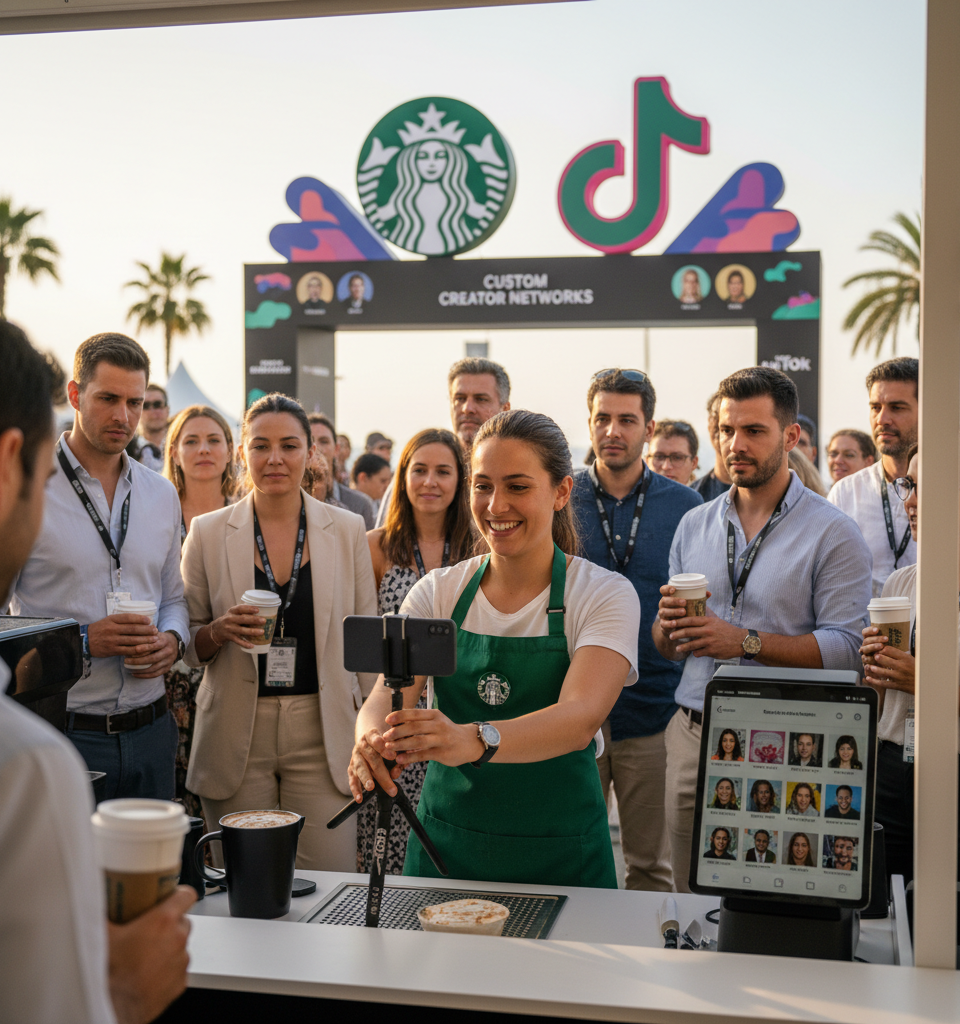
CANNES, France – TikTok, a dominant force in short-form video, unveiled a significant new advertising product this week at the Cannes Lions International Festival of Creativity: Custom Creator Networks. This initiative is designed to empower advertisers by enabling them to assemble a bespoke pool of content creators, which can include employees, brand advocates, or dedicated partners. The primary objective is to streamline the creation of high-performing ad content, either through new campaign briefs or by repurposing existing, brand-relevant video assets.
Among the earliest and most prominent brands to engage with this new offering is Starbucks. The global coffee giant is reportedly piloting the Custom Creator Networks with its own 'barista-creators,' a segment of its workforce already actively creating content online. This move underscores a growing trend where brands are leveraging internal talent and authentic voices to connect with audiences, rather than relying solely on external influencers.
Context and Industry Shift
The introduction of Custom Creator Networks comes as the digital advertising landscape continues to evolve rapidly, placing increasing emphasis on authenticity and audience engagement. Brands are actively seeking more effective ways to cut through the noise, and creator-led content has consistently proven to deliver higher engagement rates compared to traditional advertising. TikTok, already a powerhouse for organic virality, is now formalizing a structure that allows brands to harness this creative energy in a more controlled and measurable way.
Historically, brands have struggled with the scalability and management of influencer marketing, often dealing with a fragmented ecosystem of individual creators and agencies. TikTok's new program aims to consolidate this process, offering brands a more streamlined approach to identifying, engaging, and deploying creators. This centralized platform could significantly reduce friction and overheads associated with large-scale creator campaigns.
Key Details of the Program
The Custom Creator Networks initiative is characterized by its flexibility and brand-centric design. Advertisers will have the ability to handpick individuals who align perfectly with their brand ethos, whether these are established influencers, enthusiastic customers, or even their own employees. The platform is engineered to facilitate two primary functions: distributing campaign briefs to a selected group of creators for original content generation, and identifying existing, brand-relevant videos that can be converted into effective advertising material. This dual approach provides brands with both proactive content creation and retroactive optimization capabilities.
Starbucks' engagement highlights the potential for internal brand advocacy. By empowering its baristas, who possess inherent product knowledge and a direct connection to the customer experience, the company can generate content that resonates more deeply and authentically with consumers. This strategy implicitly taps into the trust and credibility that genuine employee voices often carry, distinguishing it from more overtly commercial influencer partnerships.
Broader Market Implications
This development from TikTok is poised to have notable ramifications across the digital advertising and creator economy sectors. For competitors in the social media advertising space, it sets a new benchmark for brand-creator partnerships, potentially prompting similar innovations. For brands, it offers a powerful new tool in their marketing arsenal, promising greater control, efficiency, and authenticity in their creator campaigns. The ability to harness employee-creators, specifically, could redefine how companies approach internal branding and external marketing concurrently.
Furthermore, the move solidifies TikTok's position not only as a content consumption platform but also as a robust advertising solution provider. By offering more sophisticated tools for brands, TikTok is directly competing with established ad tech players and other social platforms that have invested heavily in creator monetization and brand partnership models. This initiative is a clear signal of TikTok's ambition to capture a larger share of global advertising spend.
What's Next?
As Starbucks and other early adopters proceed with their pilot programs for Custom Creator Networks, the industry will be closely watching for initial performance metrics and case studies. The success of these early campaigns could determine the broader adoption rate among other major brands. TikTok is likely to refine the program based on feedback from these pilots, potentially adding more sophisticated analytics, creator management tools, or content integration features. The longer-term impact will depend on how effectively brands can leverage these curated networks to drive measurable business outcomes, moving beyond simple engagement metrics to tangible sales and brand loyalty. The ongoing evolution of creator networks signals a future where advertising is increasingly collaborative, authentic, and integrated directly into platform ecosystems.