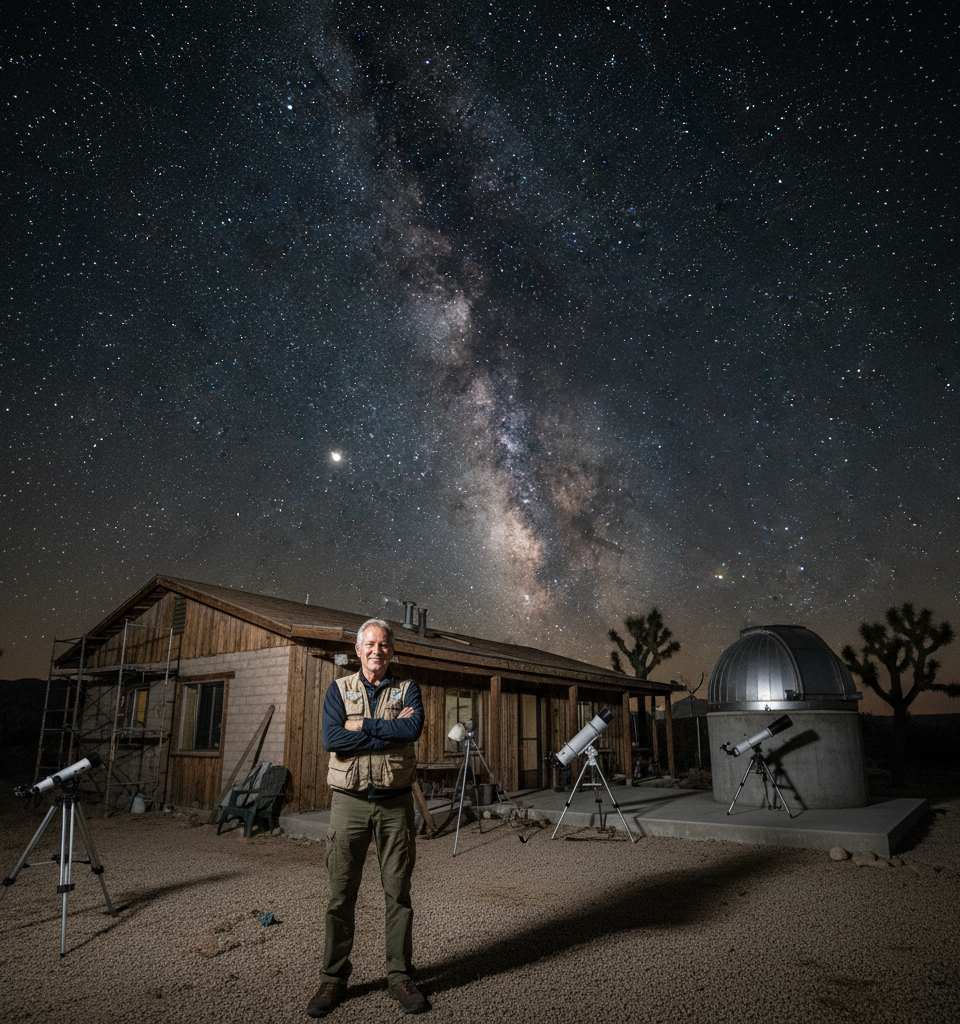
In a testament to both astronomical passion and entrepreneurial vision, retired civil engineer Michael Kantor has initiated a transformative project in the remote desert outpost of Darwin, California. Kantor recently acquired a distressed property with the express intent of rehabilitating it into a world-class retreat for astrotourism. This unique endeavor, unfolding in a region celebrated for some of the darkest skies in North America, underscores a growing niche market for experiential travel and the strategic repurposing of historical, often overlooked, locales.
The Strategic Allure of Darwin, CA Darwin, a sparsely populated town located in Inyo County, California, at the edge of Death Valley National
Park, offers an unparalleled vantage point for nocturnal sky observation. Its extreme isolation, minimal light pollution, and high elevation – approximately 4,700 feet above sea level – converge to create optimal conditions for stargazing. Kantor's decision to invest in Darwin is not merely a personal passion project but a strategic move tapping into the increasing demand for dark sky tourism. This segment of the travel industry caters to individuals seeking pristine natural environments to observe celestial phenomena, far removed from urban light domes. The town's unique character, a blend of a bygone mining era and contemporary quietude, provides an authentic backdrop for such an undertaking.
Vision for a Celestial Retreat Kantor, with a distinguished career in civil engineering, brings a wealth of practical experience to this complex renovation.
The fixer-upper property, reportedly in a state of advanced disrepair, requires significant structural and aesthetic overhaul. His vision extends beyond mere lodging; he aims to create an immersive experience, potentially incorporating specialized astronomical equipment, educational programs, and comfortable, dark-sky-friendly accommodations. While specific financial details of the acquisition and projected renovation costs remain private, similar high-end astrotourism developments can range from hundreds of thousands to several million dollars, depending on amenities and scale. The project is expected to unfold over the next 18-24 months, with an anticipated opening in late 2025 or early 2026.
Impact on the Astrotourism Landscape
This development holds significant implications for the burgeoning astrotourism market. The International Dark-Sky Association (IDA) has noted a 30% increase in global interest in dark sky locations over the past five years. Projects like Kantor's contribute to formalizing the infrastructure required to support this demand, transforming what might otherwise be informal camping trips into structured, higher-value experiences. The establishment of dedicated dark sky retreats not only provides economic benefits to remote communities through tourism revenue but also raises awareness about the critical issue of light pollution and the importance of preserving natural nightscapes for ecological and cultural reasons.
Expert Perspectives on Niche Tourism
Tourism industry analysts view such niche projects with optimism, particularly post-pandemic, as travelers increasingly seek unique, experience-based destinations rather than conventional resorts. Dr. Eleanor Vance, a professor of tourism economics at the University of Nevada, Las Vegas, commented, "Mr. Kantor's initiative in Darwin exemplifies a growing trend towards specialized, sustainable tourism. These ventures often foster community engagement, employment opportunities, and crucial investment in remote areas. The success hinges on balancing preservation with accessibility, and ensuring the development aligns with the ethos of dark sky conservation." She estimates that properly managed astrotourism sites can generate an average of $150-$300 per visitor per night, significantly higher than general interest tourism in many rural areas.
Future Implications and Community Integration
Looking ahead, Kantor's project could serve as a blueprint for similar developments in other dark sky regions. Its success will likely depend on careful integration with the existing Darwin community, respecting its unique history and character. Discussions with local authorities will be crucial for obtaining necessary permits, ensuring sustainable resource management in the arid environment, and possibly exploring partnerships for local employment. The long-term impact could include increased property values, heightened visibility for Darwin, and a sustainable economic engine that capitalizes on its most precious natural resource: its extraordinarily dark skies. Further developments could include collaborations with scientific institutions for research or public outreach programs, solidifying Darwin's reputation as a true astronomical hub. Kantor’s ambitious undertaking in Darwin represents more than just a renovation; it’s an investment in the future of experiential travel, a beacon for dark sky preservation, and a testament to the enduring human fascination with the cosmos.