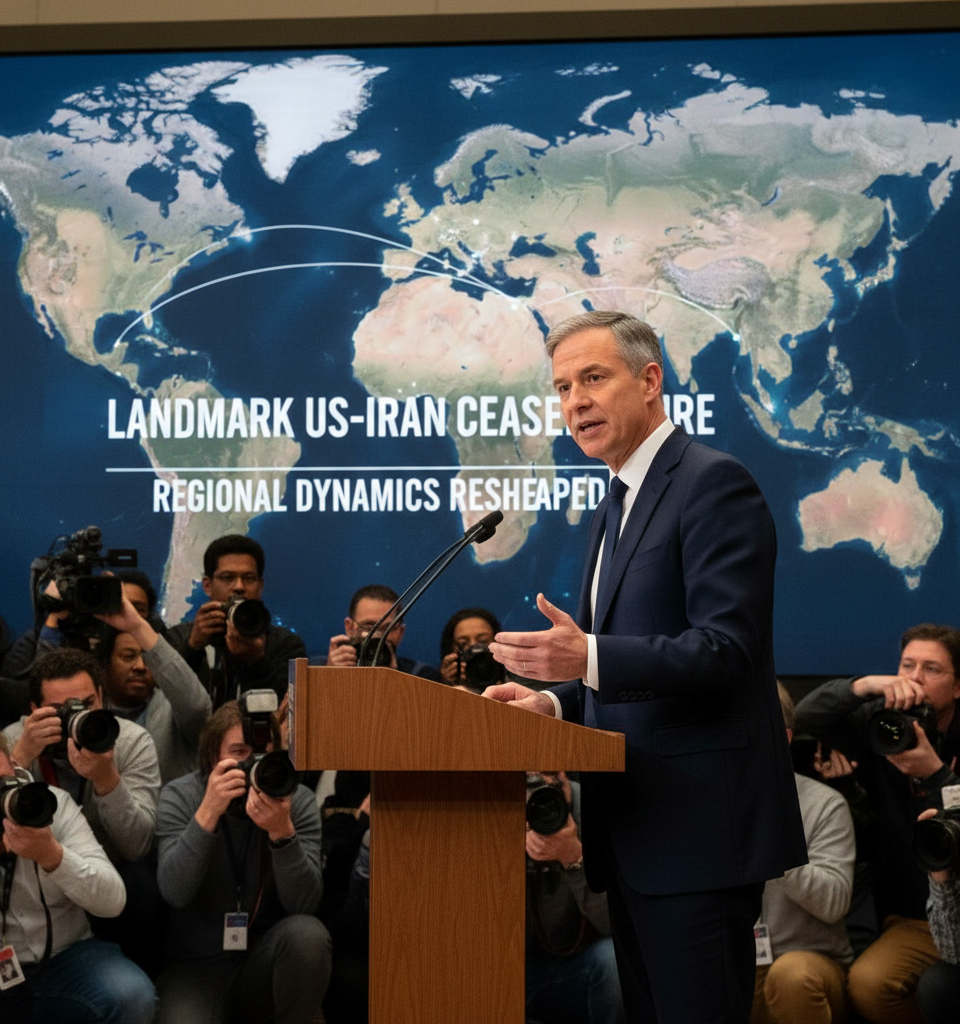
LONDON – Prime Minister Keir Starmer is set to embark on a pivotal diplomatic tour of the Middle East, commencing next week. This urgent dispatch comes on the heels of a historic, U.S.-brokered ceasefire agreement between the United States and Iran, an accord welcomed by global powers as a crucial step towards regional stability. Starmer's office confirmed the visit, stating the Prime Minister's intention to engage with key regional stakeholders to "do all we can to support and sustain this ceasefire" and explore avenues for long-term peace.
Unprecedented Truce Ignites Hopes for Regional De-escalation
This ceasefire, negotiated over several weeks of intense back-channel diplomacy facilitated by Oman and Qatar, represents a monumental shift in the geopolitical landscape. For decades, the US-Iran relationship has been characterized by deep animosity, proxy conflicts, and economic sanctions, frequently pushing the region to the brink of wider conflict. The agreement notably includes a cessation of hostilities across several proxy fronts, a commitment to direct communication channels, and initial steps towards a prisoner exchange, demonstrating a tangible reduction in immediate confrontation. The potential for a sustained de-escalation holds profound implications for maritime security in the Arabian Gulf, oil prices, and the humanitarian crises in Yemen and Syria.
Diplomacy at Work: Key Terms and International Reactions
Specific details of the ceasefire, though not fully disclosed, reportedly include a 90-day moratorium on military maneuvers in disputed territories, a lifting of some targeted sanctions on dual-use goods for humanitarian aid by the US, and Iran's pledge to cease enrichment of uranium above 60% purity. President Biden hailed the agreement as a testament to "persistent diplomacy," while Iranian President Raisi emphasized his nation's commitment to "constructive engagement." International reactions have been overwhelmingly positive, with UN Secretary-General António Guterres calling it a "beacon of hope" and the European Union pledging robust support for its implementation. Estimates suggest the initial economic relief for Iran from eased sanctions could be approximately $12 billion annually, primarily in oil export revenues, a significant sum aiding its struggling economy.
Global Market Repercussions and Energy Sector Impact
The immediate impact on global markets has been notable. Oil prices saw a sharp decline of approximately 4.5% in early trading following the announcement, reflecting diminished geopolitical risk premiums. Brent crude dipped to levels not seen in six months, falling below $78 a barrel, while WTI futures also registered significant drops. Defense industry stocks experienced a slight downturn, whereas sectors related to infrastructure and humanitarian aid in the Middle East saw an uptick, signaling investor confidence in regional stabilization. Shipping insurance premiums for transit through the Strait of Hormuz, which had surged by nearly 200% during periods of heightened tension last year, are now anticipated to see a gradual reduction, potentially boosting global trade efficiency.
Expert Analysis: A
Fragile but Essential First Step
Security analysts and Middle East experts largely concur that while the ceasefire is a crucial breakthrough, it remains inherently fragile. Dr. Sarah Khan, a senior fellow at the Royal United Services Institute (RUSI), commented, "This is not a peace deal; it's a pause. Sustaining it will require immense political will from all parties and robust international oversight." She further noted, "The UK's role in lending diplomatic weight and potentially logistical support for monitoring mechanisms will be vital. The true test lies in addressing the underlying grievances and building mutual trust, which could take years." However, others, like Professor Ali Reza, an expert in Iranian foreign policy at the University of London, expressed cautious optimism, highlighting the economic incentives for Iran to maintain the truce.
The Road Ahead: UK's Role and Future Prospects
Starmer's itinerary is expected to include engagements with leaders in Saudi Arabia, the UAE, and Qatar, strategically chosen for their influence and capacity to support peace initiatives. Discussions will focus on broadening the scope of the ceasefire, potentially leading to regional security dialogues, and facilitating humanitarian access to conflict zones. The long-term objective for the UK and its allies will be to transition from a temporary truce to a more comprehensive framework for regional security, potentially involving multilateral agreements on arms control and economic cooperation. The success of this ceasefire could pave the way for a redefined Middle East, moving beyond perpetual conflict towards shared economic and security interests. The coming months will undoubtedly test the resilience of this newfound diplomatic momentum, with the world watching closely for signs of genuine, lasting peace.