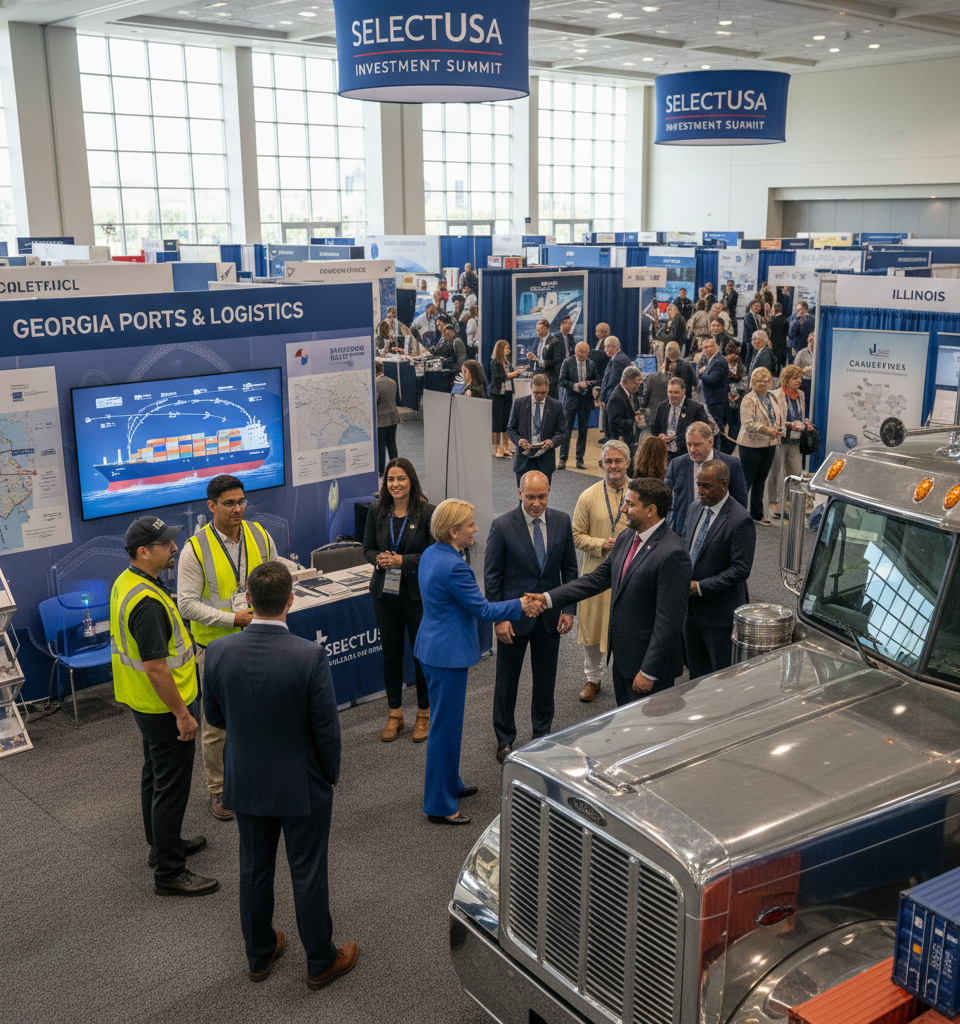
Held recently at the Department of Commerce, the 2026 SelectUSA Investment Summit served as a crucial platform where various U.S. states aggressively pursued new economic opportunities. Beyond the customary allure of foreign direct investment, a significant trend emerged: many states were also actively engaged in attracting and securing business from the United States' robust trucking industry. This strategic pivot highlights an evolving understanding among state economic development agencies of the diverse avenues for growth and job creation.
The Dual Investment Imperative
Historically, the SelectUSA Summit has been primarily a venue for connecting international businesses with American investment opportunities. However, the 2026 iteration showcased a more nuanced approach. State representatives were observed engaging intensely with both foreign dignitaries and domestic trucking sector stakeholders, indicating a recognition that the economic health of the trucking industry—a critical backbone of the national supply chain—offers substantial, often localized, investment potential. This dual imperative suggests a sophisticated strategy to diversify economic development efforts, leveraging both global capital and foundational domestic sectors.
Why the Trucking Industry Matters
The trucking industry is an economic powerhouse, responsible for moving the vast majority of goods across the United States. Its health directly impacts manufacturing, retail, and numerous other sectors. Attracting trucking companies, logistics hubs, and related infrastructure projects means not only jobs but also significant tax revenue, increased demand for local services, and enhanced regional supply chain efficiencies. States are therefore keen to offer incentives, streamlined regulatory processes, and skilled workforces to entice these businesses to establish or expand their operations within their borders.
Strategic State Engagement
State delegations at the summit employed various tactics to woo both foreign investors and trucking firms. These ranged from personalized presentations highlighting unique regional advantages—such as strategic geographic locations, access to major transportation arteries, or specialized labor pools—to offering compelling incentive packages. Discussions often revolved around infrastructure development plans, workforce training programs tailored to logistics, and regulatory environments designed to be business-friendly for trucking operations. This proactive engagement underscores the competitive nature of economic development among U.S. states.
Broader Economic Impact
The concerted effort to attract trucking industry business alongside foreign investment has broader implications for the national economy. By strengthening the domestic logistics network, states contribute to overall economic resilience and efficiency. Greater investment in trucking infrastructure and operations can lead to faster delivery times, reduced transportation costs for businesses, and ultimately, more competitive pricing for consumers. This synergy between global capital and domestic industrial growth is a key driver for sustained economic prosperity.
Looking Ahead
The 2026 SelectUSA Investment Summit could mark a pivotal moment in how states approach economic development, moving beyond a singular focus on international capital to embrace vital domestic industries. The increasing emphasis on integrating the trucking sector into broader investment strategies suggests a trend that is likely to continue. States that successfully align foreign investment with robust domestic sector growth could position themselves for long-term economic advantages, solidifying their roles as attractive destinations for both global and national enterprises.
Future summits may further refine this integrated approach, with states potentially showcasing more targeted initiatives designed to leverage foreign expertise or capital specifically for enhancements within the logistics and transportation sectors. This evolving strategy will be crucial for maintaining U.S. competitiveness in an increasingly interconnected global economy.